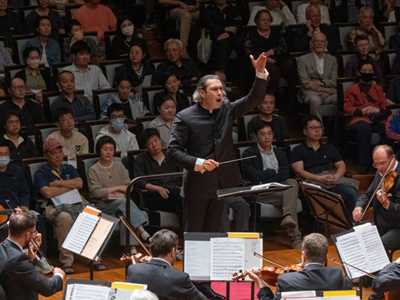
On the night of September 22
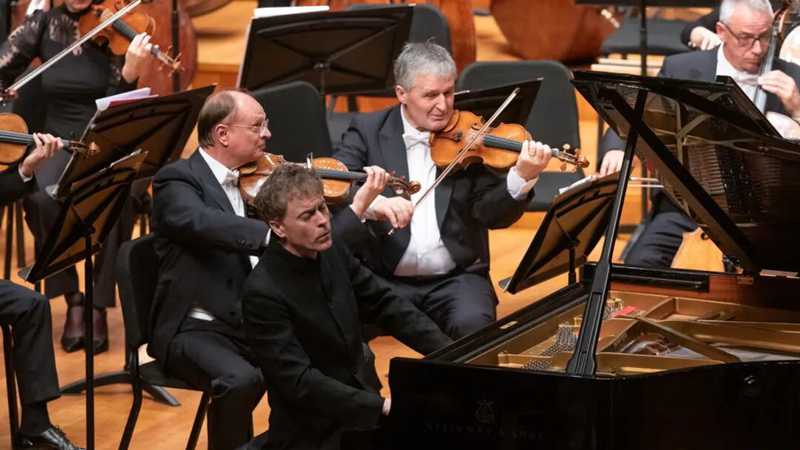
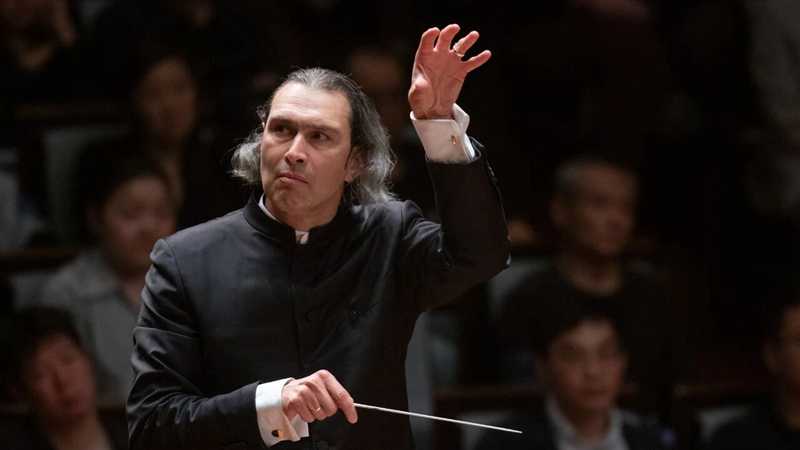
nd, the Bayerisches Staatsorchester, which has a history of 500 years, made its debut at the NCPA, kicking off the NCPA Pure Classical 2025. Music Director Vladimir Jurowski joined hands with British pianist Paul Lewis in playing Wagner’s
Tannhäuser Overture, a signature piece in the orchestra’s repertoire, Beethoven’s Piano Concerto No. 2 and Bruckner’s Symphony No. 4. Their distinctive sonic palette and artistic expression captivated the entire audience.
As an orchestra directly under the Bavarian State Opera, the Bayerisches Staatsorchester, which consists of 144 musicians, shines brilliantly both on the opera and concert stages. On the day before the performance, WANG Ning, President of the NCPA, cordially met with Serge Dorny, President of the Bavarian State Opera. The two sides exchanged views on how to deepen cooperation.

President WANG Ning said that the Bavarian State Opera, an internationally renowned art institution with a long history of 500 years, has achieved great results in inheriting and innovating the art of opera. He added that there is a broad space for exchanges and mutual learning between both sides because the NCPA shares the same artistic ideal and development philosophy with the Bavarian State Opera. Also, he talked in detail about the NCPA’s achievements in building itself into a multi-functional platform, the operation of the NCPA as “an institution in three locations”, and the current development of the World Association for Performing Arts (WAPA). After that, WANG Ning expressed his hope that the two sides would exert more efforts in core areas including high-quality production and digital cultural communication, so as to yield more substantive results of cooperation. Then he warmly invited the Bayerisches Staatsorchester to the 2025 Beijing Forum for Symphonic Music to share its successful experience in artistic development and orchestra management. President WANG Ning expects that the Bavarian State Opera will join the WAPA, with culture taken as a bridge to further deepen international art exchanges and cooperation.
President Serge Dorny spoke highly of the NCPA for its remarkable achievements made over the past 18 years, noting that the NCPA has grown into an internationally renowned art institution with far-reaching influence that has a sound management system of its own. According to him, the Bayerisches Staatsorchester’s debut at the NCPA is a highly significant artistic exchange experience. At the meeting, he gave a detailed description of the Bavarian State Opera’s organisational structure, historical and cultural heritage, as well as its latest achievements in integrating technology with the arts. He stressed the fact that the two sides share the same artistic ideal. Serge Dorny expressed his hope to further strengthen their interaction with the NCPA and establish a closer partnership with the NCPA in more areas, so as to jointly promote the booming development of the performing arts on a global scale.
ZHU Jing, Vice President of the NCPA, attended the meeting, too.
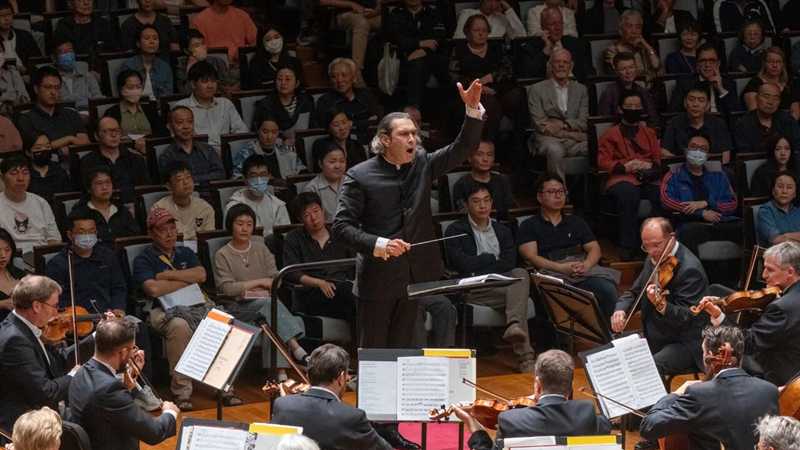
The concert held on the night of 22nd began with Tannhäuser Overture, a classic piece. Under Jurowski’s baton, the Orchestra surged forth like a billow. This overture, described by Liszt as a “symphonic poem composed in accordance with an opera”, makes dramatic conflicts and tensions clearly visible in the music, setting a lofty and philosophical tone for the entire concert.
At the concert, pianist Paul Lewis joined the orchestra in its interpretation of Beethoven’s Piano Concerto No. 2. As a disciple of piano virtuoso Brendel’s, Lewis is renowned for his rendition of Beethoven - or rather, he enjoys great popularity in the international music scene for his rendition of Beethoven’s complete sonatas and piano concertos. Pianist Lewis is highly skilled in playing Beethoven’s Piano Concerto No. 2 - he presses the keys precisely. That night, the Orchestra and Lewis brought out the best in the exuberance of the first movement, the lyricism of the second movement and the vivacity of the final movement. Lewis achieved a balance in classical melody while getting ready for ebullition in Beethoven’s middle and later works.
In the second half of the concert, the Bayerisches Staatsorchester gave an affectionate interpretation of Bruckner’s Symphony No. 4 “Romantic”. This work is the most popular in Bruckner’s vast sonic universe, where the composer’s distinctive sense of colour is particularly prominent. The serene forest, hunting horn, country dance and profound reverence for nature appear so attractive. Highly sensitive to music, Jurowski took a precise grasp of the grand musical structure and subtle cadence, so that after prolonged build-up, the music exploded with overwhelming power, then returning to a romantic and mysterious atmosphere in the depths of serenity. Under the conductor’s baton, a long, rhythmic melody was created on strings amidst the warm, mellow tones of the horns. Meanwhile, solemn and brilliant music came out in a psalmodic style on the brass instruments, captivating the entire audience.
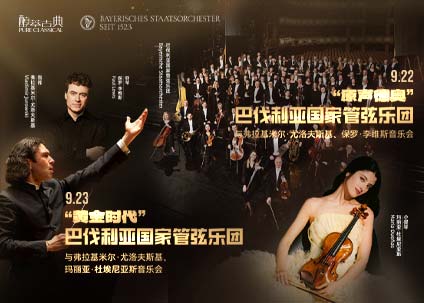
More beautiful music is to be presented in an exciting atmosphere. Tomorrow night, the Orchestra will join forces with violinist María Dueñas to present Mozart’s Symphony No. 32, Bruch’s Violin Concerto No. 1 and Richard Strauss’ Till Eulenspiegel and Der Rosenkavalier. Let’s wait and enjoy their authoritative interpretation of these best-known German and Austrian musical pieces.



 Repertoire
 Films
Films
 Videos
 Podcast
 China NCPA Orchestra
 China NCPA Chorus
 NCPA Resident Singers
 NCPA Drama Ensemble
 Buildings
Exhibitions
Buildings
Exhibitions
 Opening Hours
Services
Opening Hours
Services
 Western Cuisine
NCPA Café
Arts Gifts
Western Cuisine
NCPA Café
Arts Gifts