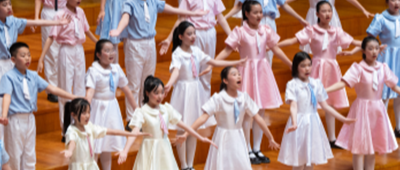
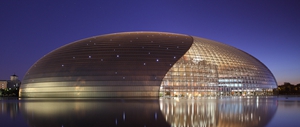
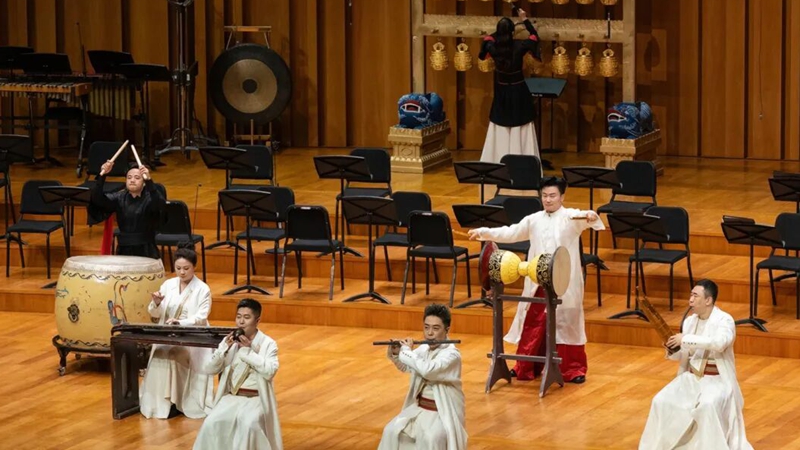
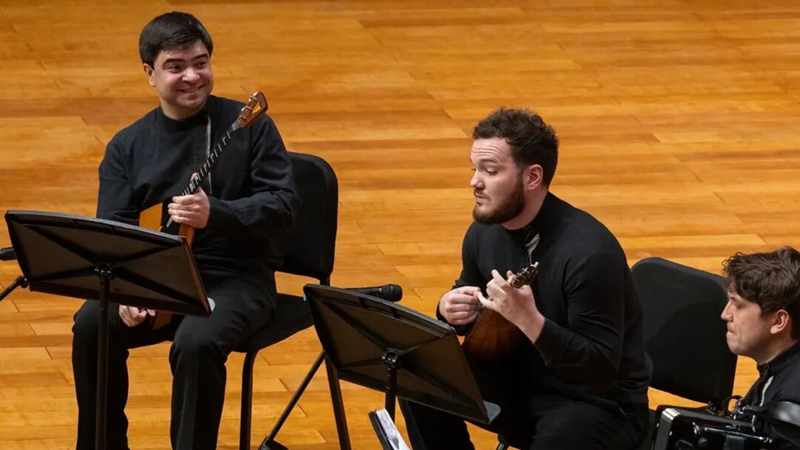
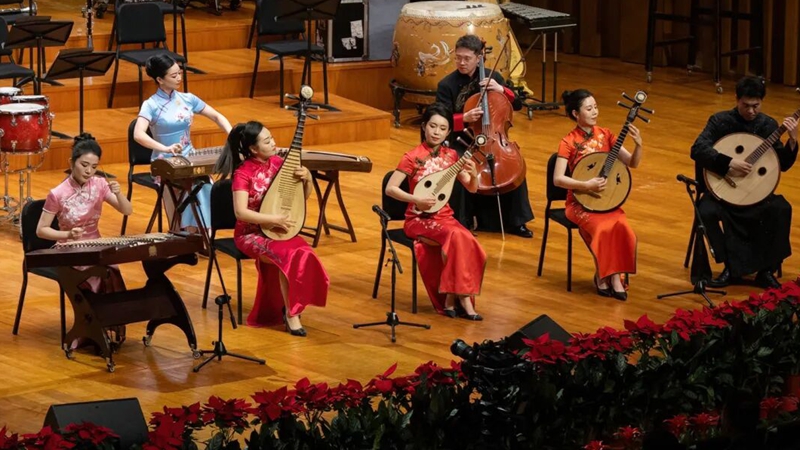
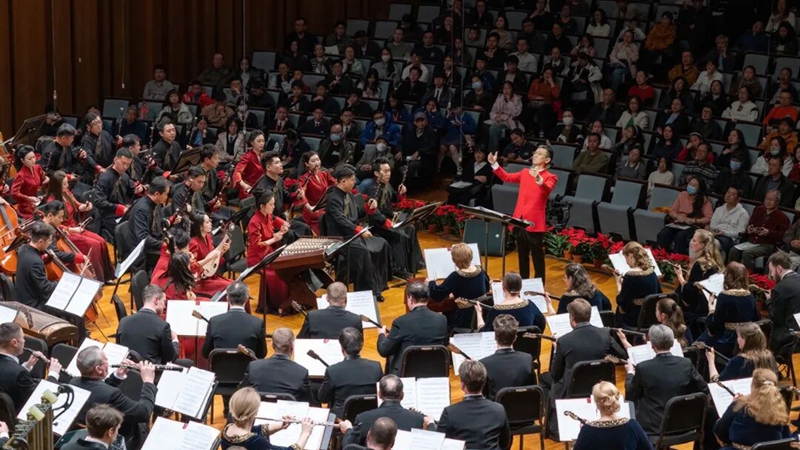
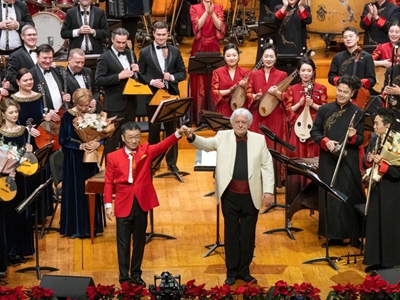
On the night of April 2nd, the NCPA Concert Hall sparkled with starlight and rang with thunderous applause. The 3rd Spring of Traditional Chinese Music, which will run for nearly a month, kicked off grandly with a special concert presented by the China National Traditional Orchestra and Russian Osipov State Academic Folk Orchestra. This musical dialogue, comparable to a “grand national event”, not only serves as a bridge of music, inscribing a heartfelt and brilliant cultural footnote to China-Russia friendship, but also, under the great vision of Harmony in Diversity, sets an open and inclusive tone for the upcoming 3rd “Spring of Traditional Chinese Music” - a nearly month-long festival featuring 27 orchestras - revealing the majestic presence and infinite potential of traditional Chinese music in the new era.
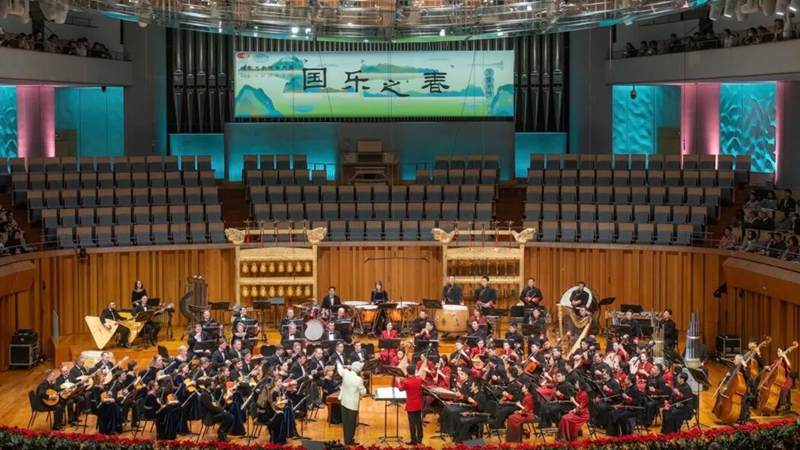
In the first half of the concert, themed Cultural Self-Respect, the two orchestras gave performances by turns, showcasing the soul of both Chinese and Russian national music. The China National Traditional Orchestra opened with Ode, igniting the passion in the entire audience. Following this, the Russian Osipov State Academic Folk Orchestra took the stage with a series of works rich in Russian folk character. From Anatoly Lyadov’s Khorovod, full of folk flavor, to Gazing at the Blue Lakes, where the balalaika whispers poetically, and further to Grandmother’s Goat, alive with witty vividness, the music unfurled slowly with the vast land of Russia presented on its natural canvas and in its living atmosphere. Immediately, the China National Traditional Orchestra showed the vivid and elegant charm of Lingnan in southern China in Rain Drops Drummed Rhythmically Against Bananna Leaves, depicted the sights of the capital, including the sound of morning bells and evening drums, as well as the incessant stream of vehicles and pedestrians in Beijing Story, and jogged the deep memory of the Ancient Silk Road in Dunhuang, which is rich in melodic tunes and modern skills. The performances given in the first half by the orchestras are two brilliant rivers of civilisation, shining with unique national glory.
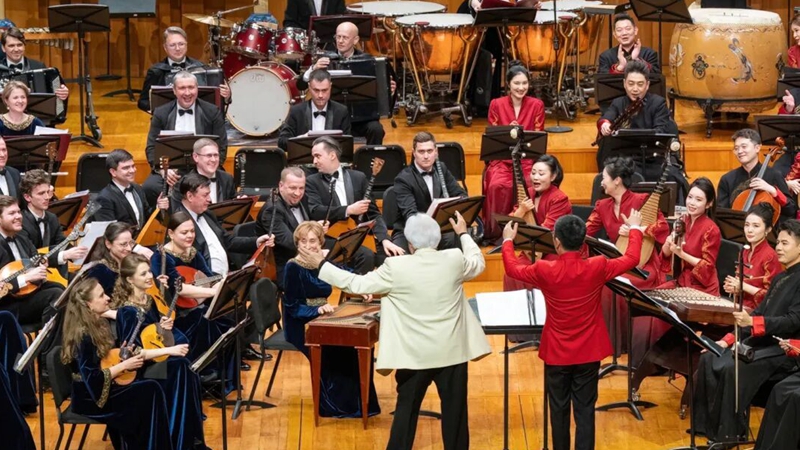
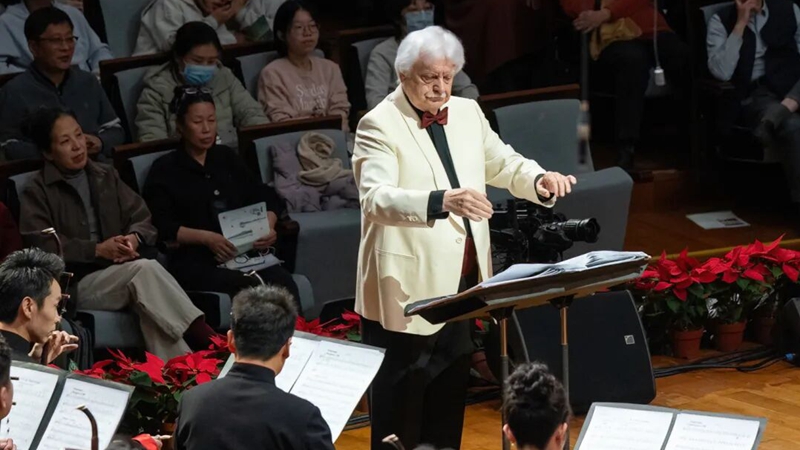
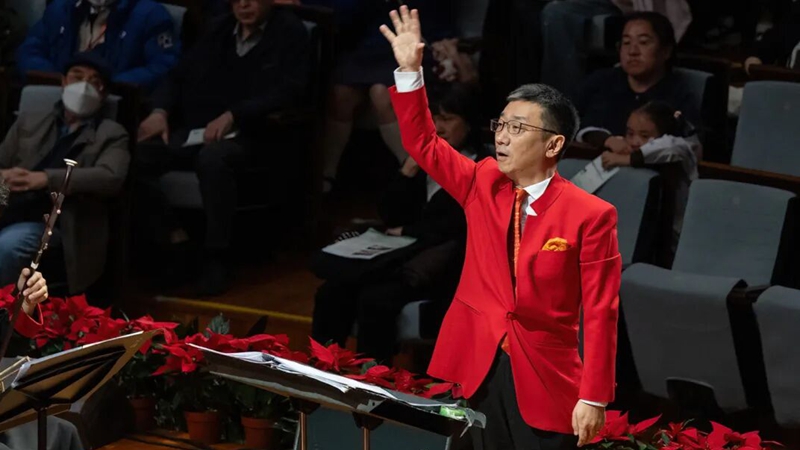
The concert reached its climax with its soul in bloom in the second half when the two orchestras played together under the leadership of LI Xincao, President of China Conservatory of Music and a renowned conductor, and Andropov Vladimir, people’s artist of Russia and Artistic Director of the Russian Osipov State Academic Folk Orchestra. The music unfolded around the “dialogue” and “resonance”, with musicians from the two countries performing together, presenting a deeper fusion of folk music - Etiquette Ceremony·Harmonious Music, composed from Chinese music Etiquette Ceremony·Harmonious Music and Russian music Welcome Overture, was interpreted by the two orchestras with all their members involved. The grand melody instantly set a tone for “Harmony”. Subsequently, Danil Stadniuk, a Russian bayan artist, performed Little Duck On The Meadow together with the orchestras, demonstrating the vigourous and vivid expressive force of the bayan. Then LI Chao, an erhu artist from the China National Traditional Orchestra, played A Pleasant Night, sounding warm and profound in the harmonic context of Chinese and Russian melodies.
Chinese music showed its greatest harmony in the co-production Melodious Resonance. This piece is a mixture of The Night On Moscow’s Outskirts, a famous Russian song, and Song of Horse Herding, a folk song of Yunnan Province. It was jointly performed by Chinese pipa artist MENG Xiao, Chinese ruan artists ZHU Chengzi and QI Wenduo, Russian balalaika artists Aleksandr Nikolaichuk, and Russian domra artists Dilyara Sagdeeva and Uliia Neverova. Pipa tremolos and ruan vibratos were interwoven with the clear and quick pizzicato sounds of the balalaika and domra, to compete for brilliance, yet still in harmony, with these two kinds of plucked string music presented the most vividly in terms of technique and wisdom. The concert thus ushered in the most symbolic moment of “instrumental harmony”. Then the Russian gusli showed its ethereal timbre in the elegant melody of the Chinese guzheng, further enriching the musical texture.
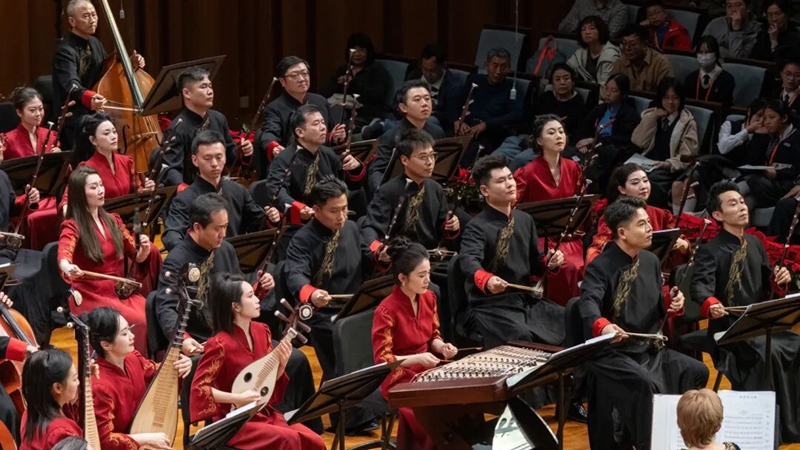
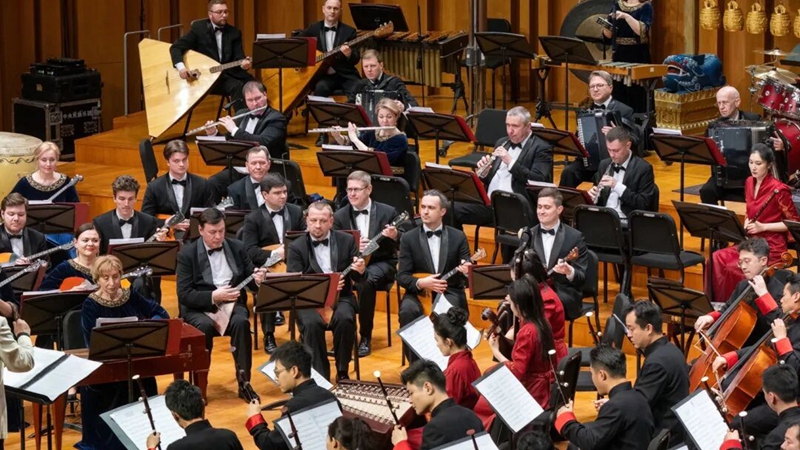
The concert reached its peak in the two finales co-presented by the orchestras - following the lively and cheerful melody of Korobeiniki, a co-production of China and Russia, I Love You, China, was rendered in majesty. When this piece, carrying profound emotion, was performed with heartfelt devotion by all the artists from China and Russia, the music overstepped national and linguistic boundaries, becoming a tribute to shared human feelings. The audience couldn’t help clapping along, many even touched with tears glistening in their eyes. Final note fading, applause and cheers surged like tides toward the stage, igniting fervour in the air.
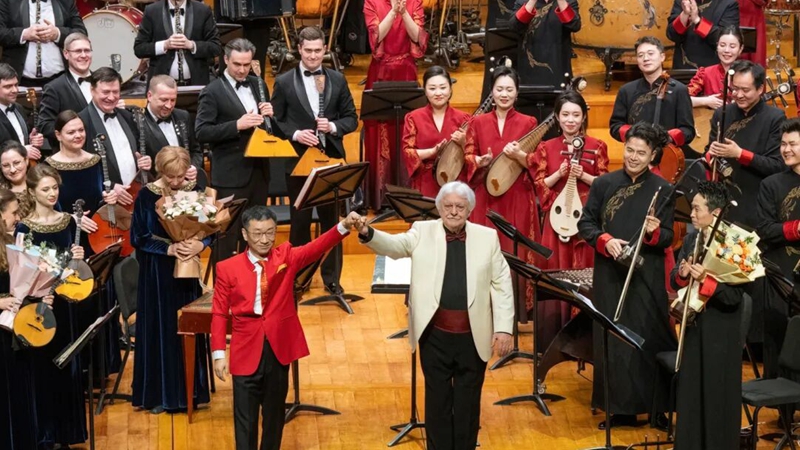
More remarkably, the two maestros appeared together on the stage to give an exciting encore - Kalinka - with the two orchestras under their baton. Led by them in unison, the two orchestras did better teamwork by playing their respective instruments in perfect harmony.
The 3rd Spring of Traditional Chinese Music kicked off grandly under the theme of Harmony in Diversity. At the opening concert, Chinese music showcased inclusive and ever-evolving spirit with times. Music, a language intelligible to all, is intriguing to both artists and audiences. In particular, like a gorgeous rainbow, it goes beyond the borders, witnessing the profound friendship between China and Russia, adding another finishing touch to the bilateral cultural exchange.
This concert will be put on the air at 19:30 on April 4
th as part of the “Spring Online” NCPA Online Performance Series so that a wider audience can immerse themselves in the unique charm of mixed Chinese and Russian music in their homes.
On April 4th and 5th, the Russian Osipov State Academic Folk Orchestra will appear at the NCPA and Beijing Performing Arts Centre to present four distinctive Russian music feasts to the Chinese audience. Please stay tuned for the feasts, which feature masterpieces by great composers such as Glinka, Rachmaninoff and Glazunov, as well as stylistically vivid, deeply meaningful Russian folk adaptations and great Chinese musical pieces to be interpreted on Russian music instruments.



 Repertoire
 Films
Films
 Videos
 Podcast
 China NCPA Orchestra
 China NCPA Chorus
 NCPA Resident Singers
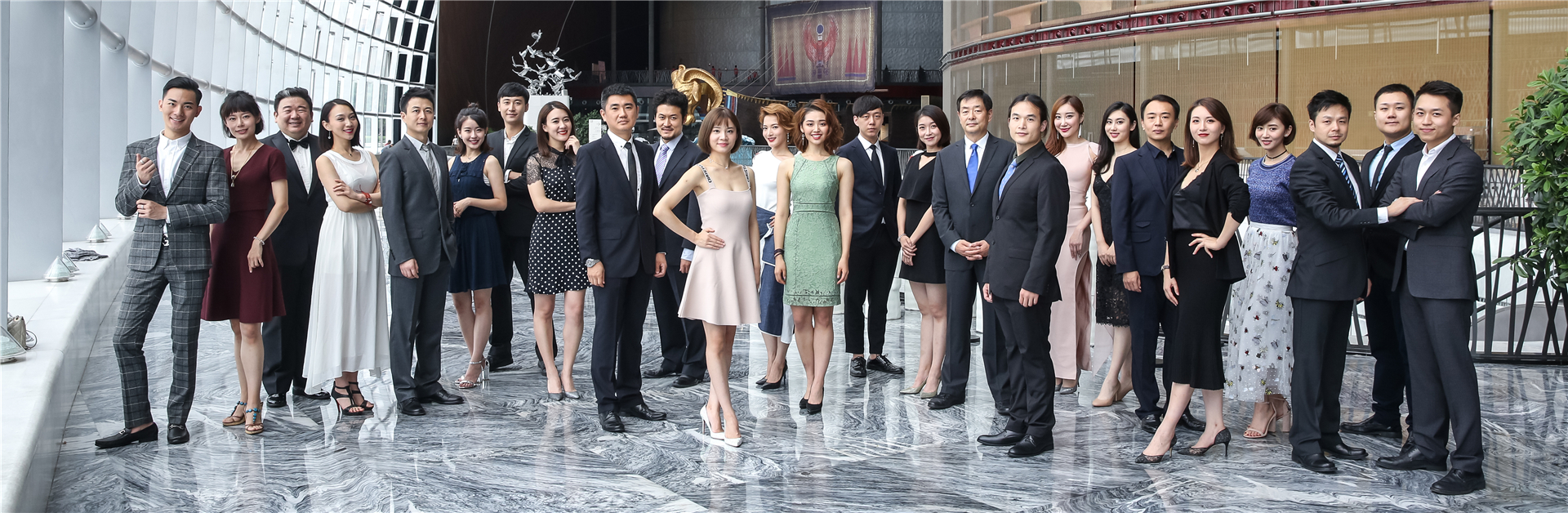 NCPA Drama Ensemble
 Buildings
Exhibitions
Buildings
Exhibitions
 Opening Hours
Services
Opening Hours
Services
 Western Cuisine
NCPA Café
Arts Gifts
Western Cuisine
NCPA Café
Arts Gifts