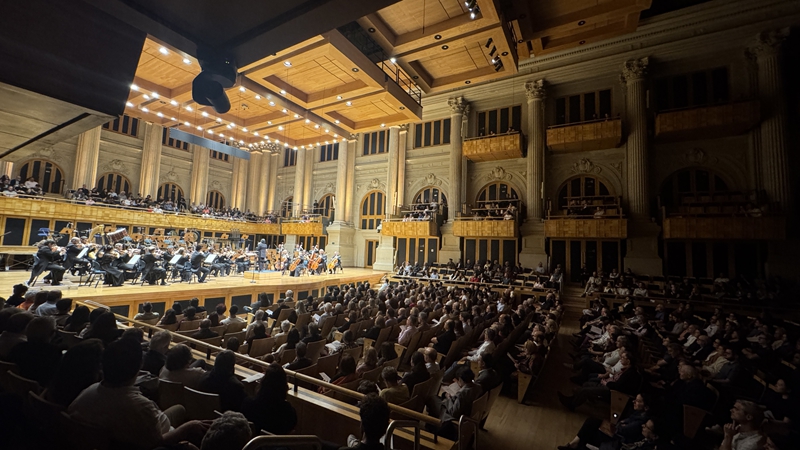
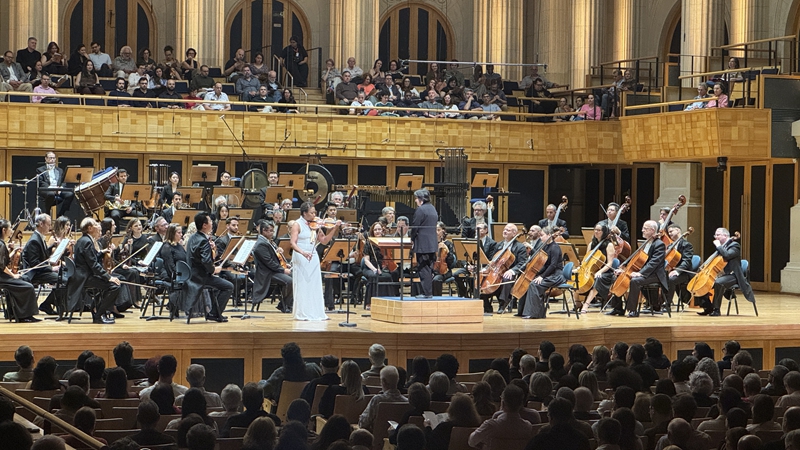
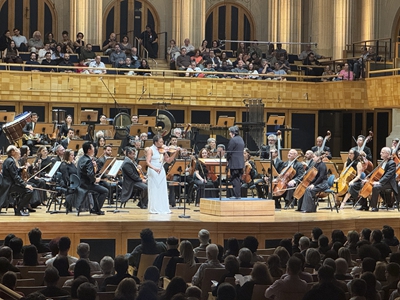
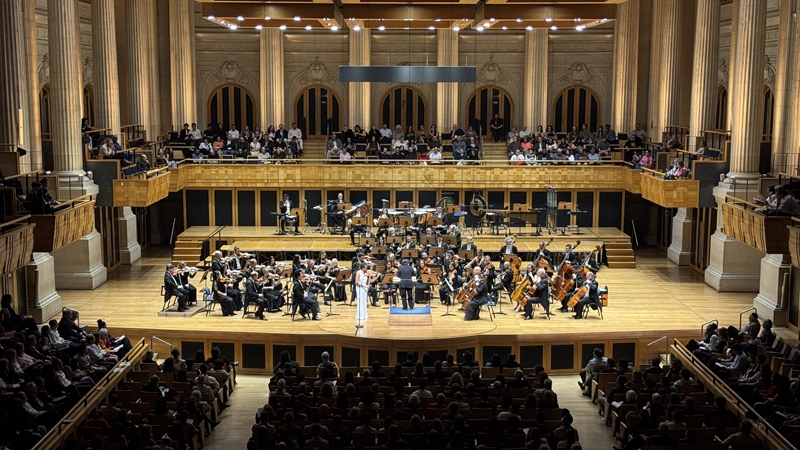
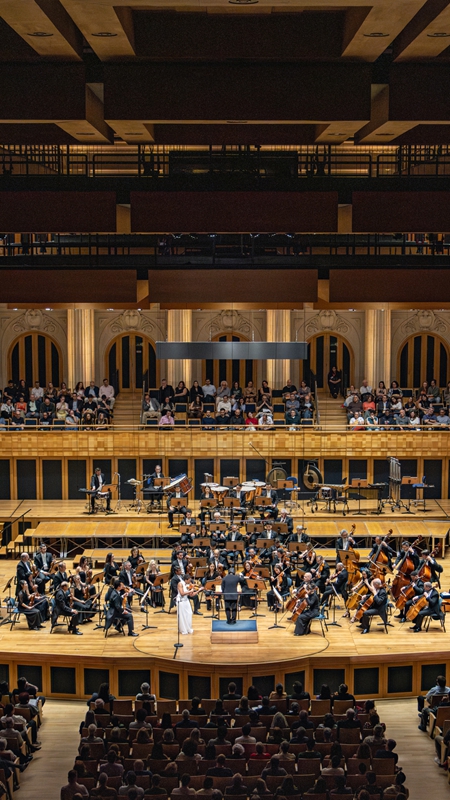
Music links mountains and seas, while voices converge in harmony. At 20:00 on September 3rd local time, a joint gala concert was grandly held at Sala São Paulo under the title of “Moving Forward Together: China NCPA Orchestra’s Brazil Tour 2026 China-Brazil Year of Culture”. Through the World Association for Performing Arts (WAPA), a platform that facilitates international cultural exchange and cooperation, a founding WAPA member, the two orchestras exchanged visits within just two weeks. As an official event of the 2026 China-Brazil Year of Culture, the concert brought the two orchestras across continents to build a bridge of mutual cultural learning through music.
Among the distinguished guests in attendance were YU Peng, the Chinese Consul General in São Paulo, Vincenzo Carone, Director of Executive Office at the Secretariat of Culture, Economy and Creative Industry of the State of São Paulo, and Marcelo Lopes, President and CEO of the São Paulo Symphony Orchestra Foundation. All the guests witnessed this musical feast steeped in the profound friendship between Chinese and Brazilian artists.
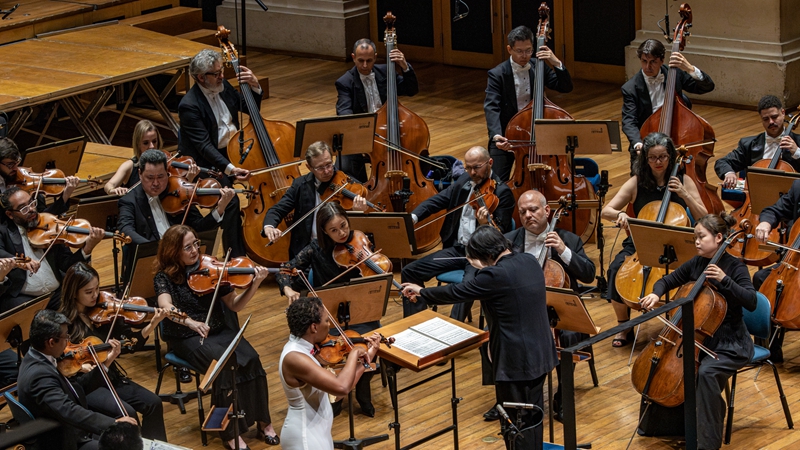
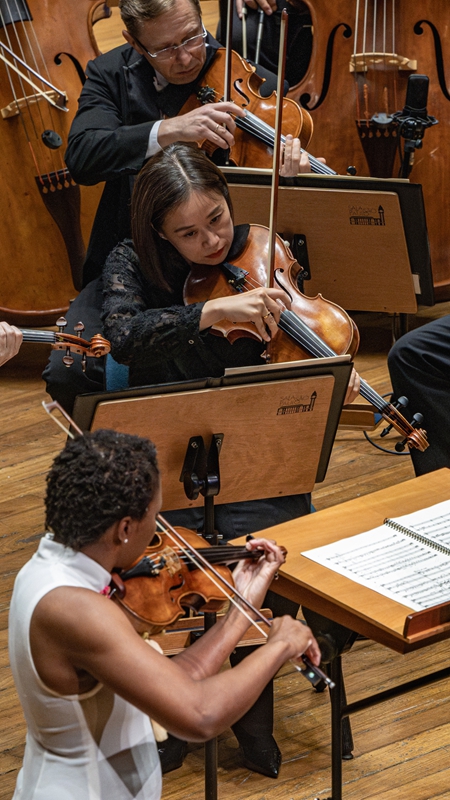
Themed “Mussorgsky’s Feast of Sound and Colour”, the concert featured an ingeniously designed repertoire, a blend of Eastern charm and Western classics, with a cross‑cultural musical dialogue created on the South American stage. Musicians from the two orchestras performed together, sitting side by side, blending into one ensemble despite their different cultural backgrounds, and giving a joint rendition of every piece. It is worth mentioning that conductor ZHANG Xian demonstrated a masterful command over works of diverse styles and cultural origins. With her virtuosity, she created a broad space for mutual rapport between the musicians of both nations, vividly rendering everything from Eastern aesthetics to grand symphonic climaxes.
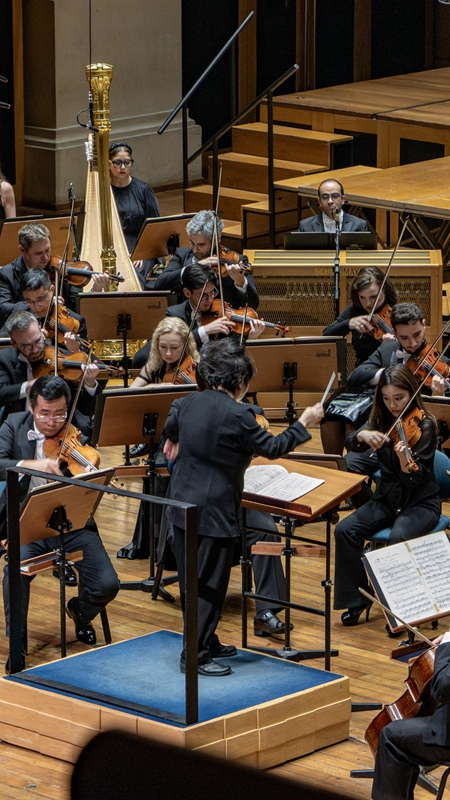
The first half began with “Purple Bamboo Tune” from BAO Yuankai’s Chinese Sights and Sounds. Short in length, the piece blends Jiangnan-style folk music into a grand symphonic expression, so that gentle and lively melodies are heard to flow slowly, while vivid and upbeat folk rhythms seem to fill the air. As it was played, the unique beauty of Oriental music was vividly presented at Sala São Paulo, allowing the local audience to directly experience the elegance of Chinese traditional folk music. Following that, violinist Tai Murray took the stage to perform Prokofiev’s Violin Concerto No. 2 in G Minor. From the first movement, which boasts a dramatic yet lyrical narrative, to the second, with its restrained andante, and to the finale, which is rhythmically vigorous in its allegro, the musician bowed at a flexible pace, filling the music with tension. Performing in perfect sync with the orchestra, she brought out the emotional complexity of the work, drawing the audience into profound immersion.
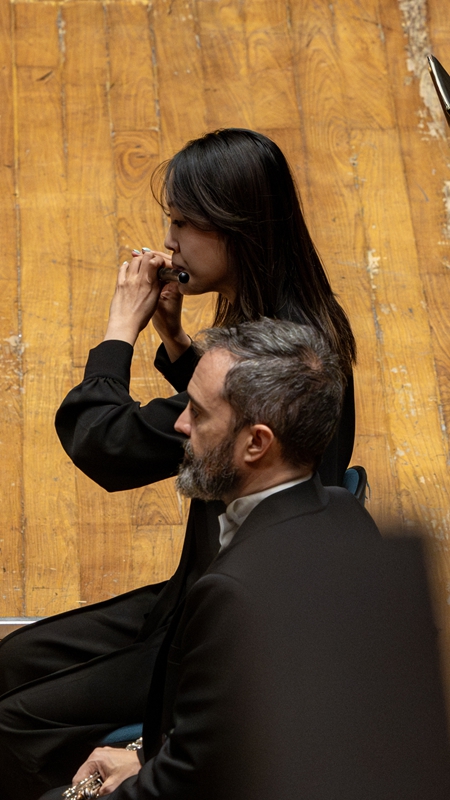
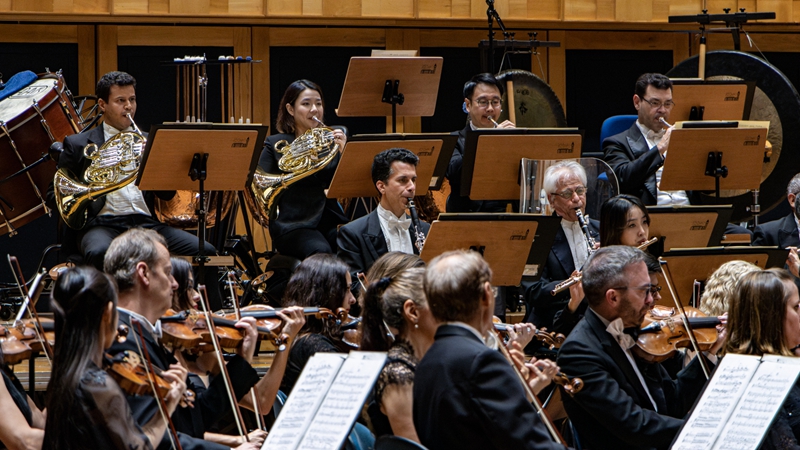
In its second half, the concert was crowned with Mussorgsky’s Pictures at an Exhibition, orchestrated by Ravel. The recurring theme, “Promenade”, threaded through the entire piece, sounding like a visitor strolling through a gallery, with eleven strikingly different musical pictures strung together. The uncanny dwarf, weathered castle, lumbering ox cart and lively nestlings came alive in sound one after another. The musicians, who came from two countries, acted in perfect unison, transforming still pictures into vivid, three-dimensional auditory tableaux with their richly layered and colourful orchestral instruments. The final movement, La Grande Porte de Kiev, thundered with majestic grandeur - brass blazing, strings surging, and percussion resounding - as the combined orchestras drove the performance to a breathtaking climax.
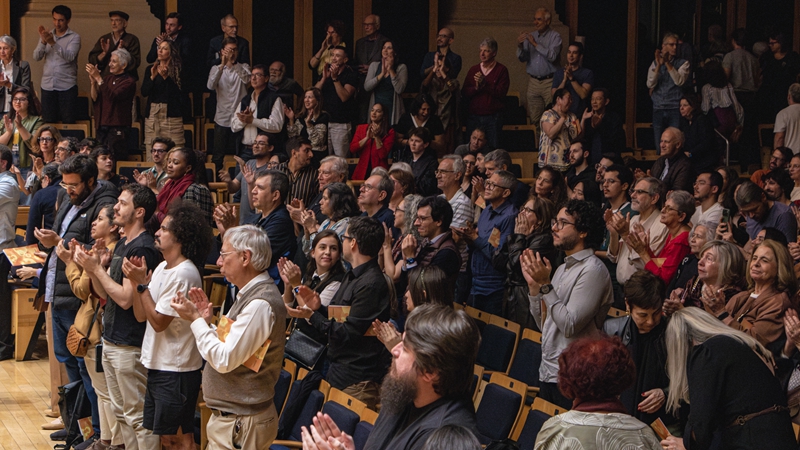
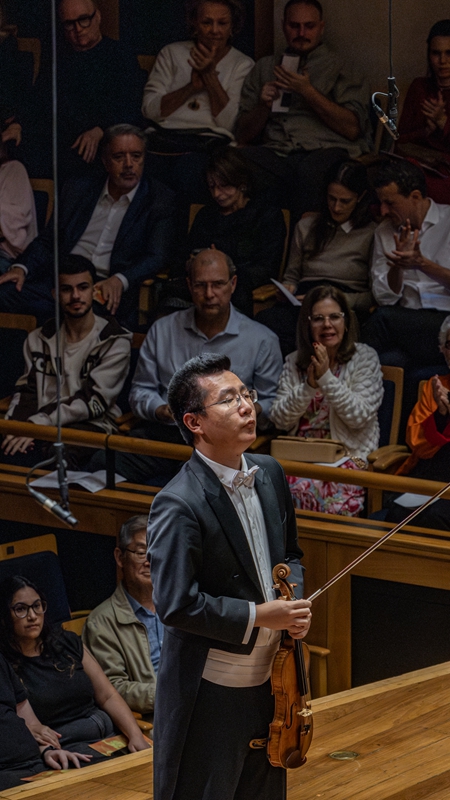
As the final notes faded into the air, a thunderous wave of applause surged through the concert hall. The audience rose to their feet in a prolonged standing ovation for the performance, cheering repeatedly. The musicians, hailing from diverse corners of the globe, performed as a harmonious whole, bridging vast oceans and distant lands with every note.
The warm response from the audience bore testimony to the cross-cultural appeal of music. An audience member, already acquainted with Chinese music, said that the Chinese musicians played their instruments in a remarkably distinctive manner, and the performance broadened his musical horizons. Another one, who had just enjoyed traditional Chinese music for the first time, said that it was absolutely enchanting, and that was an extraordinarily unique experience for him.
Marcelo Lopes, President and CEO of the São Paulo Symphony Orchestra Foundation, expressed his delight in welcoming the musicians from the China NCPA Orchestra. He noted that this joint concert is a wonderful practice for artists of the two nations to deepen exchange and enhance mutual understanding. Through music, a universal language, the two orchestras have forged stronger ties by learning from each other, laying a solid foundation for more future artistic collaborations.
The exchange activity marks a reciprocal, two-way artistic interaction between China and Brazil. On August 22nd this year, musicians from the São Paulo Symphony Orchestra visited Beijing and joined forces with the China NCPA Orchestra for the “Sights and Sounds of Amazon” Concert. Documentary footage of the Amazon Rainforest was combined with symphonic music, providing an immersive audiovisual experience to audiences in the Chinese capital. At the end of the concert, BAO Yuankai’s Pleasant Sunrise was played as an encore, kicking off the exchange visits between the China and Brazilian orchestras. The joint concert in São Paulo, in turn, began with Purple Bamboo Tune, also composed by BAO Yuankai. With his works as the thematic thread, the two concerts were thus linked in a seamless arc, each marking one end of a complete cultural exchange loop, framed by the two-way movement of “visits to China and visits abroad.”
A Brazilian oboist present at both concerts said with emotion that although China and Brazil are geographically distant and musically distinct, the exchange visits helped both sides to gain a deeper appreciation of each other’s cultural treasures. WANG Yubing, Deputy Managing Director and Trumpet Principal of the China NCPA Orchestra, remarked that as an Chinese saying goes, “The key to state-to-state relations lies in close bonds between peoples, and close bonds between peoples lie in mutual understanding”. He then added that though we are thousands of miles apart, music has brought us together and brought our hearts closer.
The joint concert is not merely an intercontinental artistic collaboration, but also a practice of deepening cultural dialogue between Chinese and Brazilian musicians. From Beijing to São Paulo, the two orchestras have taken music as a bond, enhancing mutual understanding and learning through cross-cultural exchange, building closer people-to-people ties through art.
On the afternoons of September 4th and 5th (local time), the two orchestras will present two more captivating concerts to local audiences. Notably, the concert starting at 16:30 on September 5th will be live-streamed globally via YouTube, to share this musical splendour with audiences around the world.



 Repertoire
 Films
Films
 Videos
 Podcast
 China NCPA Orchestra
 China NCPA Chorus
 NCPA Resident Singers
 NCPA Drama Ensemble
 Buildings
Exhibitions
Buildings
Exhibitions
 Opening Hours
Services
Opening Hours
Services
 Western Cuisine
NCPA Café
Arts Gifts
Western Cuisine
NCPA Café
Arts Gifts