On the night of September 11
th,
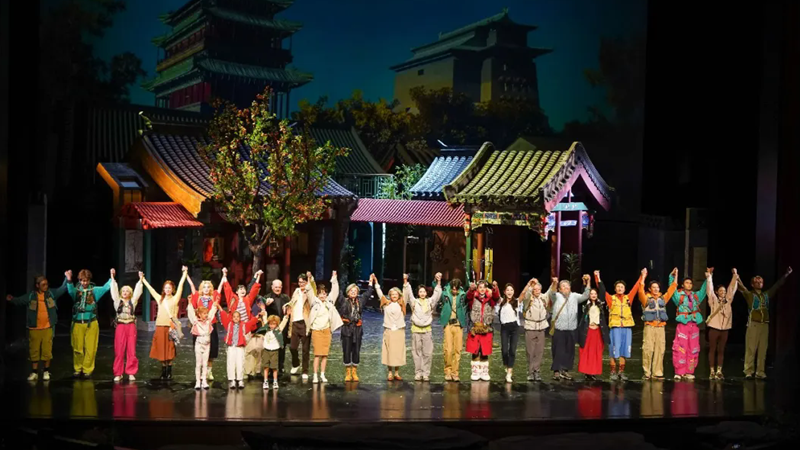
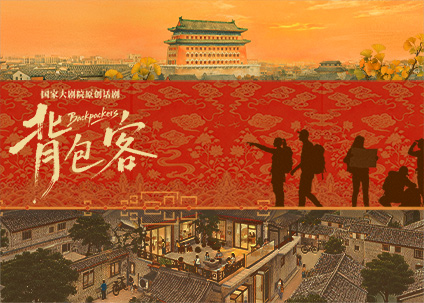
Backpackers, a drama commissioned by the NCPA, had its grand premiere at the Theatre. As a powerful work with realistic theme that turns its lens toward the urban look of Beijing today, it comes out on the second anniversary of the Beijing Central Axis’ inscription on the UNESCO World Heritage List. It is also a work with sincerity presented by the NCPA Drama Ensemble on its tenth anniversary. Grounded in the everyday life of the hutongs and animated by the spirit of youth, the drama brings vividly to the stage the journey of ordinary people in the new era, involving their growth and their pursuit of dreams.
The story is set in Beijing of 2026, where the cultural legacy of the old capital meets the bustle of modern city life. Centring on a single courtyard hostel, the drama tells a warm story about travellers from all corners of the world meeting, coming to know one another, and healing one another as they journey on.
“It is difficult to build a work around backpackers.” Looking back on the writing course of
Backpackers, playwright WANG Jian grows more reflective. He said that the story goes back to over a decade ago. At the time, the executive presenter of this drama, WANG Ning, now President of the NCPA, was still working in Xicheng District, Beijing. They went out together on research visits. The first time they walked into the lobby of a hutong hostel, where WANG Ning was captivated by the walls, densely covered in graffiti. He said it wasn’t “graffiti” - it was “a wall that breathes”. Twenty or thirty languages gathered together on one surface, like a symphony without a conductor. Perhaps it was then that
Backpackers began to sprout - into a stage work that would use a single hostel to read every traveller in the world.
Tonight, the seed planted over a decade ago has finally taken root on the Central Axis, a place that carries both historical depth and contemporary spirit. The stylish hostel, born of a small hutong courtyard, has stepped from conception into reality, becoming a haven for backpackers from every corner of the globe and opening its door to the audience for the first time.
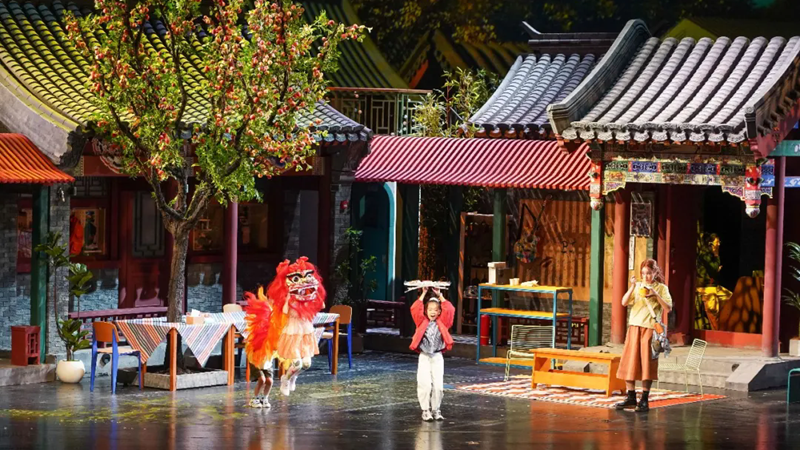
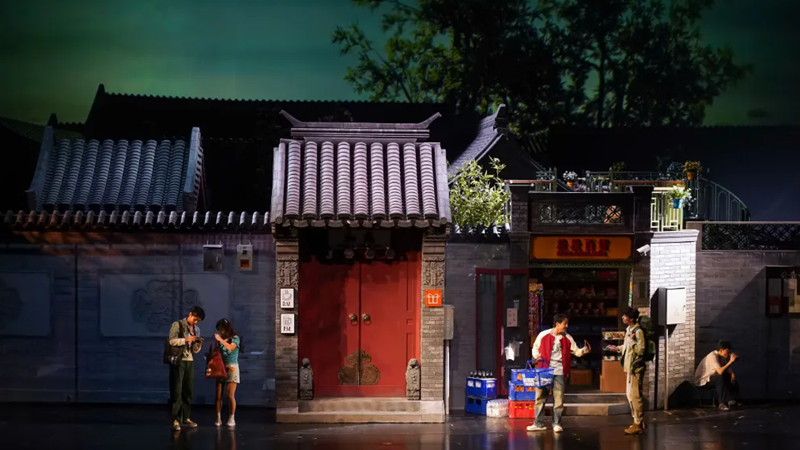
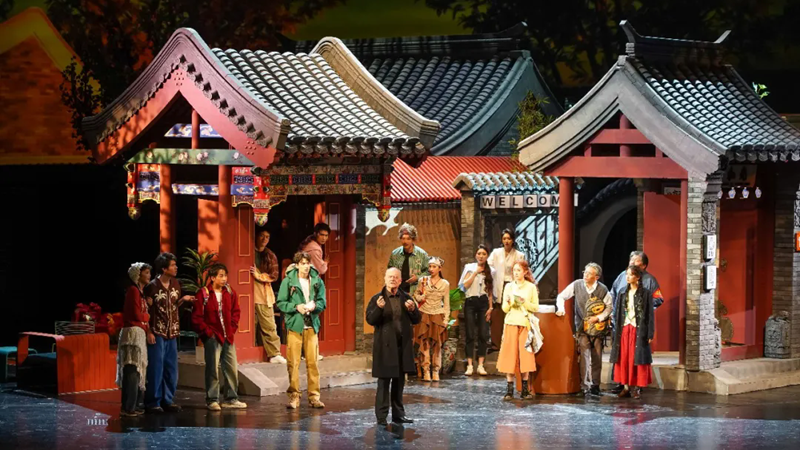
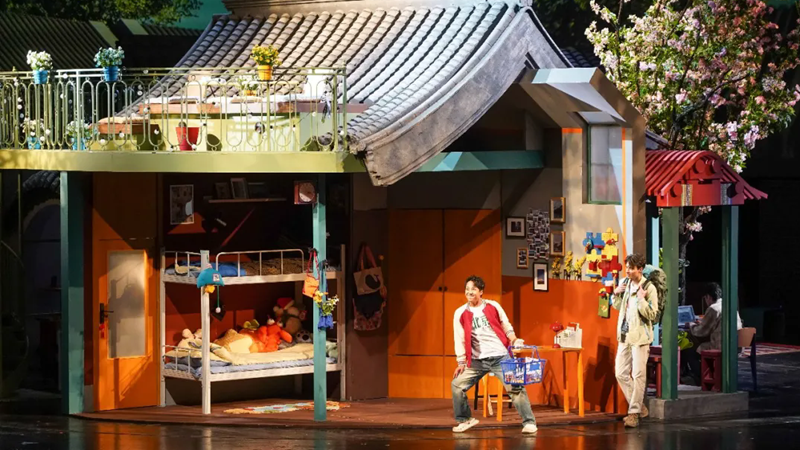
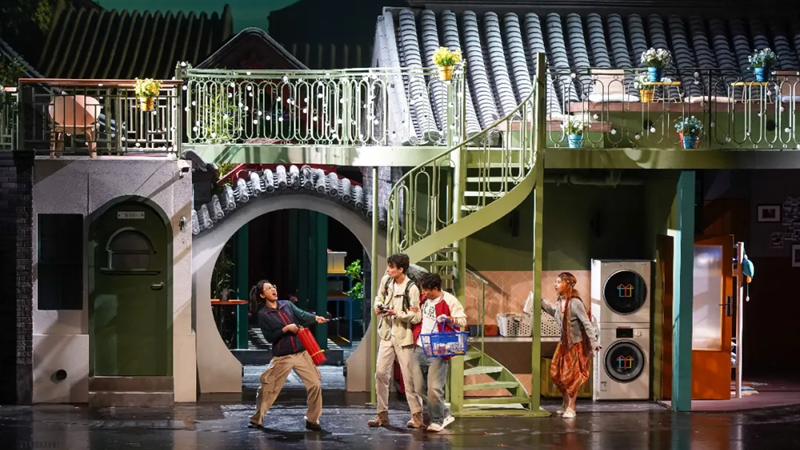
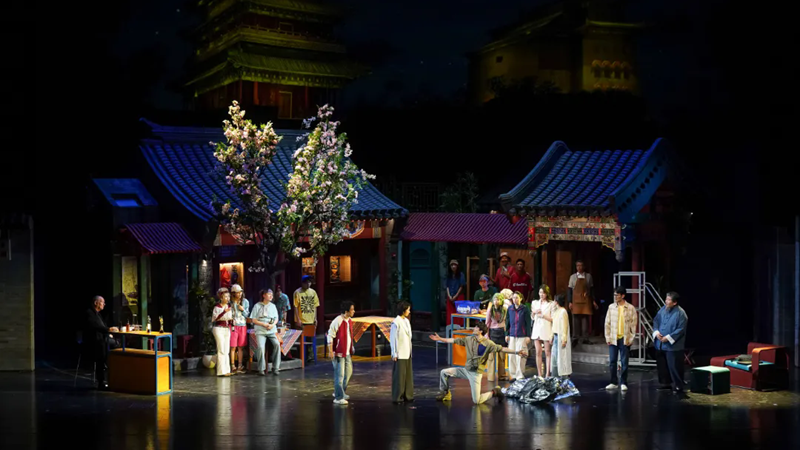
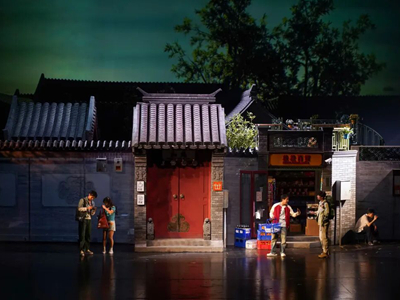
The meticulously crafted real-scene stage scenery is a striking feature of the drama. Set designer ZHANG Kunpeng has faithfully reconstructed the partial structure of a traditional siheyuan courtyard, capturing the authentic texture of an old Beijing hutong courtyard. At the centre of the drama is the “Heguang” Courtyard Hostel, which blends the old-world elegance of Chinese architecture with the lively atomosphere of a modern city.
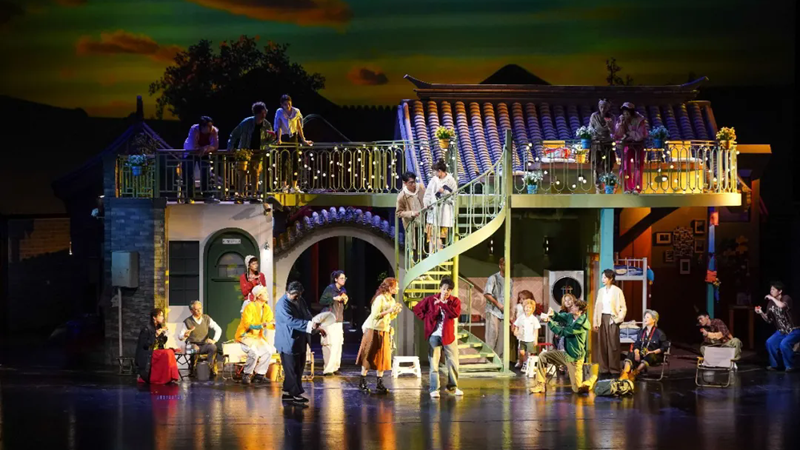
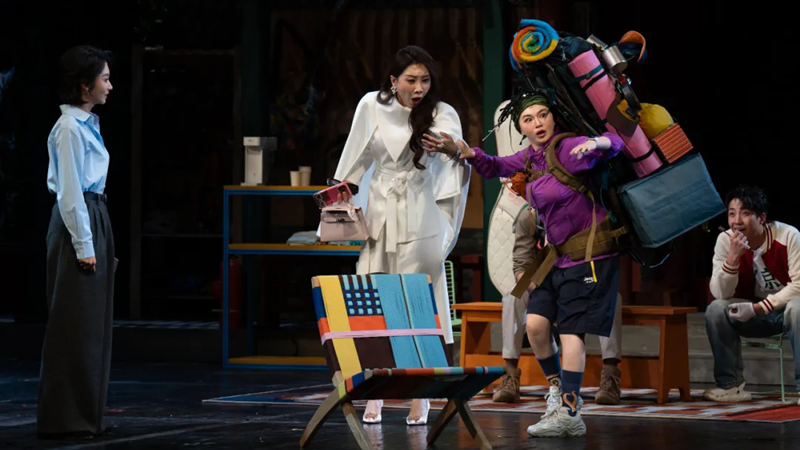
Every detail of the yard rewards attention. In the display window of the east wing, there are professional outdoor gears arrayed by category, including backpacks, trekking poles, headlamps, sleeping bags and portable stoves, looking as if it were a small outdoor museum. The hostel serves coffee by day and wine by night, along with a menu of specialty food. There is also a laundry room and staff quarters. The terrace is a place bathed in the evening breeze, and a place where a crescent moon hangs high over the upturned eaves. A vivid tableau of everyday life is thus presented on the stage, just as it is.
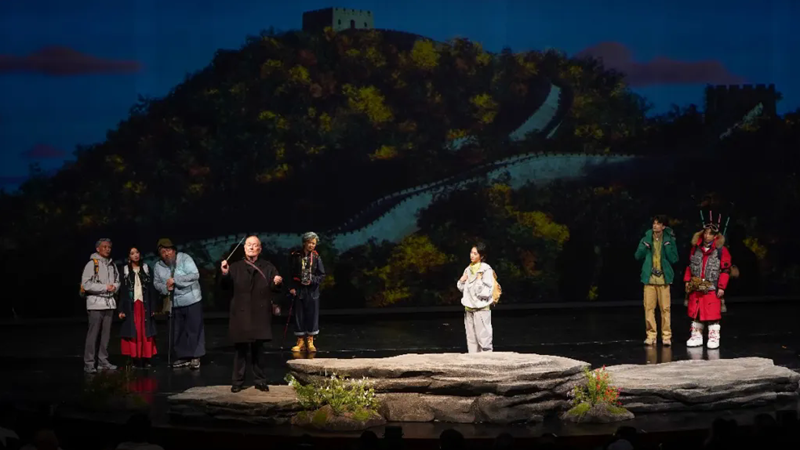
Stage technology lets the scenes flow freely. The revolving stage links every functional space of the hostel together. Video projections bring to life the Zhengyangmen Gate, Arrow Tower and other landmarks on the Beijing Central Axis. To ensure that every audience member’s line of sight rests easily, the creative team has built a digital model of the courtyard using VR technology to fine-tune the alignment between the revolving stage’s angles and the multimedia pictures. Thus, as the stage revolves slowly, the scenery revolves with it - the courtyard keeps turning, its orientation shifting, while the landmarks on the Central Axis succeed one another through light and shadow. As cold gives way to heat and the seasons turn, they unfold within the yards. The transformation of space and the passage of time thus unfold before the audience in the same breath.
This siheyuan courtyard on the Central Axis is a small window through which the world may see contemporary Beijing. The drama Backpackers tells the travel stories of ordinary people, holding a mirror to the spirit of a great era. It depicts youth and passion, perseverance and growth, expressing an attitude towards life that suggests “cherishing time and setting out now”. Amid these stories of everyday life, the audience will see themselves, find what they love, and journey toward distant horizons.
About Backpacks
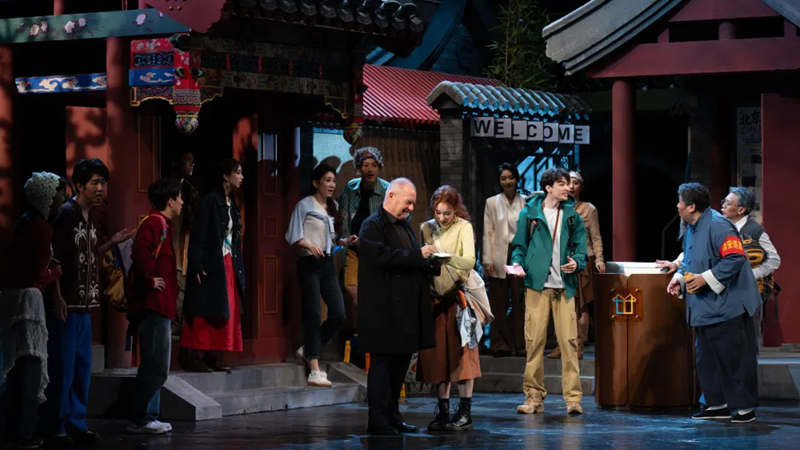
The story starts with the journey of MA Shang, a French backpacker, to Beijing. Carrying a camera, he has come all the way to the capital - and no sooner has he set foot in the “Heguang” hostel than he is caught in an unexpected fire drill, drenched from head to toe, camera and all. Manager ZHAO Yan handles the situation promptly and well, with the mishap smoothed over. Meanwhile, those strangers from every corner of the world are brought together under one roof for the first time. Among them are Song Song, the warm, hospitable owner of a corner shop who loves Beijing, LIU Shiyun, a former TV hostess who stepped back into family life years ago and is now trying to break free from the shackles of identity, CHENG Shi, a slightly reticent engineer absorbed in AI research, TIAN Xiaocui, a girl from Yunnan who works in exchange for lodging, carrying with her a passionate dream, LIN Wanting, a girl from Taiwan who follows in her forebears’ footsteps to Beijing in search of intangible cultural heritage - ancient architectural paintings, LI Baohong and ZHAO Zhiqiang, inheritors of intangible cultural heritage who hold fast to traditional crafts and craftsmanship, and other backpackers who come from different countries, speaking different languages. Ordinary people of different identities and different backgrounds begin a warm encounter in this hutong courtyard.
Journeying to Beijing across the Eurasian continent, MA Shang is here to find the Chinese woman backpacker who saved his life years ago in the Alps. Through one gathering after another, through chats and shared stories, he realises that the steady, gentle hostel manager, ZHAO Yan, is the very person he has been seeking. Open and ardent, MA Shang confesses his love to her boldly, only to stir unease in Song Song, who is in love with ZHAO Yan. Only then does everyone learn that ZHAO Yan, who seems so settled in the courtyard, was once a backpacker that travelled across mountains and seas. The death of her mother makes her stop, burying her dream of distant travels deep within - keeping the courtyard, settling into the years.
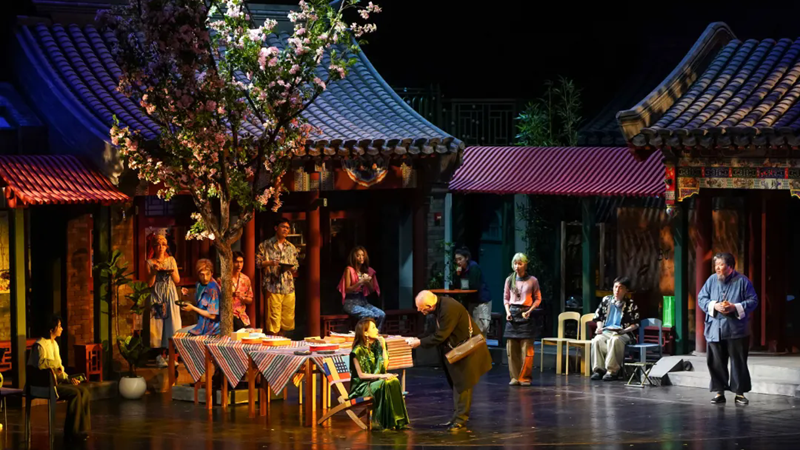
With the confession unanswered, MA Shang quietly leaves the courtyard. ZHAO Yan organises everyone to search for him in different directions, and Luca, a German conductor who has struck up a friendship with MA Shang in the courtyard, joins the search. They finally find him safe and sound by the Grand Canal in Tongzhou. It turns out that MA Shang, in low spirits that day, goes out alone to wander along the Central Axis, and as he walks forward, he comes upon water - Beihai, and then Houhai, all the way to the Drum and Bell Towers, where water disappears suddenly. His curiosity is thus piqued, and he wanders where Beijing’s water comes from. He follows it all the way to the Kunming Lake in the Summer Palace, and then simply keeps going along the water course - by boat, by shared bike - from Haidian District all the way eastward until he reaches Tongzhou. TIAN Xiaocui teases him that he is just taking a “city walk”, yet MA Shang corrects her, seriously: no - it is a “city voyage”. A false alarm, in the end, proves to be the backpackers’ most unlikely exploration of the city.
As the seasons turn, the crabapple tree bears witness to the transformation of everyone. Those travellers, who once rushed by, come back now, each with a different surprise. LIU Shiyun has let go of her fixations and become a backpacker blogger, rediscovering her own worth during travel. CHENG Shi and LIN Wanting, having fallen in love with each other, go hand in hand forward and use AI to serve traditional architecture, TIAN Xiaocui, having apprenticed herself to a master, delves deep into the intangible cultural heritage crafts of Hexi Coloured Painting and Gourd Pyrography, and she has fulfilled her dream of attending university, opening a new chapter in her life.
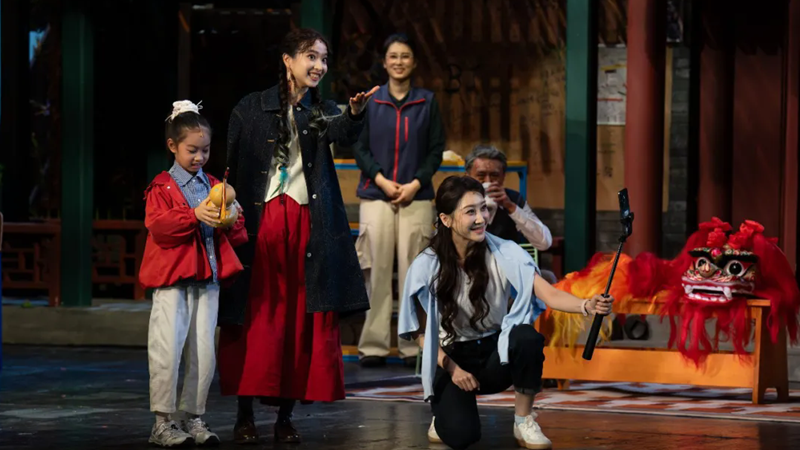
There is a reunion on any journey, with beauty enduring and renewing itself. MA Shang runs into an old French friend, Najia, in the courtyard - the convenient visa-free transit policy allows foreign travellers to experience the charm of Beijing in depth. Conductor Luca sincerely invites everyone to a concert, allowing the beauty of art to live on and spread. And SU Xianghong, an old backpacker who has just appeared for the first time, travels far for her dreams, overturning the stereotypes the public holds about the elderly. Her declaration - “Get on the road first, and the answers will come along the way” - gives voice to the truth that “the love of life and the urge to set out have nothing to do with age”.
The drama saves its most moving moments for ZHAO Yan. SU Xianghong brings to ZHAO Yan her mother QI Yun’s backpack and letter. In the letter, QI Yun shares her understanding of the “backpack”: to pack your bag, you must empty it first to let go of whatever weighs too much - only in this way does the heart have room to breathe. “Yanzi, set out. When you miss me, go and see the world on my behalf.” Only then does ZHAO Yan understand just how vast her mother’s world is.
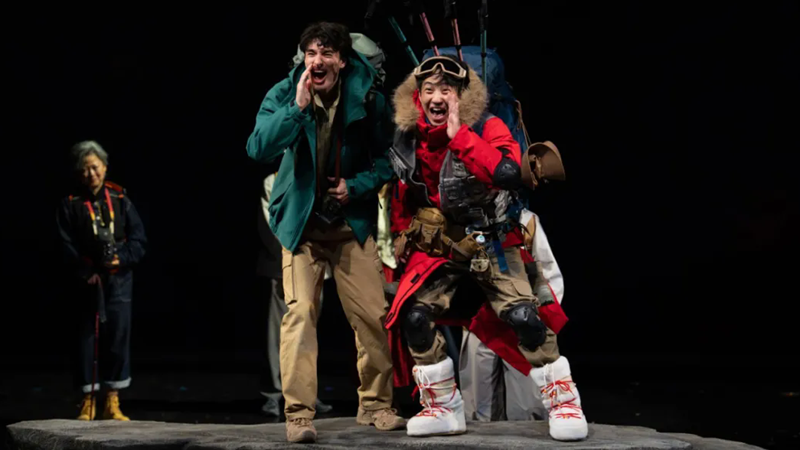
A single letter from home loosens the shackles that have held ZHAO Yan’s heart for years, allowing her to let go of regret and make peace with the past, and, at last, to let go of her lasting resentment at her father, ZHAO Zhiqiang. At the same time, the younger generation, or rather, their story of chasing dreams, helps ZHAO Zhiqiang reshape his understanding of the inheritance of traditional culture and the progress of the times. He understands the deeper meaning of preservation and innovation, of stability and of setting out. In the closing scene of the drama, everyone agrees to climb the Great Wall at Simatai together. As the vast landscape unfolds before them, each heart opens with it.



 Repertoire
 Films
Films
 Videos
 Podcast
 China NCPA Orchestra
 China NCPA Chorus
 NCPA Resident Singers
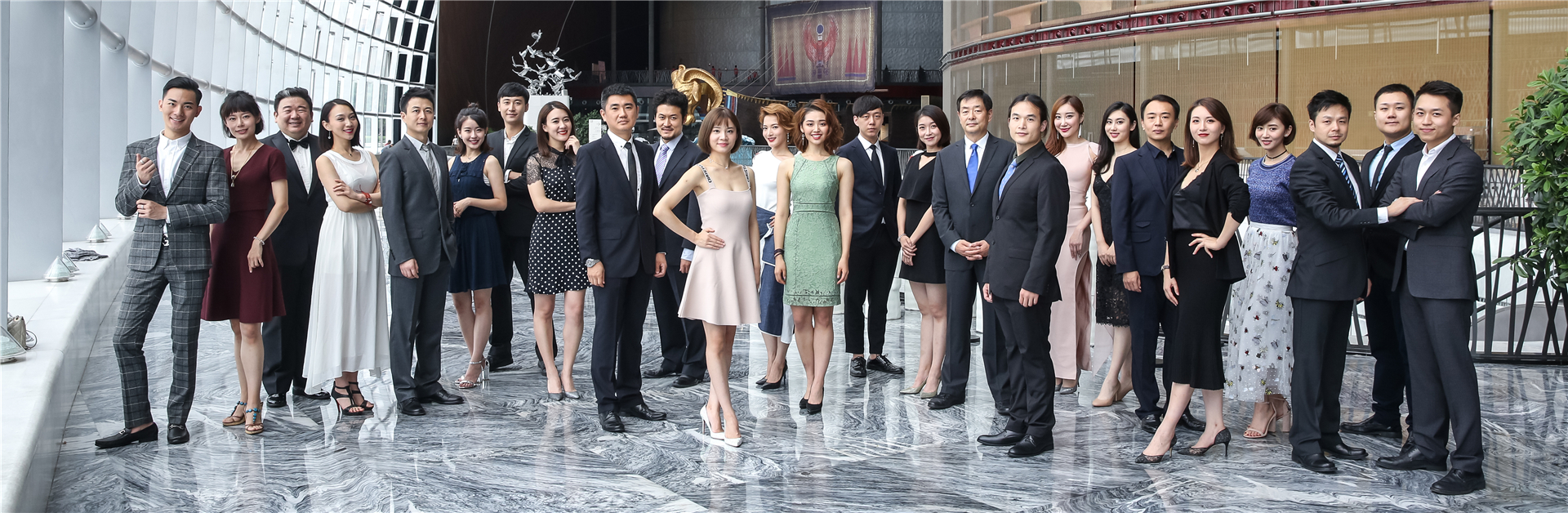 NCPA Drama Ensemble
 Buildings
Exhibitions
Buildings
Exhibitions
 Opening Hours
Services
Opening Hours
Services
 Western Cuisine
NCPA Café
Arts Gifts
Western Cuisine
NCPA Café
Arts Gifts