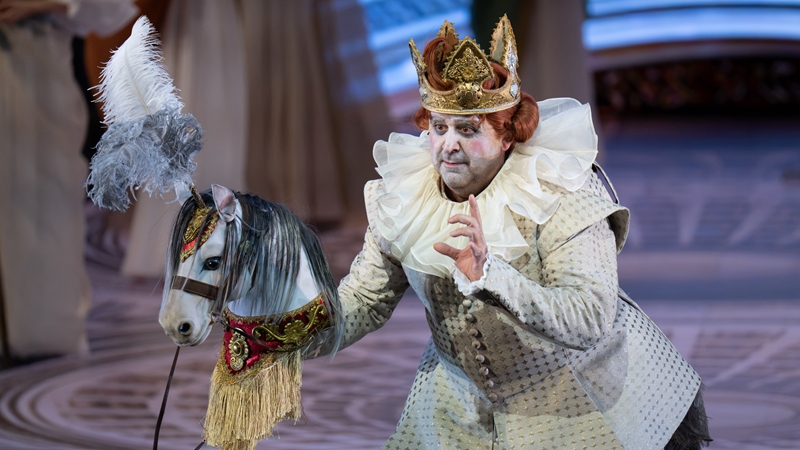
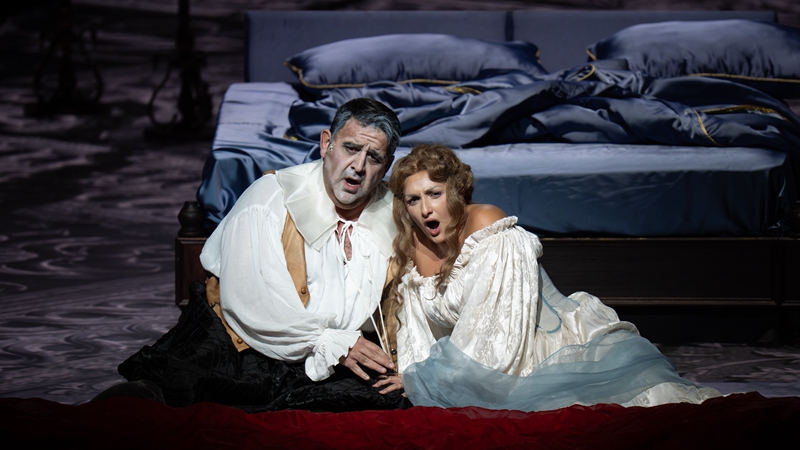
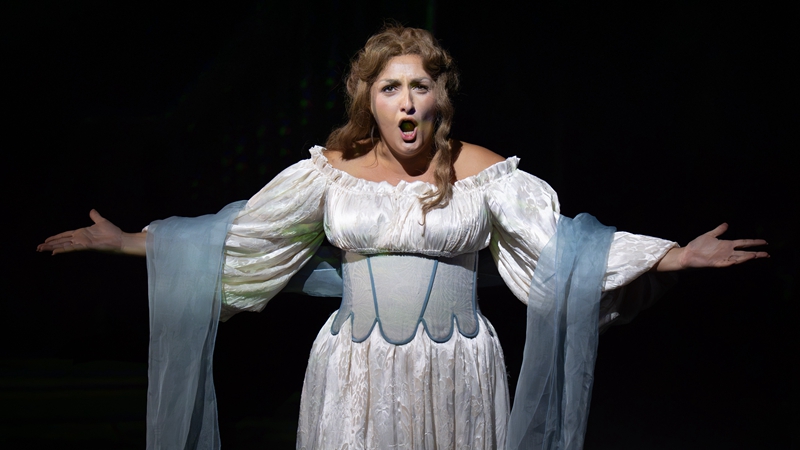
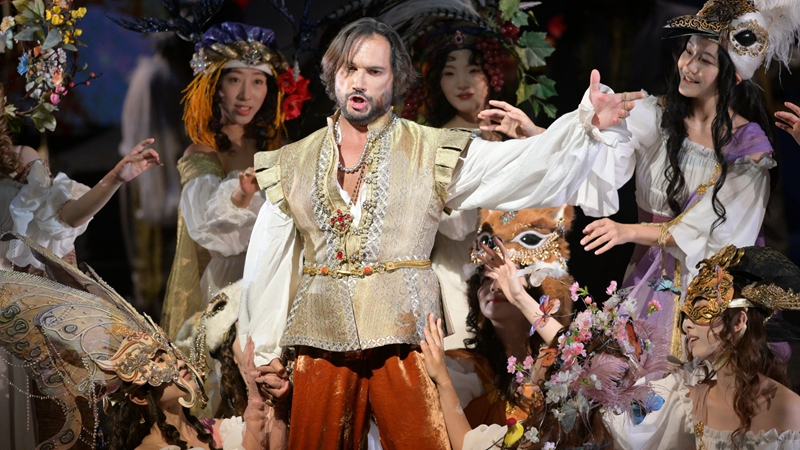
On the night of September 16
th, Verdi’s opera
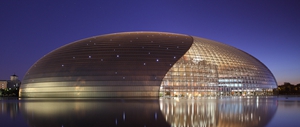
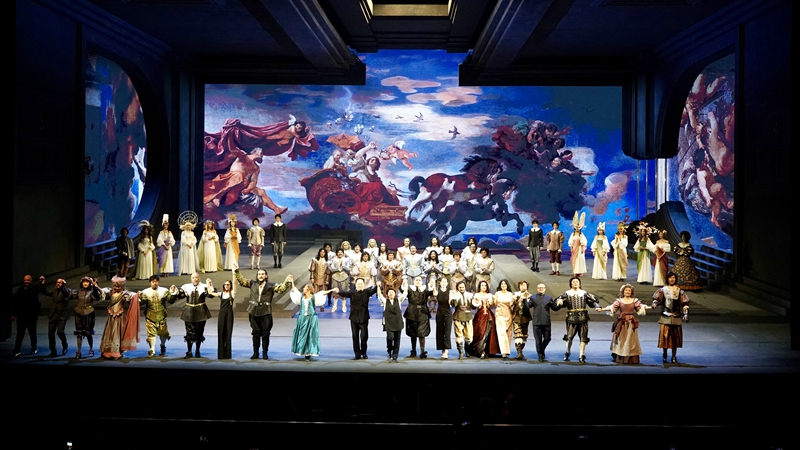
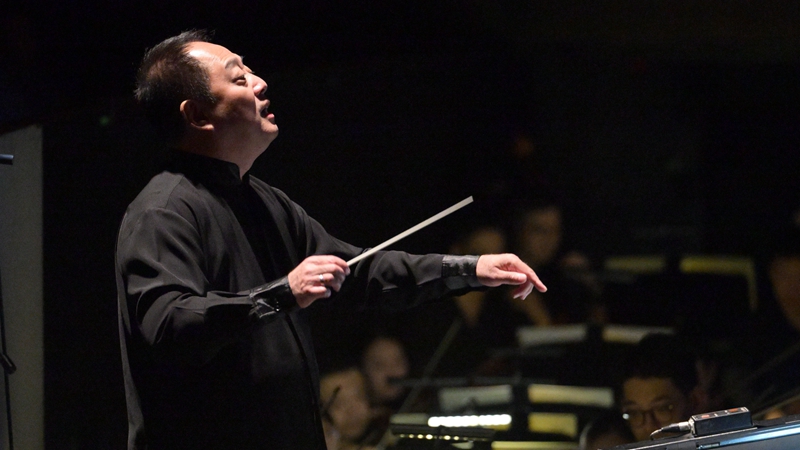
Rigoletto was staged at the NCPA Opera House. Under the baton of LÜ Jia, Music Director of the NCPA, a stellar lineup of vocal artists from home and abroad, alongside the NCPA Resident Singers, NCPA Chorus and NCPA Orchestra, delivered a soul-stirring performance. This masterpiece by Verdi, having been enduringly popular for 175 years, was once again presented impressively on the NCPA stage, drawing thunderous applause.
Written in 1851 as an adaptation of Victor Hugo’s drama
Le Roi S’Amuse,
Rigoletto is one of Verdi’s three immortal masterpieces of his middle period. It boasts a tightly woven dramatic structure, a vividly layered portrayal of characters and enduring, beautiful melodies. Deeper still, it brims with a profound humanism and a searching meditation on human nature. For the first time, Verdi placed a humble, imperfect yet spiritually rich figure at the centre of the stage, letting the light fall upon the love and fear hidden deepest within an ordinary heart. Through tangled fates, he probes into love, hatred, obsession and fragility in human nature - that’s how the opera can retain its soul-stirring power across centuries.
As the curtain was raised, under the masterful boton of LÜ Jia, the NCPA Orchestra performed Verdi’s music, fully unleashing the dramatic power of Verdi’s music. Musical lines rose and fell with the fate of the characters, as one classic aria rang out after another, creating a deeply moving atmosphere in the theatre.
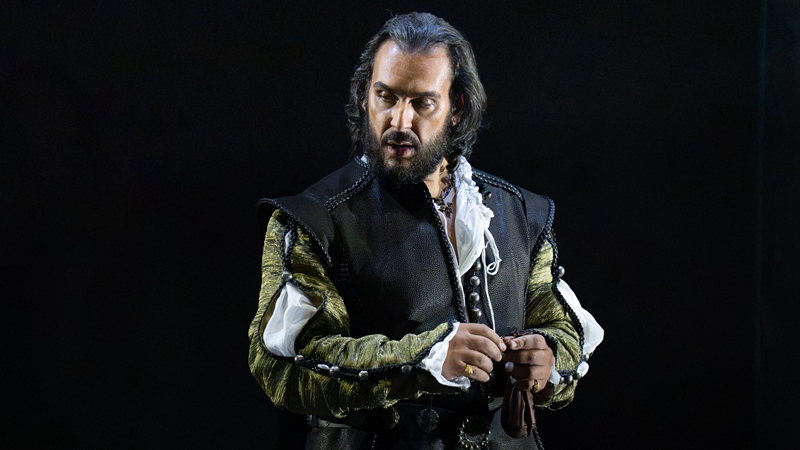
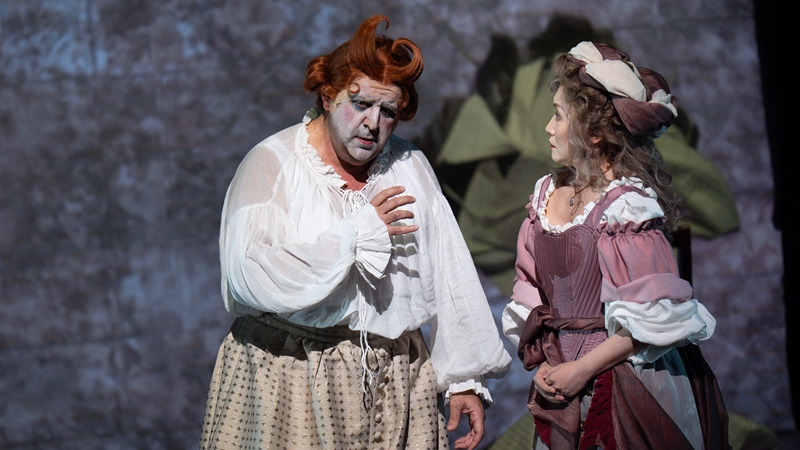
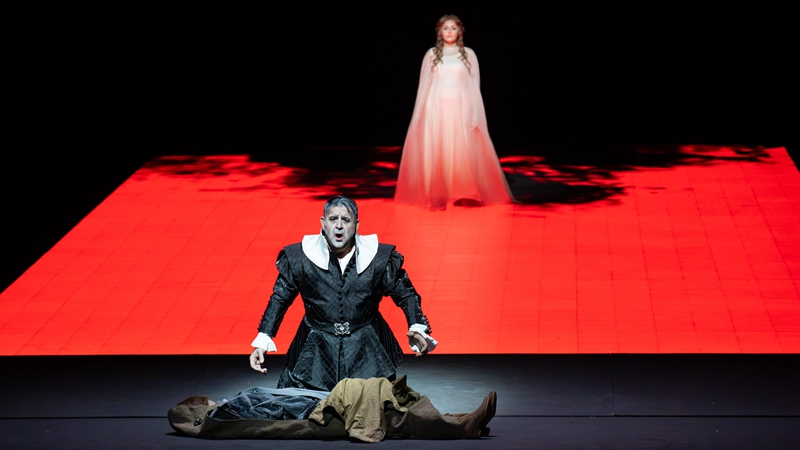
At the heart of the opera stands Rigoletto, a vivid, richly layered character. In the royal court, he is a sarcastic and mean jester, but in front of his daughter Gilda, he is a devoted father. Beside the Duke, he acts as an accomplice to evil, yet when his daughter is abducted, he is reduced to a victim toyed with mercilessly by fate.
With his steady, mellow voice and delicate artistry, Fabián Veloz gave a distinct portrayal of Rigoletto, particularly his complicated mentality. In the aria
Cortigiani, vil razza dannata, he carried Rigoletto from a roar of grief-stricken fury into a desperate plea for pity, rendering the transition and interplay between these two opposing emotion in a smooth manner. In Act II’s duet between Rigoletto and Gilda,
Si, vendetta, Fabián Veloz performed in a voice full of explosive power, driving the opera to its climax.
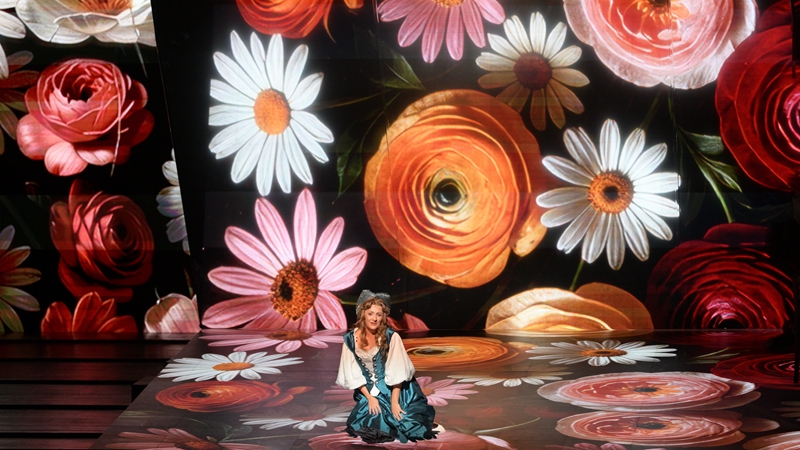
Gilda, sung by Daniela Cappiello, has a clear voice. Her aria
Caro nome is light and melodious, delicately capturing a young girl’s yearning for first love.
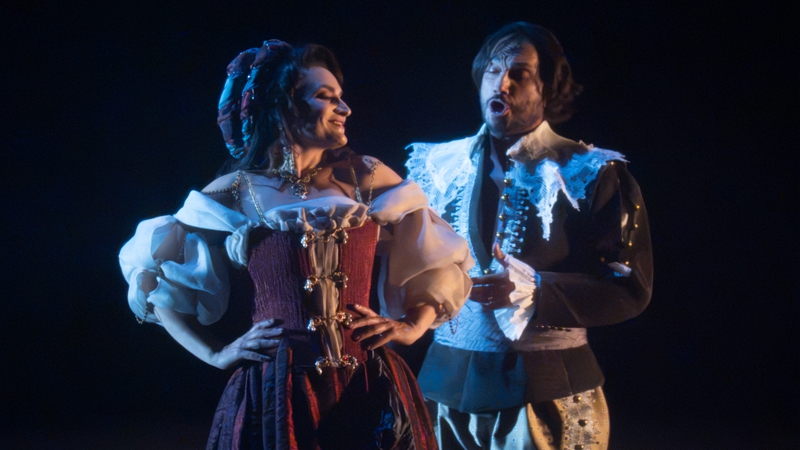
Francesco Demuro, who portrays the Duke of Mantua, has a bright, free-swinging vocal timbre. The aria La donna è mobile, which is known to every household, sounded ethereal in his performance, laying bare the Duke’s flippancy and his fickleness in love.
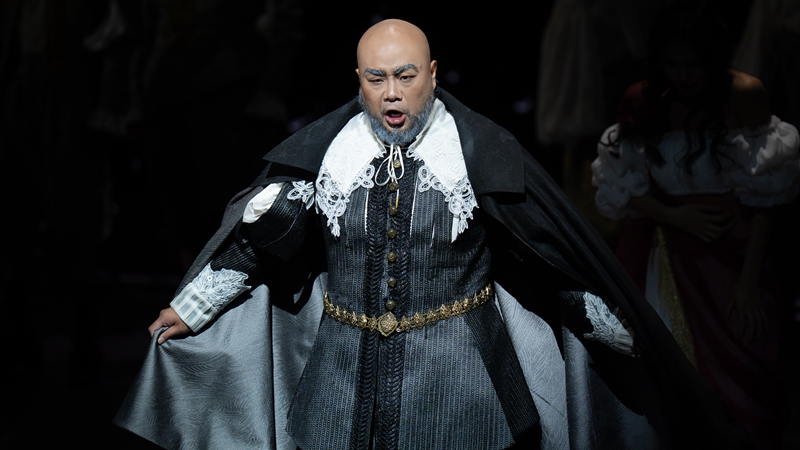
Antonio Di Matteo, who plays Sparafucile, sang in his low, magnetic voice, vividly rendering the assassin’s cruelty and mercenary greed.
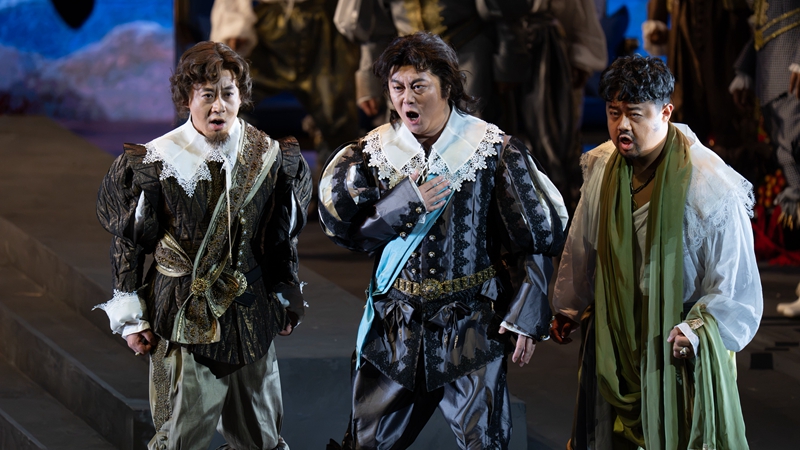
In Act III’s quartet Bella figlia dell’amore, Rigoletto and his daughter, the Duke of Mantua, and Maddalena, played by Nicole Piccolomini, vocalised together. With four utterly different states of mind unfurling across the stage, the strong dramatic tension earned a warm burst of applause.
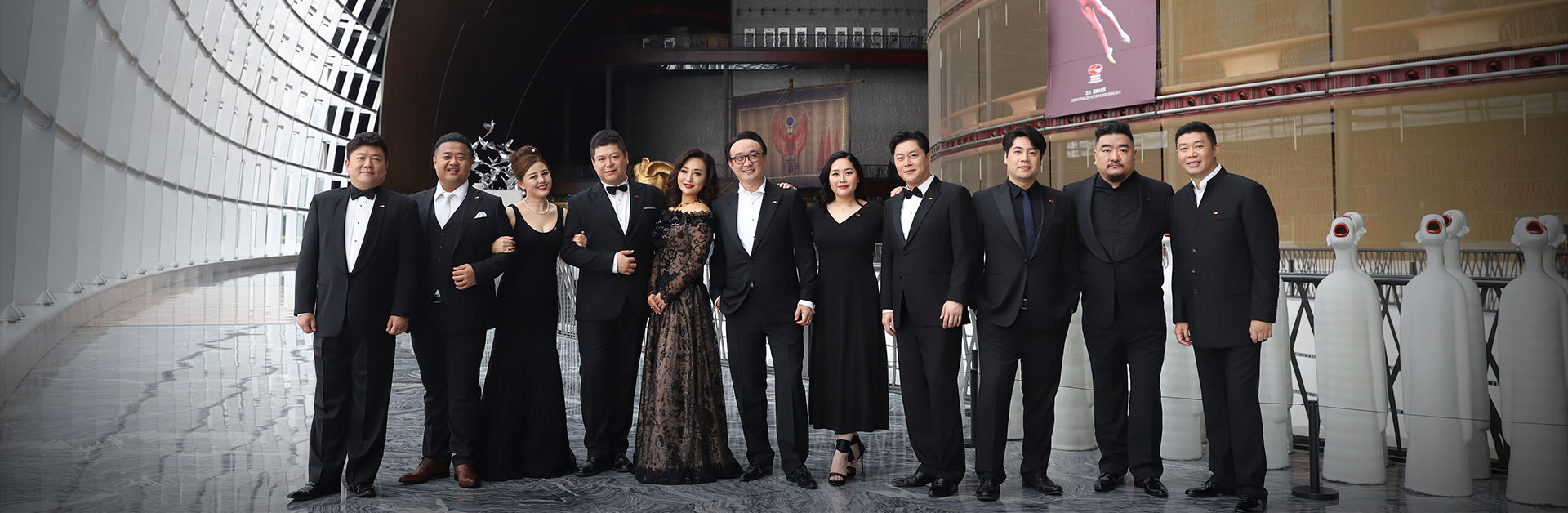
Other singers, including DU Ang, WANG Jing, WANG Hexiang, KOU Jing, TONG Ziyang, ZHANG Chuyan, GU Zibei, and CHEN Jian, gave brilliant performances as well, carrying all joys and sorrows into the ears of every listener.
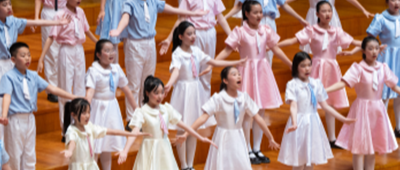
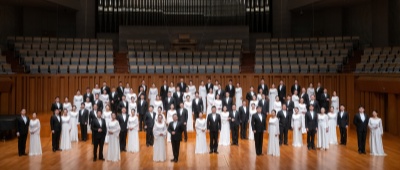
The China NCPA Chorus laid a full, well-layered choral foundation beneath the opera, echoing the soloists, and they jointly made a piece of musical tapestry for the human nature depicted by Verdi.
A Classic Reimagined in Contemporary Taste
Digital Media Reconstructs the Narrative of a Classic Opera
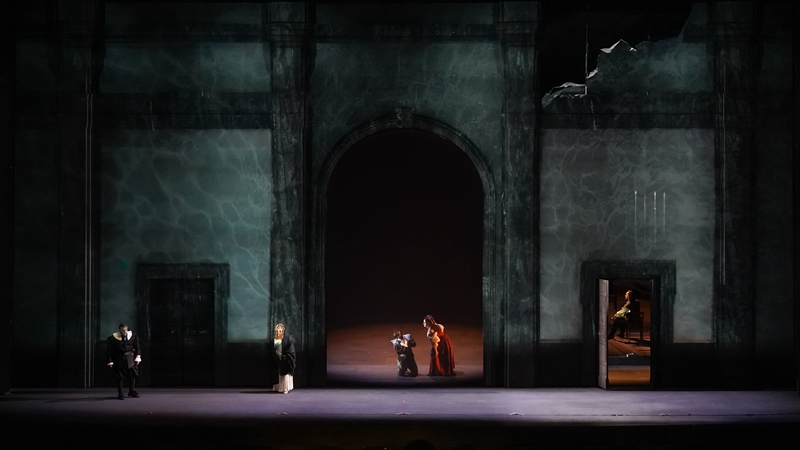
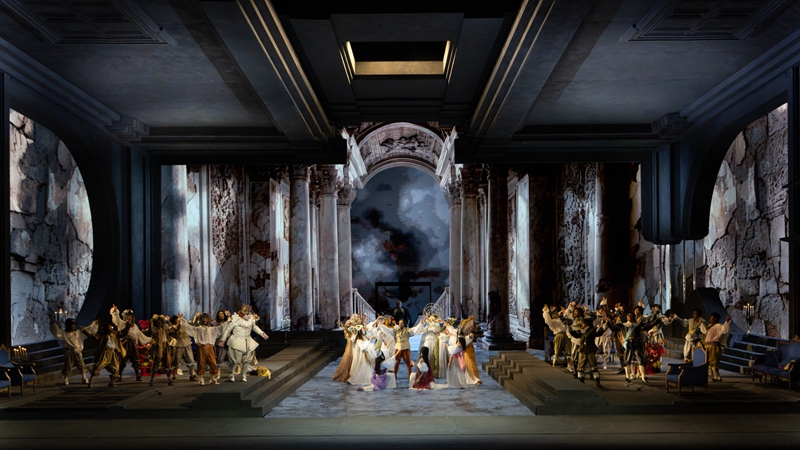
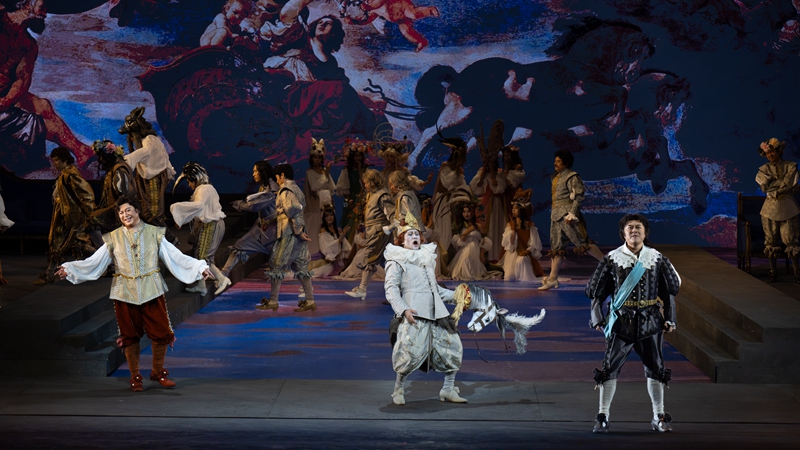
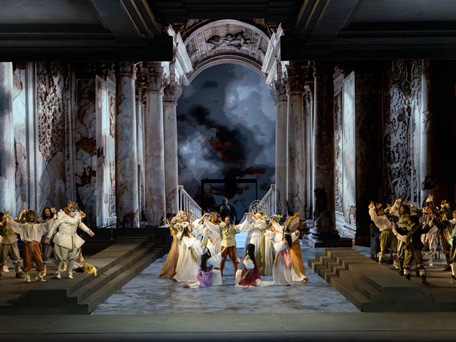
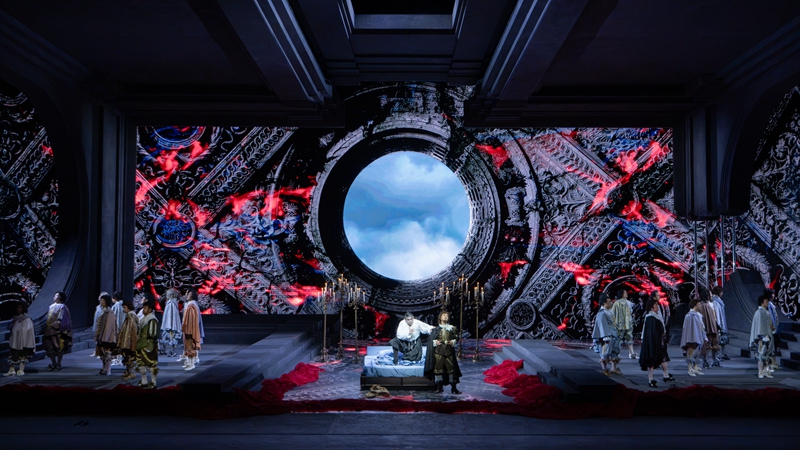
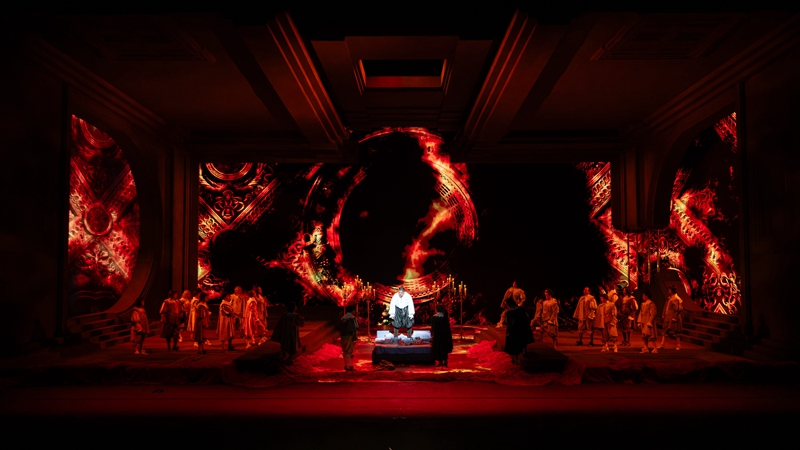
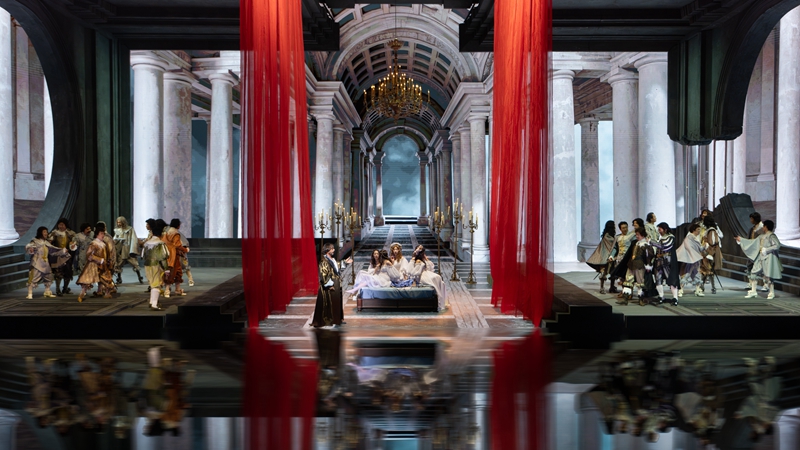
This production of Verdi’s Rigoletto is directed by Davide Livermore, an internationally renowned opera director. In two other co-productions with the NCPA, Lakmé and Die Walküre, Livermore already showed his flair for reimagining classic opera through digital media, and his interpretation of “stage aesthetics” - “technology should be in the service of emotion”. Here, in staging Rigoletto, he still goes beyond traditional realistic sets and uses LED digital screens and 3D light-and-shadow technology to build a stage space where physical and digital realms blur, presenting the ethos of the sixteenth-century Italian royal court.
The court’s cold gold and muted grey lay bare the vanity and emptiness hidden beneath aristocratic luxury. The dim soft light and dazzling flowers in Gilda’s chamber set off a young girl’s pure fantasy. The sombre interplay of red and black steeps death and betrayal in fatalism. The stage setting, which is minimalist yet charged with emotional tension, lends this century-old classic a more contemporary aesthetic and a stronger hold on the audience.
On September 17
th, another lineup of singers, including Leon Kim, ZHANG Wenqin, WANG Chong, GUAN Zhijing, and WANG Hongyao, will take the stage in this timeless tragedy of human nature, with this run continuing through September 20
th.



 Repertoire
 Films
Films
 Videos
 Podcast
 China NCPA Orchestra
 China NCPA Chorus
 NCPA Resident Singers
 NCPA Drama Ensemble
 Buildings
Exhibitions
Buildings
Exhibitions
 Opening Hours
Services
Opening Hours
Services
 Western Cuisine
NCPA Café
Arts Gifts
Western Cuisine
NCPA Café
Arts Gifts