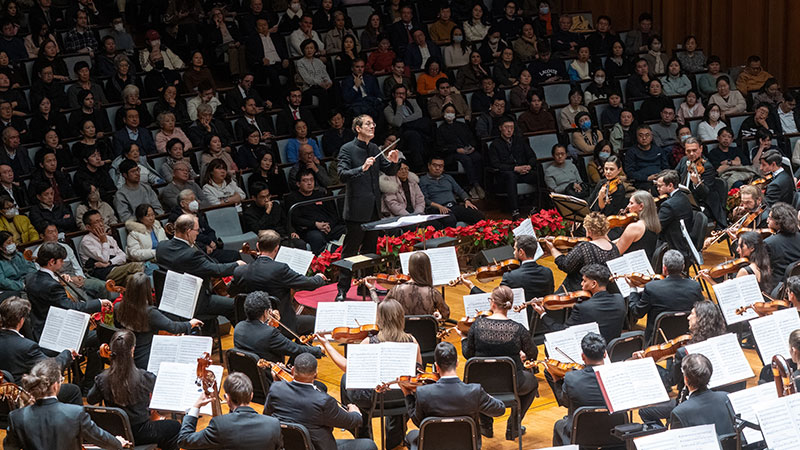
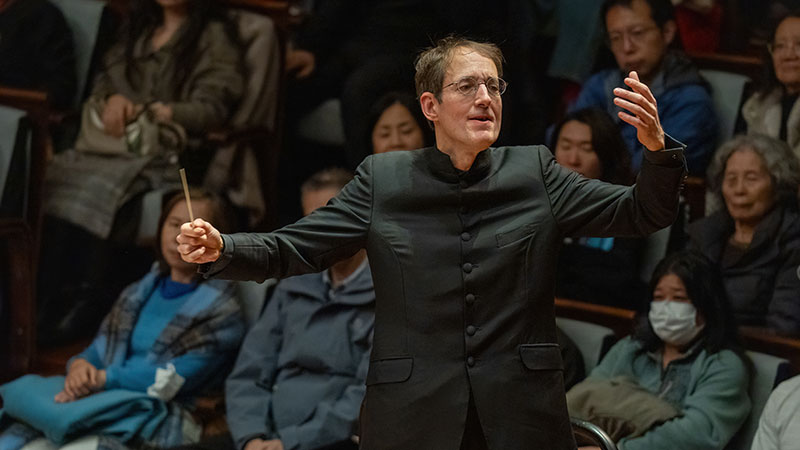
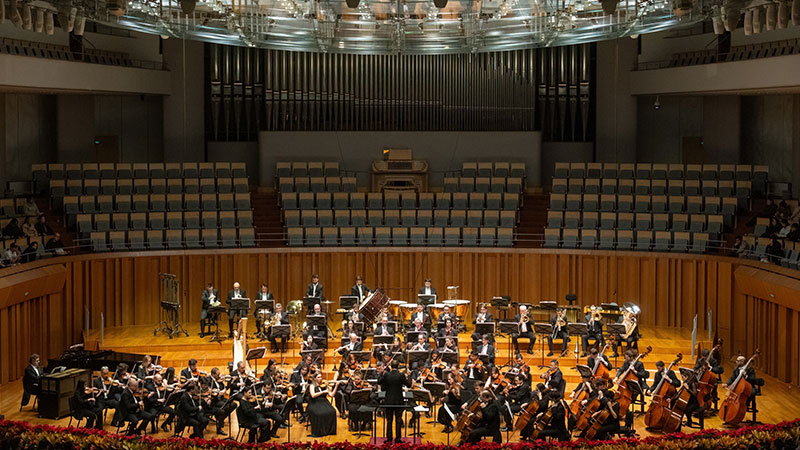
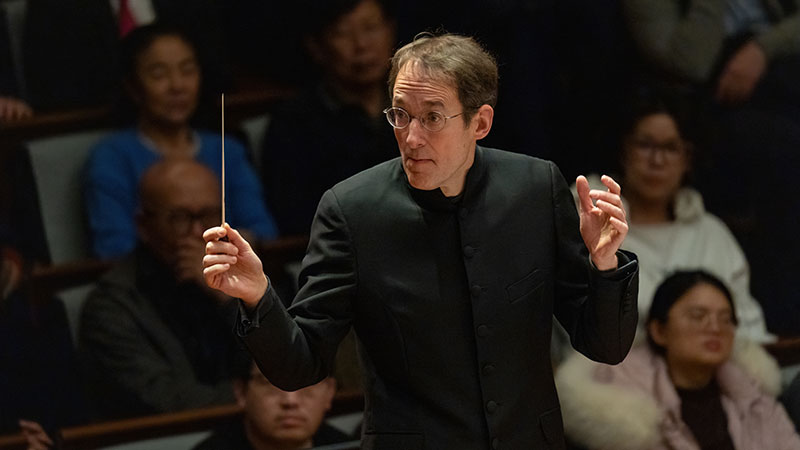
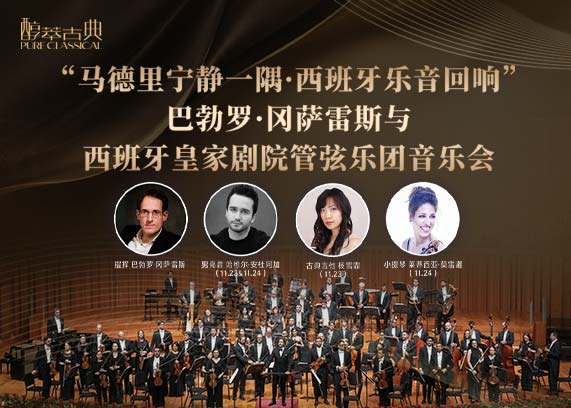
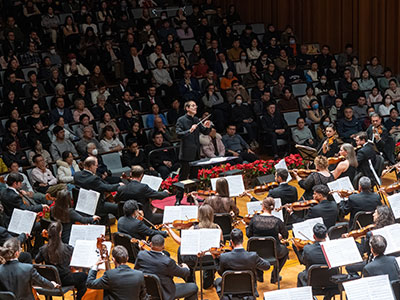
On November 23rd, Pablo González took the baton to lead the Teatro Real Orchestra and the soloists in the first of two consecutive concerts, offering the audience a symphonic feast of authentic Spanish colour.
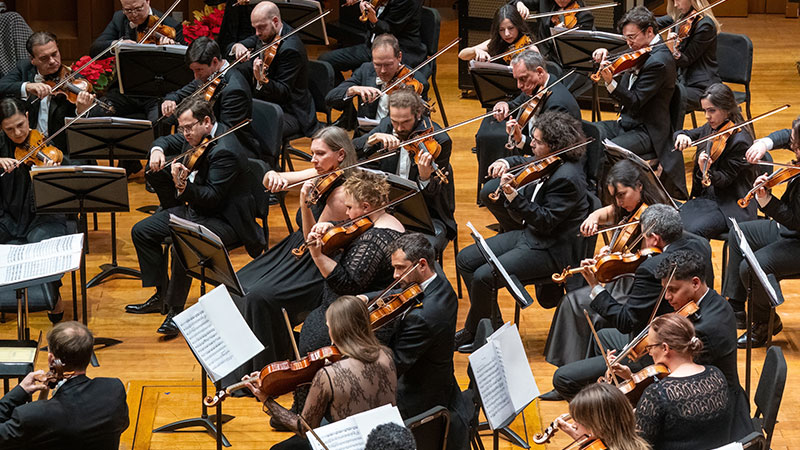
Rooted in the Teatro Real, the Teatro Real Orchestra has long been steeped in opera and symphonic repertoire, bringing to Spanish music an instinctive, innate feel. In this concert, as Pablo González’s lean, tensile gestures rose and fell, the orchestral texture unfolded in layer upon layer of sound, unfurling the singular, sun-drenched palette of Iberian music.
The first half opened with Joaquín Turina’s Danzas fantásticas, Op. 22, a work the composer dedicated to his wife and a cornerstone of the Spanish nationalist school. Drawing on the novel La orgía by José Más and on folk music from Seville in southern Spain, it unfolds along melodic lines that are graceful and beguiling, brimming with Spanish ardour and vitality. Its rhythm is built on characteristic patterns of Spanish folk dance, and its three movements are sharply contrasted: the spirited fervour of the Aragonese jota in Exaltación, the dreamlike haze of the 5/8 zortziko in Ensueño, and the unrestrained revelry of the closing Andalusian farruca in Orgía. Under Pablo González’s baton, the orchestra’s sound took on vivid relief, and the Andalusian spirit swept through the hall.
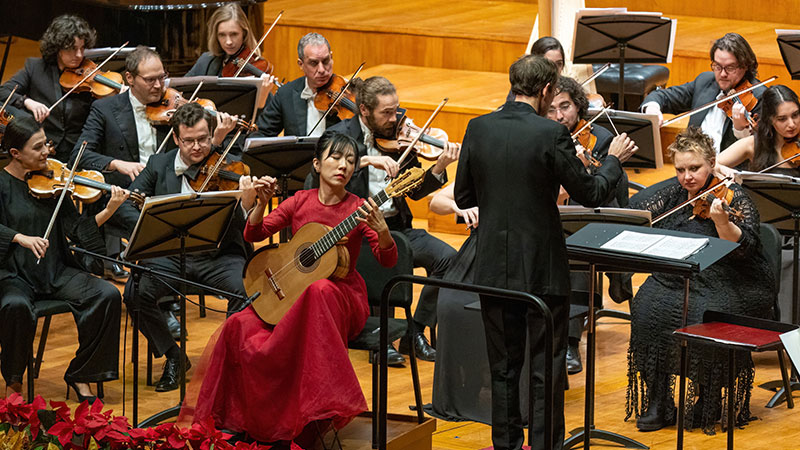
The stage lights then dimmed and narrowed as YANG Xuefei took the stage with her classical guitar to perform Joaquín Rodrigo’s timeless Concierto de Aranjuez. Joaquín Rodrigo, the blind Spanish composer, never played the guitar and never wrote another work for it, yet he produced what is hailed as one of the three great guitar concertos. Here the guitar’s warm, rounded tone entered into gentle dialogue with the orchestra. In the slow second movement, the guitar, alongside the English horn, took up the melody that has moved countless listeners—tender and lingering with a faint melancholy—before the soloist brought it to a limpid close. The finale was light and free-spirited, the guitar’s nimble lines interweaving with the orchestra and building to a climax over impassioned accompaniment. As the last note faded away, the hall erupted in thunderous applause.
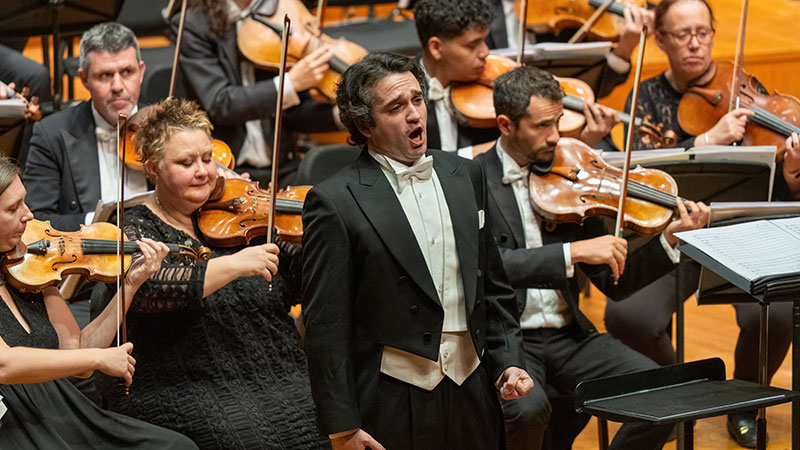
After the interval, tenor Xabier Anduaga took the stage with a selection of zarzuela classics. A Spanish form of lyric theatre, zarzuela combines song, drama, and the vitality of folk dance. The moment Anduaga’s bright, mellow voice rang out, the audience was transported to the world of the Spanish theatres. Through the contours of his singing, he brought out all the ardour, romance, and humour of the stories, while the orchestra’s accompaniment was nimble and sympathetic, its melodies swaying with every shift of emotion, until a rich, unmistakably Spanish theatricality pervaded the hall.
The concert closed with Capriccio espagnol, Op. 34, a work alive with southern sunshine and flamenco fervour—yet written by a Russian composer, Nikolai Rimsky-Korsakov, who never set foot in Spain. The piece is not only a dazzling jewel of the nineteenth-century orchestral repertoire but also a model of orchestration that later composers have studied and revered. Tchaikovsky was so impressed by it that he carried the score with him for years, studying its orchestration, hailing it as “a colossal masterpiece of instrumentation” while humbly describing himself, by comparison, as a mere craftsman tinkering with music.
On November 24
th at 19:30 PM, on the same stage, Pablo González again led the Teatro Real Orchestra, joined by soloists, in an entirely new programme. Alongside a rich selection of zarzuela classics, the programme included Manuel de Falla’s ballet music
The Three-Cornered Hat, Suites Nos. 1 and 2—Falla being a central figure of the twentieth-century Spanish nationalist school of music. At once breathing with the heat of dance and sustained by the structural control of orchestral writing, the work holds an important place in twentieth-century ballet music. Also on the programme is Édouard Lalo’s
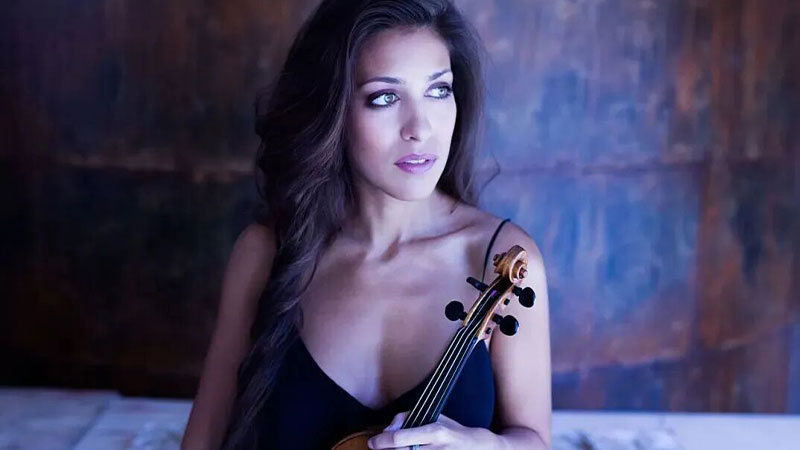
Symphonie espagnole, Op. 21 for violin and orchestra, one of the best-loved works in the violin repertoire, performed by Spanish violinist Leticia Moreno. A “Spain” imagined by a French composer is returned to its native colours by a Spanish player, as the music continues to reveal the myriad charms of the Spanish music.



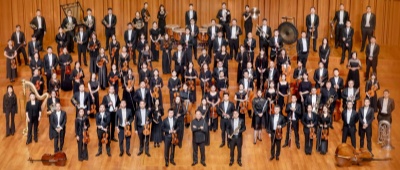 China NCPA Orchestra
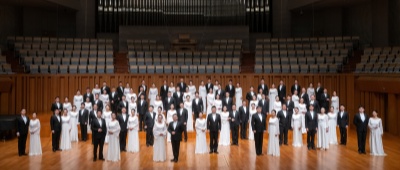 China NCPA Chorus
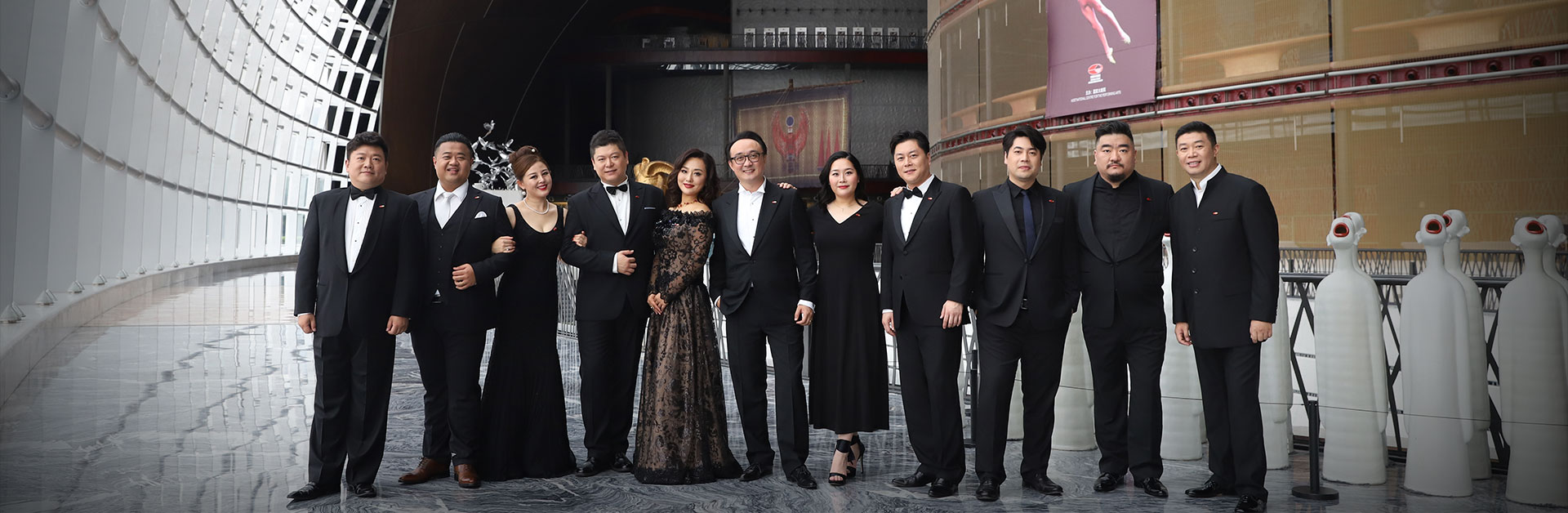 NCPA Resident Singers
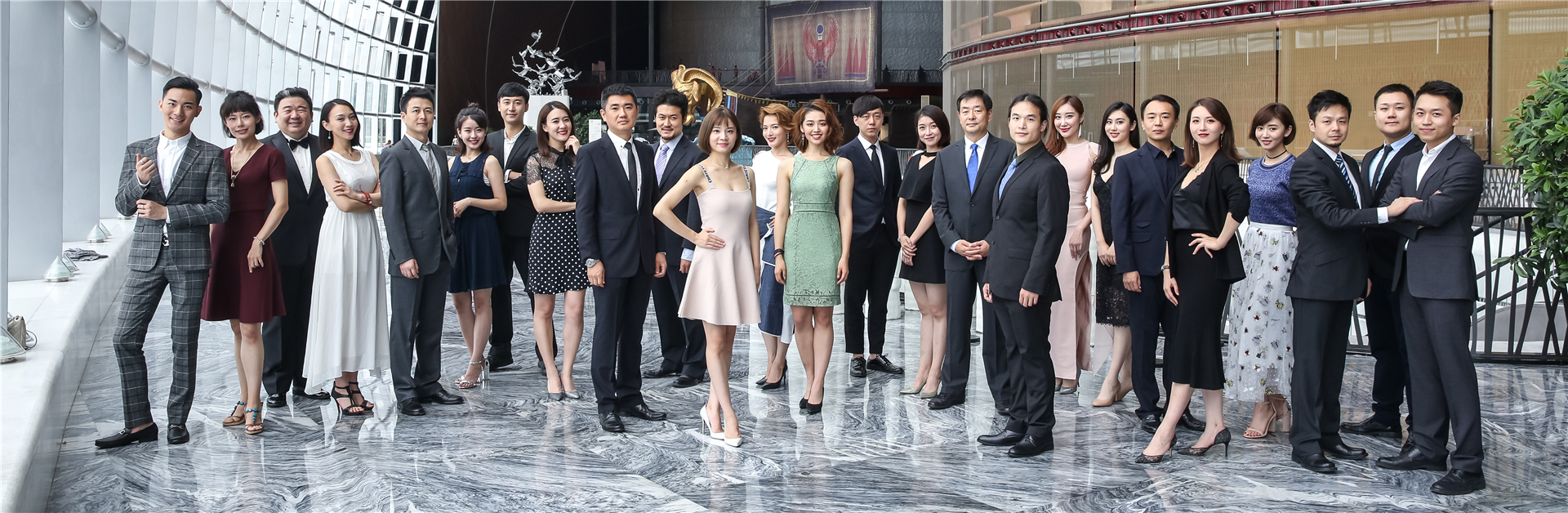 NCPA Drama Ensemble
 Buildings
Exhibitions
 Opening Hours
Services
 Western Cuisine
NCPA Café
Arts Gifts
 Repertoire
 Videos
 Podcast