-
About
-
Synopsis
-
Creative
-
Artist
-
Presenter
Guidance
The detailed information will be coming soon. Click our Full Calendar and explore more performance in NCPA.
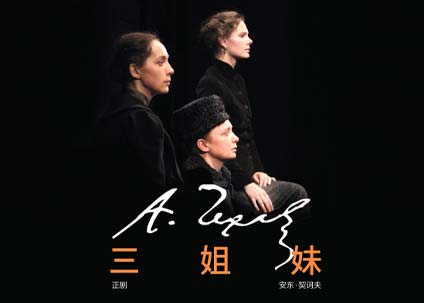
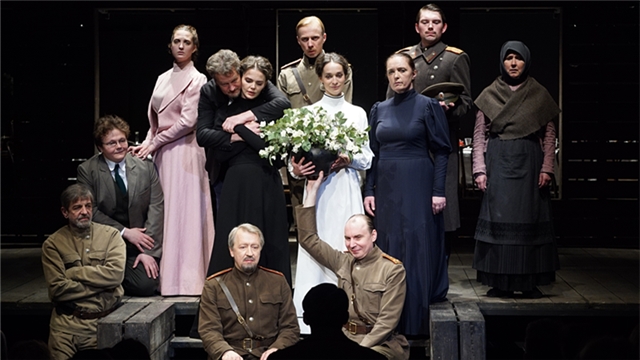
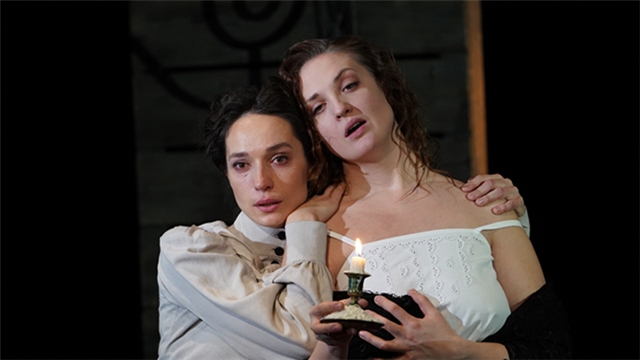
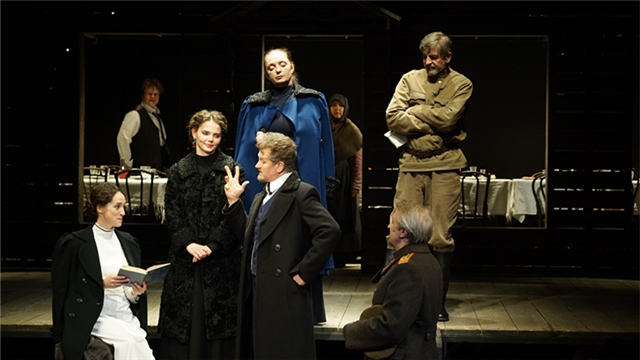
Three Sisters is one of Anton Chekhov’s most representative works. Written in 1900, it depicts how three sisters, Olga, Masha and Irina, chase their dreams in a Russian town where they live. They long to return to Moscow for a more meaningful life, but they are always dragged back to their mundane and even hopeless reality.
Since its premiere in 1901, Three Sisters has been seen as a landmark in the history of world theatre. It was written by Chekhov at the pinnacle of his career, symbolising a shift in modern theatre from traditional structure to deep psychological description and emotional introspection. This drama laid the foundation for Modernist Theatre in terms of language and presentation, exerting an influence on Stanislavsky, Brecht and Pirandello, even making psychological realism prevalent as a stage tradition in the 20th century.
Having been reinterpreted and rearranged by many directors on a global scale, Three Sisters is one of the most challenging dramas that are staged the most frequently at contemporary theatres. It reveals the social rifts ubiquitous in Russia in the 19th century. It also touches upon what baffles all mankind and brings hopes to them, revealing their desire for something meaningful, their yearning for change and their continuous attempt to stand upon their dignity in an inescapable life.
For this very reason, Three Sisters is extolled as “the quietest yet most powerful narrative on the stage.” It is a mental map far beyond Russia.
Honours and Awards
Three Sisters was awarded the title of Best Drama by the St. Petersburg Council of Culture in 2010, nominated for the Konstantin Stanislavsky Award in 2010/2011, and presented with the Golden Sofit Award in 2011.
From the Director
This in fact is one of the greatest plays of the world repertory, one of Chekov’s most complex (I’ve said once already that Uncle Vanya for me is his finest, most harmonious play, and Three Sisters – one of most complex and maybe one of the most disharmonious stories by Checkov). This is a whole chunk of life seen by Chekov through his personality, his imagination, his most painful acquiescence of his illness, his skeptically-optimistic view of human condition, his knowledge of life which proceeds often in spite of our wishes and fears. You have to fight this life, you have to fight your fate, even though you know you will lose. Chekov speaks with passion and eloquence about the hopelessness of our life, about the tragic discrepancies between our yearnings and the reality, about the vital importance of staying true to oneself and preserving your dignity.
Three Sisters is a play about people with ideals. You might call them intellectuals, but I think people with ideals exist in all levels of society, the same way in all levels of society you find people with no ideals and people who’ve lost their ideals. I think today too many of us in the whole world understand only too well what are unfulfilled hopes, fallen-through plans, lost illusions, impossible loves. We all unfortunately understand the universal language of loss. We understand the stern language in which life speaks to us - and in this life we have to stay true to ourselves and preserve our personal dignity at any cost.
—Lev Dodin
Credits
Director: Lev Dodin
Set Designer & Costume Designer: Alexander Borovskiy
Artistic Collaboration: Valery Galendeev
Lighting Designer: Damir Ismagilov
Dancing Professor: Yuri Vasilkov
Military Consultant: Colonel Nikolay Morozov
Head of Music Department: Michail Alexandrov
Cast
Masha: Elizaveta Boiarskaia
Olga: Irina Tychinina
Irina: Ekaterina Tarasova
Alexander Vershinin: Igor Chernevich
Ivan Chebutikin: Sergei Kuryshev
Nicolai Tuzenbach: Oleg Ryazantzev
Feodor Kuligin: Sergey Vlasov
Performed in Russian with surtitles in Chinese
In a remote Russian town live three sisters - Olga, Masha and Irina, who always miss the days when they spent their childhood in Moscow. In the seats, you can appreciate not only the supplemented story of the two protagonists, but also a profound reflection on life and the times.
After their father’s death, the three sisters find themselves trapped in their dreary and stagnant life. Olga moils at school all day long. Masha gradually withers in her bleak and suffocating marriage. Yet the youngest, Irina, still cherishes the hope, believing that everything will eventually turn out for the best as long as she works hard to make her life better.
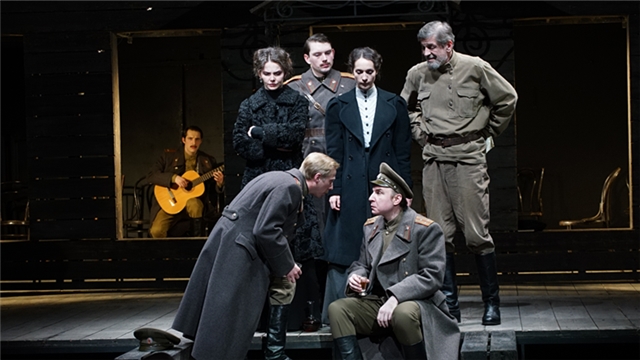
The army officers stationed in the town bring a flurry of excitement and a fleeting delusion to this family, which is gradually falling into silence. Colonel Vershinin, who is full of ideals and good at thinking critically, falls quietly in dangerous yet torrid love with Masha. Baron Tuzenbach, an idealist, falls deeply in love with Irina, yet his feelings are not reciprocated at all. Solyony, a gloomy lone wolf, plots a tragedy with jealousy and despair.
Meanwhile, the sisters’ brother, Andre, sinks into depravity step by step. He marries Natasha, an ambitious and debt-ridden woman, getting increasingly marginalised in the family. The home, which is warm and full of memories, gradually becomes strange and oppressive.
As each year goes by, a fire suddenly breaks out, followed by a succession of stageings of romance, marriage, betrayal and a duel. The army leaves the town, with their friends going away one after another, yet the three sisters remain where they are. When Tuzenbach dies in the duel, Irina’s last hope is dashed. Amidst the music played to see the army off, the three sisters hug tightly together, trying to believe that:
They must live on even if life is full of pain.
There will be one day when people understand why all this happens.
There will be one day when life gets better.
Lev DodinDirector
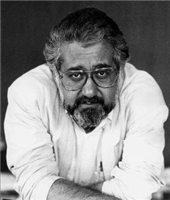
Lev Dodin
Being one of the most influential directors in the world, Lev Dodin was born in 1944 in Siberia. As a youth, he studied theater at the Leningrad Young Artists’ Theatre. After high school graduation, he attended Leningrad Theatre Institute, studying with Boris Zon, a student of Stanislavsky.
Dodin’s directorial debut was in 1966 with a telecast of First Love based on the story by Ivan Turgenev, followed by dozens of shows at theaters in St. Petersburg, Moscow, and internationally. He gradually established a highly distinctive stage style.
Since becoming Maly’s artistic director and making it more influential in 1983, his works include Brothers and Sisters, Lord of the Flies, The Devils, Stars in the Morning Sky, The Cherry Orchard, Platonov/A Play with No Name, Uncle Vanya, Life and Fate, Love’s Labour’s Lost, Long Day’s Journey into Night, Three Sisters, Love and Intrigue, Enemy of the People, Hamlet, Brothers Karamazov, The Seagull and King Lear.
His opera productions include Elektra for the Salzburg Festival, Mazeppa at Milan’s La Scala, Lady Macbeth of the Mtsensk District for Florence’s Maggio Musicale Festival, The Demon at Paris Châtelet, The Queen of Spades (Amsterdam, Florence, Paris, Moscow), Chovanshina at the Vienna State Opera and Luisa Miller at the Verdi Festival, Parma.
In 1967, Dodin began to teach acting and directing and has been teaching since. He is a professor at the St. Petersburg Academy of Theatrical Arts and chair of the directing department. He has taught several generations of actors and directors; many are currently working at the Maly Drama Theatre.
During more than 30 years of international touring, Dodin’s productions for Maly Drama Theatre have garnered many international laurels, including a Laurence Olivier Award and the European Theatre Award (2000). He is the Honorary President of the Union of European Theatres.
Alexander BorovskySet Designer
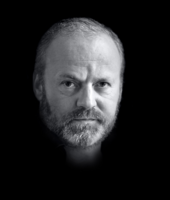
Alexander Borovsky
Alexander Borovsky was born in Kiev and graduated from the Moscow Art Theatre School (taught by master professor I. Maligina) in 1983.
He is the designer-in-chief at the Theatre Art Studio, Moscow, and invited designer-in-chief at the Maly Drama Theatre, St-Peterburg.
Throughout his career he has designed more than 150 productions – at Sovremennik Theatre, Moscow Art Theatre, Maly Theatre, Bolshoi Theatre, Maly Drama Theatre of St-Petersburg, Alexandrinsky Theatre and others. As a set designer, Borovsky has worked in many theaters in Finland, Bulgaria, Great Britain, USA, Denmark, Austria, Italy and other countries.
Borovsky is a repeat winner of theatre prizes: “Golden Mask” Russian National Theatre Award for Best Designer in Drama, Chrystal Turandot, the Stanislavsky Award and others. In 2016 he was awarded the silver medal of the Russian Arts Academy. In 2018 was awarded the City of Moscow Prize in the “Visual Arts” nomination (for the set-design of performances in recent years and artistic design of the interiors of Theatre Art studio theatre).
Borovsky began working with Lev Dodin in 2007 on the performance of Love’s Labour’s Lost. This collaboration has since thrived, including Long Day’s Journey Into Night (2008), Three Sisters (2010), Love and Intrigue (2012), Enemy of the People (2013), The Cherry Orchard (2014), Hamlet (2016), Fear Love Despair (2017), Brothers Karamazov (2020), The Seagull (2022), Ward N 6 (2024), Romeo and Julliet in the Dusk (2025) and Family Affair (2025) at Maly Drama Theatre of St-Petersburg. He has also designed Chovanshina at the Vienna State Opera and Louise Miller for the Verdi Festival in Parma, both directed by Lev Dodin.
Damir IsmagilovLighting Designer
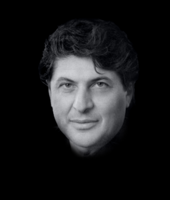
Damir Ismagilov
Damir Ismagilov is a famous Russian lighting designer. He started working for the Chekhov Moscow Art Theatre in 1977 and had joined the Bolshoi Theatre in 1996 (promoted to chief lighting designer 2002-2025).
In all he has lit over 450 productions, including: Boris Godunov, The Cherry Orchard, The Three Sisters, King Lear, Swan Lake, Ward No. 6,Aida, Macbeth and Mazeppa. He has collaborated with Lev Dodin and Alexander Borovsky for a long time.
He has also worked at the Maryinsky Theatre, The Maly Drama Theatre – Theatre de l`Europe of St Petersburg, The Russian Academic Youth Theatre and Bolshoi Theatre. He is the author of the book Theatre Lighting.
Elizaveta Boiarskaiaas Masha
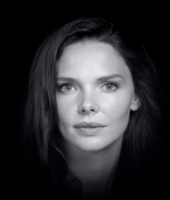
Elizaveta Boiarskaia
Graduated from St. Petersburg State Theatre Arts Academy (Lev Dodin’s class) in 2007, Elizaveta has been an actress of the Maly Drama Theatre since 2006. She has been exalted as Deserved Actor of Russia. Her roles include Masha in Three Sisters, Louise in Love and Intrigue, Varvara in Brothers and Sisters, Varya in Cherry Orchard (Vesrion 2015), Ophelia in Hamlet, Elena in Uncle Vanya, Ekaterina in Brothers Karamazov, Arkadina in The Seagull. She is Winner of the Golden Sofit Award 2006, Winner of the Triumph Independent Prize, Winner of the Golden Mask Award 2024 for the role of Arkadina in The Seagull (best duet with Igor Chernevich as Trigorin), Winner of the Stanislavsky Award, Winner of the National Film Prize “Golden Eagle” for the role of Anna Karenina, and of several other theatre and film prizes.
Irina Tychininaas Olga
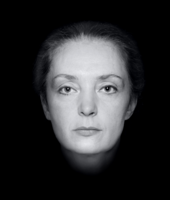
Irina Tychinina
Graduated in 1989 from the Leningrad State Institute of Theatre Music and Cinematography (Lev Dodin's class), she is Deserved Actor of Russia. She plays Katrina Stockman in Enemy of the People, Researcher in Pasternak, The Bacchanal, Anfisa in Brothers and Sisters, Olga in Three Sisters (Version 2015) and other roles. She is Winner of the Golden Sofit theatre prize 2011.
Ekaterina Tarasovaas Irina
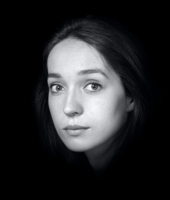
Ekaterina Tarasova
Ekaterina Tarasova was graduated from the St. Petersburg State Theatre Arts Academy (Veniamin Filshtinsky’s class) in 2011, and since 2010 she has been an actress at the Maly Drama Theatre. She plays Anisia in Brothers and Sisters, Sonia in Uncle Vanya (2015), Louise in Love and Intrigue, Irina in Three Sisters, Ania in Cherry Orchard, Ophelia in Hamlet, Grushenka in Brothers Karamazov and other roles.
Igor Chernevichas Alexander Vershinin
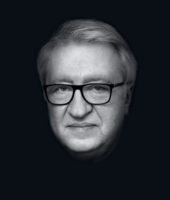
Igor Chernevich
In 1989, Igor Chernevich graduated from the Leningrad State Institute of Theatre Music and Cinematography (Lev Dodin’s class) and joined the company of the Maly Drama Theatre. As a Deserved Actor of Russia, Igor plays Astrov in Uncle Vanya, Vershinin in Three Sisters, Gaev in Cherry Orchard, Wurm in Love and Intrigue, Claudius in Hamlet, Dmitriy in Brothers Karamazov, Trigorin in The Seagull, and Gromov in Ward N6. She is Winner of the Strigelchik Theatre prize for the role of Gaev in Cherry Orchard and Winner of the Golden Sofit Award 2021.
Sergei Kuryshevas Ivan Chebutikin
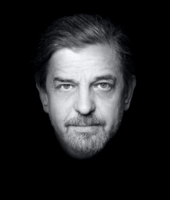
Sergei Kuryshev
Graduated from the Leningrad State Institute of Theatre Music and Cinematography (Lev Dodin’s class) in 1989, Sergei Kuryshev has joined the company of the Maly Drama Theatre in 1989. As People’s Artist of Russia, he plays Voinitsky in Uncle Vanya, Lear in King Lear, Chebutikin in Three Sisters, Thomas Stockman in Enemy of the People, Firs in Cherry Orchard, Sorin in The Seagull, Dr. Ragin in Ward N6 and other roles. He is Winner of the Golden Sofit Award 1998, 2013, 2024, Winner of the Golden Mask Award 2004 for the role of Voynitskiy in Uncle Vanya and Winner of the Stanislavsky Award.
Oleg Ryazantzevas Nicolai Tuzenbach
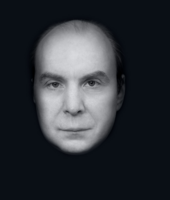
Oleg Ryazantzev
Oleg Ryazantzev graduated from the St. Petersburg State Theatre Arts Academy (Andrey Andreyev`s class). Since 2005 he has been an actor of the Maly Drama Theatre. He has played Lukashin in Brothers and Sisters, Waffles in Uncle Vanya (2015), Tuzenbach in Three Sisters, Petya Trofimov in Cherry Orchard, Smerdiakov in Brothers Karamazov, Medvedenko in The Seagull, Doctor in Ward N6 and other roles. He is Winner of the Golden Sofit theatre prize 2021.
Sergey Vlasovas Feodor Kuligin
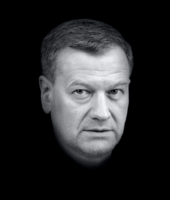
Sergey Vlasov
Graduated from the St. Petersburg State Theatre Arts Academy in 1979 (class of Arkady Katsman and Lev Dodin), Sergey Vlasov has been an actor at the Maly Drama Theatre since 1981. He has been exalted as Deserved Actor of Russia. He plays Duke of Gloucester in King Lear, Kuligin in Three Sisters, Peter Stockman in Enemy of the People, Gaev in Cherry Orchard, Korzuchin in Eight Dreams and other roles. He is Winner of the Russian Federation’s State Prize for Arts and Literature.
Maly Drama Theatre
The Maly Drama Theatre was founded in 1944, when most theatres in Leningrad (now St. Petersburg) had been relocated due to the war. Set up by the local executive committee, the theatre, small in size at first, mainly toured the towns and villages nearby, almost little-known in the urban area.
In 1973, Yefim Padve was invited to serve as Chief Director at the theatre. He invited a number of renowned playwrights and young directors to work with the theatre, including Lev Dodin, who later became world-famous.
With his distinctive art language and superb directing skills, Dodin promptly won widespread acclaim from both the public and critics by virtue of his first few directorial works. He also drew high attention for staging the works about real Soviet life, including Dom (The House), adapted from a novel by Fedor Aleksandrovich Abramov.
In 1985, his directorial work, Brothers and Sisters, authored by Abramov, had its successful premiere. Then it toured the world, becoming one of the most internationally recognised works of Theatre.
In 1983, Dodin was officially appointed Artistic Director of Maly Drama Theatre. After that, the theatre became a leading ensemble in Russia’s theatrical circles. Meanwhile, it earned a wide reputation in the international theatre community with its creative and distinctive stage productions.
Now the theatre is home to a company of 57 staff members. In addition to giving regular performances in St. Petersburg, the theatre is often invited to major theatre festivals held around the world. It has performed in over 60 cities across Europe, Australia, the Americas and Southeast Asia.
In 1998, the theatre was awarded the title of “Theatre of Europe” at the the Union of European Theatres for its remarkable artistic achievements.
*Please purchase tickets through authorized channels to avoid counterfeiting. Before completing your purchase, please verify the performance date, time, venue, and seat number carefully. Performance tickets are time-sensitive and limited in availability. Once a transaction has been completed, tickets are non-exchangeable, non-refundable and cannot be reissued if lost. Please double-check all ticketing details and securely retain your physical ticket or electronic order. If you are unable to attend due to personal reasons, please make your own arrangements regarding the use of your tickets. We appreciate your understanding as any inconvenience caused.
*The cast, programme, or other performance details are subject to change and shall be based on the live performance. In the event of major adjustments - such as changes to the performance date or lead cast - please refer to the official announcements issued by the NCPA and follow the relevant procedures as instructed.
*The NCPA opens 90 minutes before performances, and 60 minutes before art education lectures and similar events. Auditorium entry begins 45 minutes before performances. For all performances and events, the Northern entrance serves as the sole public entrance. Please ensure that ticket scanning and security screening are completed prior to entry, and allow sufficient time to avoid delays.
*Tickets must be retained in their original, intact condition. Admission will be denied for tickets lacking a stub, or bearing any alterations, obscured information, or defacement. Each ticket is valid for a single entry on the date of the performance. For certain performances, presentation of original valid identification documents is required. Admission will be granted only when the ticket information corresponds with the presented identification.
*Recommended admission height: 1.2 meters and above. Special provisions may apply to certain performances or events, as indicated on the corresponding ticketing page.
*All attendees are required to undergo security screening upon entry. Smoking and open flames are strictly prohibited within the NCPA premises. Prohibited items include, but not limited to, firearms and replicas, controlled knives, flammable or explosive substances, toxic or hazardous materials, corrosive substances, and radioactive materials. Any prohibited items discovered will be handed over to public security authorities.
*For safety and hygiene reasons, the NCPA does not provide storage services for food, beverages, or similar items. The following items are not permitted inside the NCPA: food and drinks, flags & banners, electronic cigarettes, power banks exceeding 20000mAh, flowers, recording or photography equipment, and oversized luggage.
*Attendees are requested to address appropriately. Admissions will be denied to individuals who are improperly attired or under the influence of alcohol.
*If you are late, please wait quietly in the audience waiting area. Entry will be permitted under the guidance of ushers during appropriate intermissions or between movements, and you are requested to take the nearest available seat with minimal disturbance. For concerts consisting of a single piece - either for the entire performance or a complete half - late arrivals and audience who leave midway will not be admitted.
*All attendees are requested to observe proper performance etiquette. Please keep quiet and remain seated throughout the entire performance. Mobile phones should be turned off or set to silent mode, and calls should not be made in the auditorium. Photography, audio, or video recording of the performance is strictly prohibited without prior permission. The use of flashlights, including phone flashlights, is not allowed.
* After the performance, please exit the auditoriums in an orderly manner. Loitering is discouraged.



 Repertoire
 Films
Films
 Videos
 Podcast
 China NCPA Orchestra
 China NCPA Chorus
 NCPA Resident Singers
 NCPA Drama Ensemble
 Buildings
Exhibitions
Buildings
Exhibitions
 Opening Hours
Services
Opening Hours
Services
 Western Cuisine
NCPA Café
Arts Gifts
Western Cuisine
NCPA Café
Arts Gifts



 This page provides performance information only.

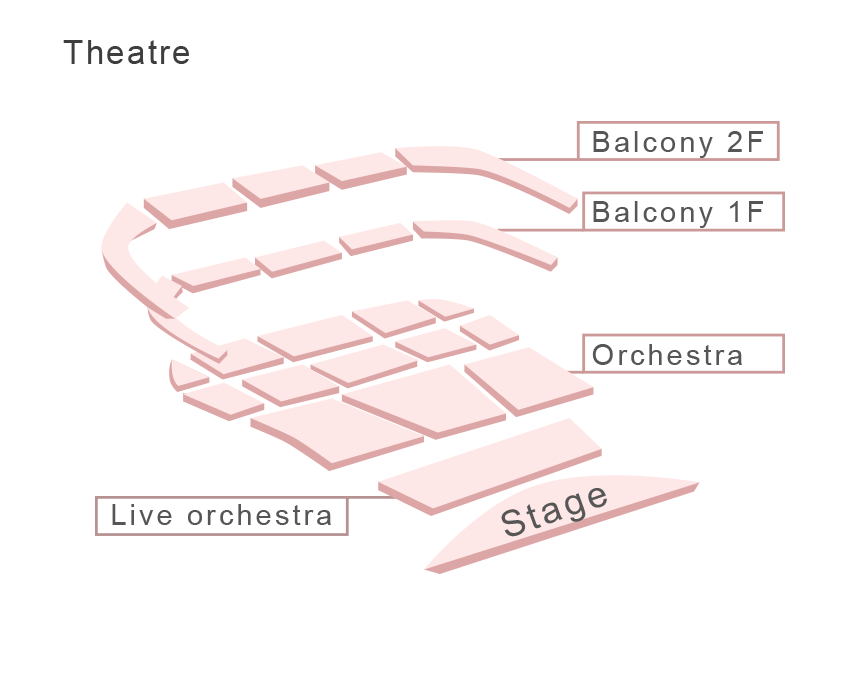 戏剧场
戏剧场
 小剧场
小剧场
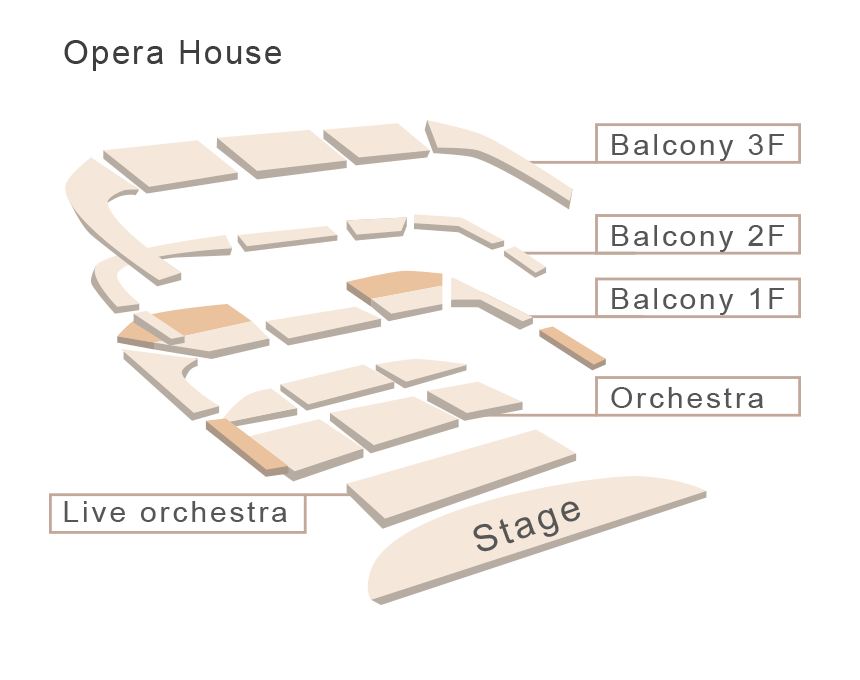 歌剧院
歌剧院
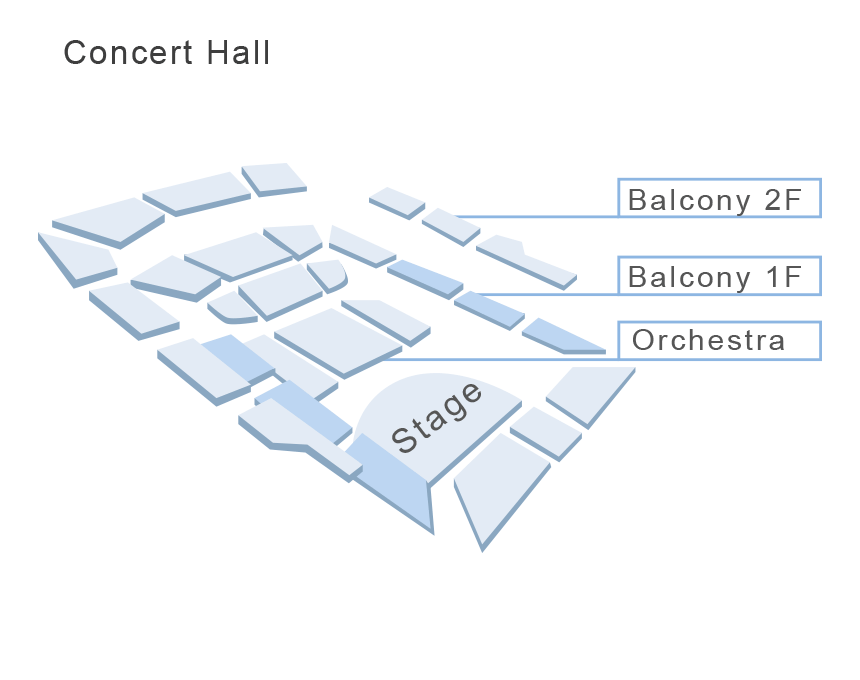 音乐厅
音乐厅