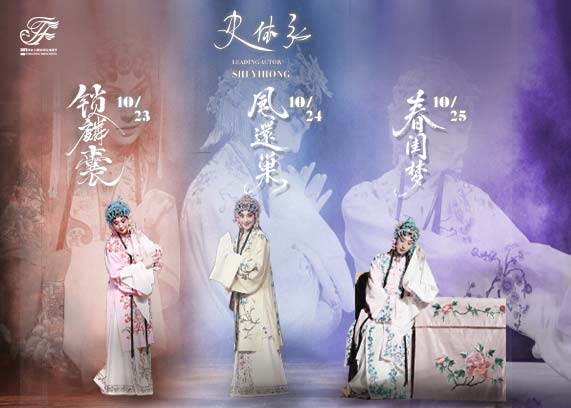
October 23rd — The Unicorn Purse
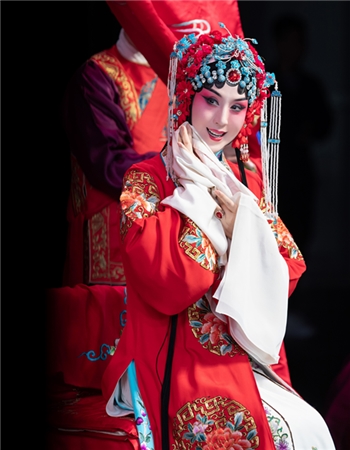
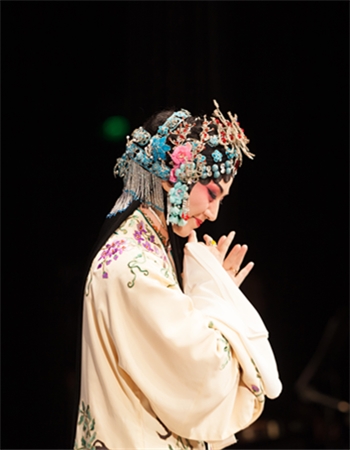
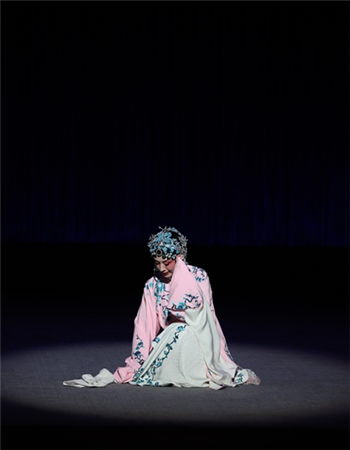
SHI Yihong as XUE Xiangling
On her way to her wedding, the proud and privileged XUE Xiangling, the daughter of a wealthy family, encounters ZHAO Shouzhen, a bride from a poor family. Moved to see ZHAO weeping over her lack of a dowry, XUE gives her a treasured Suo Lin Nang (Unicorn Purse), which had been entrusted to her by her mother-in-law. Six years later, devastating floods leave XUE’s family destitute. Forced to make a living, she takes a position as a servant in the household of Master LU. There, she discovers that Madam LU is none other than ZHAO Shouzhen, the woman she once helped. Remembering XUE’s kindness, ZHAO welcomes her with gratitude, and the two women become like sisters. The story ultimately ends with XUE’s family reunited.
The Unicorn Purse is considered a masterpiece of the CHENG school of Peking Opera. Also known as The Peony Calamity, the Peking Opera was written by renowned playwright WENG Ouhong in 1937 at the invitation of CHENG Yanqiu. It draws inspiration from a story recorded in Zhi Chen Tan, as cited in The Story of Drama.
One of the highlights of the work is WENG Ouhong’s innovative use of changduanju—a poetic verse form featuring lines of varying lengths—in its lyrics. Equally central is XUE Xiangling’s transformation from wealth to poverty and the profound changes in her character that follow. The contrast is expressed through her singing, movements, and expressions, making the role a major test of an actor’s artistry.
At its heart, The Unicorn Purse is a female-centered story of compassion and dignity. XUE Xiangling is wealthy yet compassionate; ZHAO Shouzhen is poor yet proud and self-respecting. Nearly every character is touched by a sense of compassion for others—and it is this deeply human quality that makes the opera so moving.
October 24th — The Phoenix Returns to the Nest
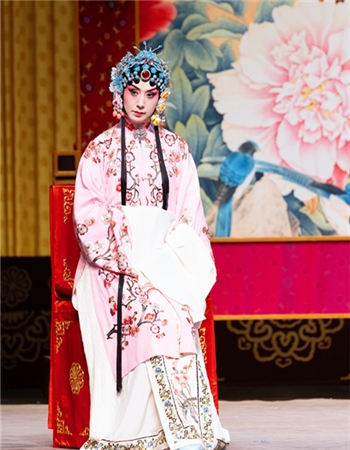
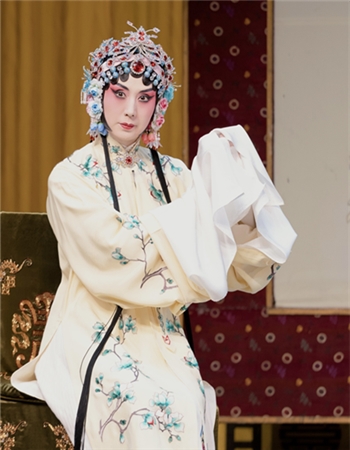
SHI Yihong as CHENG Xue’e
Set in the late Ming Dynasty, the story follows CHENG Pu, a Vice Minister who has two daughters. His elder daughter, CHENG Xueyan, born to his wife, is plain in appearance, while his younger daughter, CHENG Xue’e, born to his concubine, is beautiful and intelligent. CHENG Pu dotes on Xue’e and intends to marry her to MU Juyi. However, Xueyan secretly takes her sister’s name and goes to meet MU Juyi, who flees upon seeing her. Meanwhile, ZHU Huanzhen, who is in fact interested in Xue’e, disguises himself as MU Juyi and arrives at the CHENG household. Mistaking ZHU for MU Juyi, Mrs. CHENG arranges for Xueyan to marry him. Although the couple realizes the misunderstanding on their wedding night, it is too late to undo the marriage. Meanwhile, MU Juyi earns recognition for suppressing a rebellion and happens to encounter Xue’e while serving with the army. The Marshal orders the two to marry. Reluctantly, MU enters the bridal chamber, only to discover Xue’e and realize that another misunderstanding has taken place. He quickly apologizes, and the two ultimately become a happy couple.
The Phoenix Returns to the Nest is adapted from the Qing imperial court collection Xunhuan Xu. Originally titled Yin-Yang Tree and also known as The Uneven Match, it was a newly created Peking opera first staged by the legendary Peking Opera master MEI Lanfang in 1928. The production holds a special place in the history of Peking Opera and remains an undisputed classic of the MEI school and part of its core repertoire. Unlike earlier newly created works, which often emphasized elaborate choreography and redesigned costumes and headdresses, The Phoenix Returns to the Nest returned to traditional forms, including the classic hairstyle and traditional costumes. Its performance style is more restrained and nuanced, placing greater emphasis on the subtle inner emotions and psychological development of the characters. The work is widely regarded as a landmark in MEI Lanfang’s artistic career and an important milestone in the evolution of his distinctive artistic style.
Through this work, audiences can experience the graceful and refined artistic style of the MEI school in its nuanced character portrayals. The work also features the full range of Peking Opera role types—sheng, dan, jing, and chou—with each character following a distinct dramatic arc and possessing a clearly defined personality. Lively conflicts and twists drive the story forward, ultimately leading to a joyful and satisfying happy ending.
With its engaging storyline and accessible humor, the production is particularly well suited to younger audiences who are interested in discovering Peking Opera but may not know where to begin. One of the play’s most entertaining moments is the comic “unexpected wedding night”, which provides much of the humour in the production.
Although the female lead, CHENG Xue’e, has relatively few arias, her passages are distinguished by their ornate and distinctive melodies, lively rhythms, and expressive, lyrical quality. They are among the best-known and most widely performed pieces in the MEI school repertoire.
October 25th — The Drunken Fight at the Mountain Gate & Spring Boudoir Dream
The Drunken Fight at the Mountain Gate
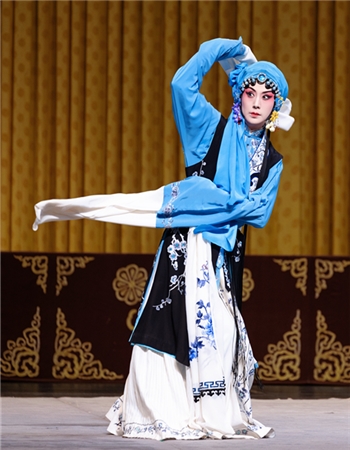
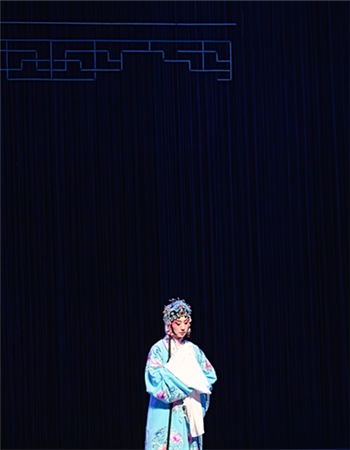
XU Zhaoying as LU Zhishen
After LU Tixia punches the corrupt bully Zhen Guanxi to death, he seeks refuge at Mount Wutai, where he shaves his head and enters the Buddhist order. Elder Zhizhen gives him the Buddhist name Zhishen. Unable to endure the strict monastic rules, Zhishen secretly leaves the temple and indulges in alcohol. On his way back, overcome with drunken exuberance, he stops at a mountain pavilion and performs a spirited display of martial arts, mimicking the many forms of the arhats with uninhibited energy and vivid expression. When he returns to the temple, he finds the mountain gate locked. In a fit of drunken fury, he pounds on the gate with his fists and kicks the guardian figures, throwing the entire monastery into chaos. Unable to tolerate his unruly behavior, the monks refuse to accept him back. Elder Zhizhen has no choice but to write a letter of introduction, give Zhishen some money, and send him to the Grand Xiangguo Temple in Dongjing.
Spring Boudoir Dream
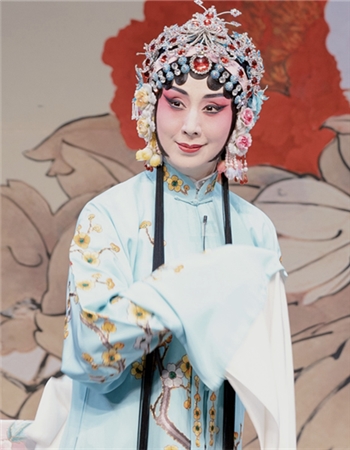
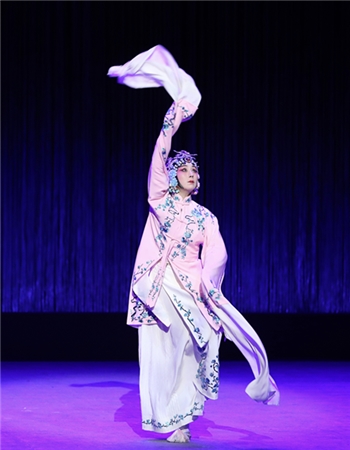
SHI Yihong as Ms. ZHANG
Spring Boudoir Dream was written by JIN Zhongsun and premiered by CHENG Yanqiu in 1931 at Beijing’s Zhonghe Theatre. Set amid the turmoil of the late Eastern Han dynasty, the work tells the tragic story of WANG Hui, a young warrior who is forcibly conscripted only months after his wedding. He is killed by an arrow on the battlefield, while his wife, ZHANG, remains at home, longing for his return. Consumed by grief and longing, she eventually dreams of her husband, only to awaken to an even deeper sense of sorrow. Beneath its historical setting lies a pointed reflection on the devastation caused by the warlord conflicts of the time, portraying a society ravaged by warfare and expressing the people’s longing for peace and their rejection of endless war. For the celebrated “Dream” scene, CHENG Yanqiu invited the renowned Kunqu performer YU Zhenfei to collaborate on its creation. Drawing on the stylized movements of the Kunqu classic The Peony Pavilion: The Interrupted Dream, the scene blends the artistic traditions of Peking Opera and Kunqu in a distinctive and elegant fusion. Throughout the opera, ZHANG’s arias are deeply plaintive and emotionally poignant, expressing profound grief and longing. The work remains one of the signature masterpieces of the CHENG school of Peking Opera.
*Please purchase tickets through authorized channels to avoid counterfeiting. Before completing your purchase, please verify the performance date, time, venue, and seat number carefully. Performance tickets are time-sensitive and limited in availability. Once a transaction has been completed, tickets are non-exchangeable, non-refundable and cannot be reissued if lost. Please double-check all ticketing details and securely retain your physical ticket or electronic order. If you are unable to attend due to personal reasons, please make your own arrangements regarding the use of your tickets. We appreciate your understanding as any inconvenience caused.
*The cast, programme, or other performance details are subject to change and shall be based on the live performance. In the event of major adjustments - such as changes to the performance date or lead cast - please refer to the official announcements issued by the NCPA and follow the relevant procedures as instructed.
*The NCPA opens 90 minutes before performances, and 60 minutes before art education lectures and similar events. Auditorium entry begins 45 minutes before performances. For all performances and events, the Northern entrance serves as the sole public entrance. Please ensure that ticket scanning and security screening are completed prior to entry, and allow sufficient time to avoid delays.
*Tickets must be retained in their original, intact condition. Admission will be denied for tickets lacking a stub, or bearing any alterations, obscured information, or defacement. Each ticket is valid for a single entry on the date of the performance. For certain performances, presentation of original valid identification documents is required. Admission will be granted only when the ticket information corresponds with the presented identification.
*Recommended admission height: 1.2 meters and above. Special provisions may apply to certain performances or events, as indicated on the corresponding ticketing page.
*All attendees are required to undergo security screening upon entry. Smoking and open flames are strictly prohibited within the NCPA premises. Prohibited items include, but not limited to, firearms and replicas, controlled knives, flammable or explosive substances, toxic or hazardous materials, corrosive substances, and radioactive materials. Any prohibited items discovered will be handed over to public security authorities.
*For safety and hygiene reasons, the NCPA does not provide storage services for food, beverages, or similar items. The following items are not permitted inside the NCPA: food and drinks, flags & banners, electronic cigarettes, power banks exceeding 20000mAh, flowers, recording or photography equipment, and oversized luggage.
*Attendees are requested to address appropriately. Admissions will be denied to individuals who are improperly attired or under the influence of alcohol.
*If you are late, please wait quietly in the audience waiting area. Entry will be permitted under the guidance of ushers during appropriate intermissions or between movements, and you are requested to take the nearest available seat with minimal disturbance. For concerts consisting of a single piece - either for the entire performance or a complete half - late arrivals and audience who leave midway will not be admitted.
*All attendees are requested to observe proper performance etiquette. Please keep quiet and remain seated throughout the entire performance. Mobile phones should be turned off or set to silent mode, and calls should not be made in the auditorium. Photography, audio, or video recording of the performance is strictly prohibited without prior permission. The use of flashlights, including phone flashlights, is not allowed.
*After the performance, please exit the auditoriums in an orderly manner. Loitering is discouraged.



 Repertoire
 Films
Films
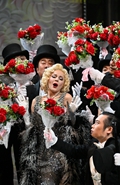 Videos
 Podcast
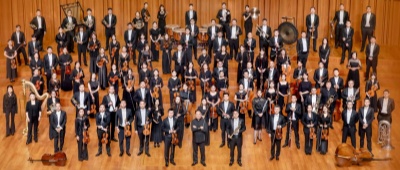 China NCPA Orchestra
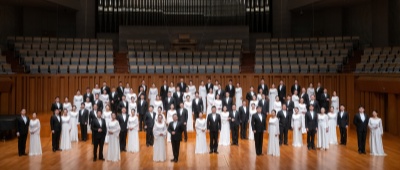 China NCPA Chorus
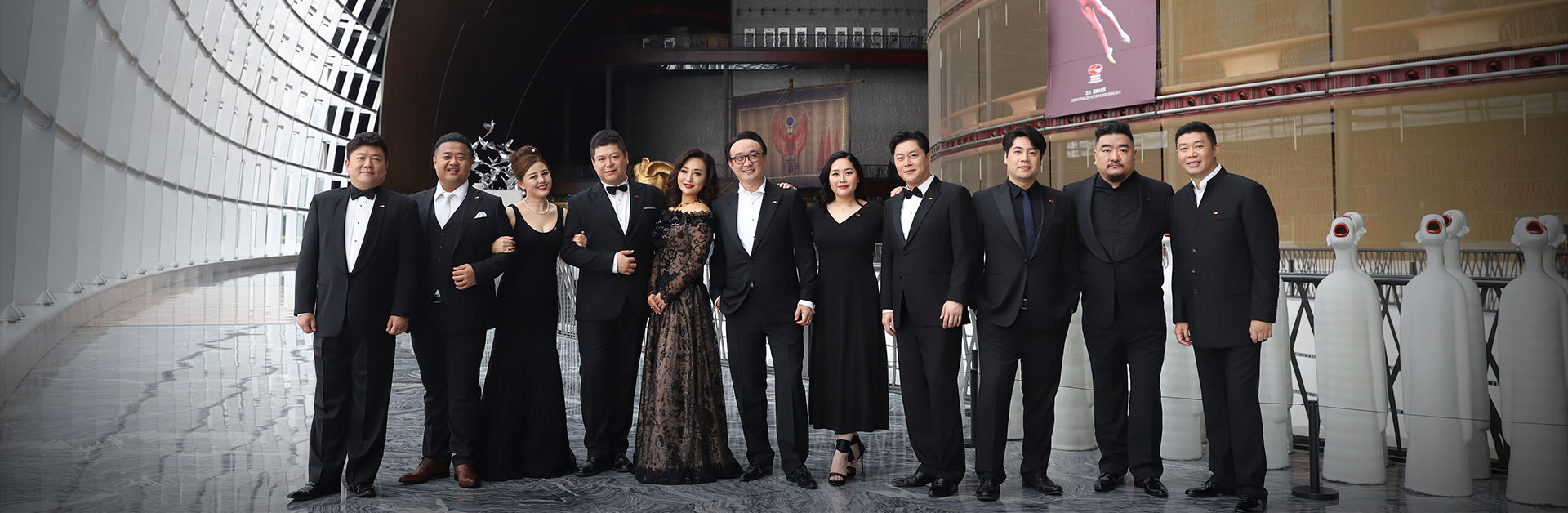 NCPA Resident Singers
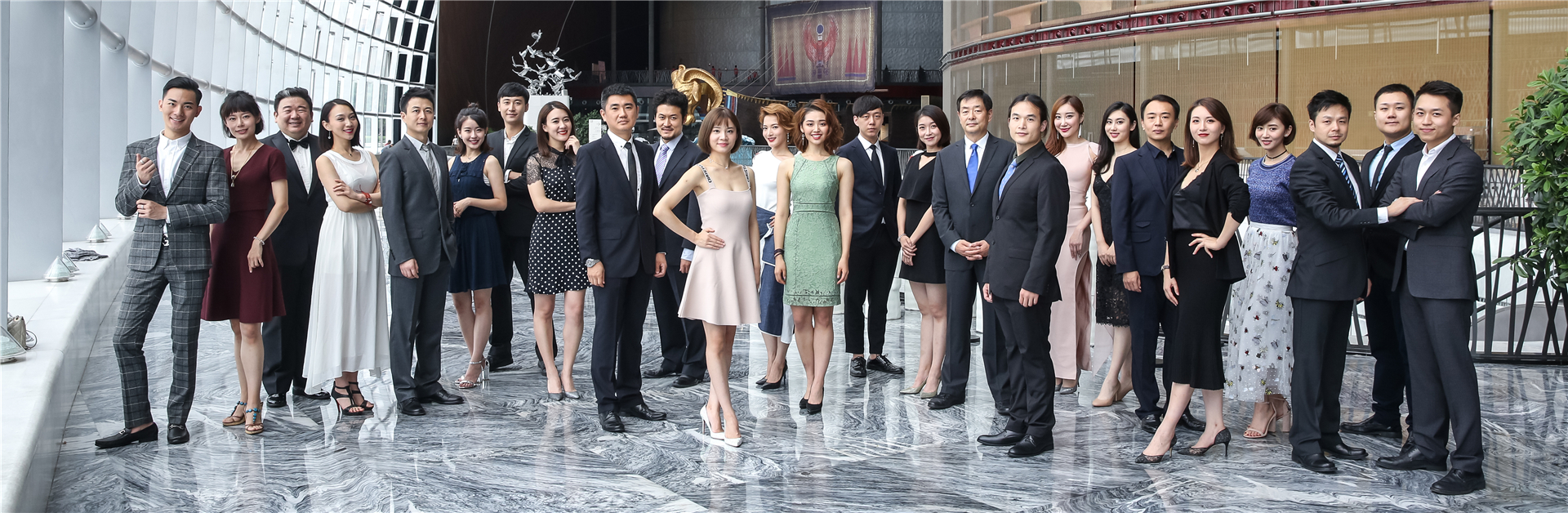 NCPA Drama Ensemble
 Buildings
Exhibitions
Buildings
Exhibitions
 Opening Hours
Services
Opening Hours
Services
 Western Cuisine
NCPA Café
Arts Gifts
Western Cuisine
NCPA Café
Arts Gifts



 This page provides performance information only.

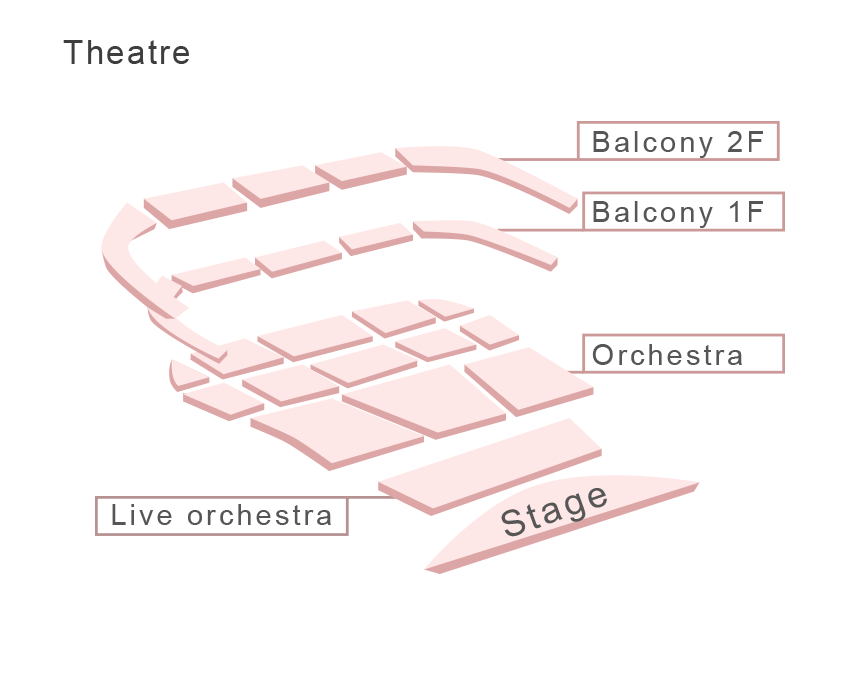 戏剧场
戏剧场
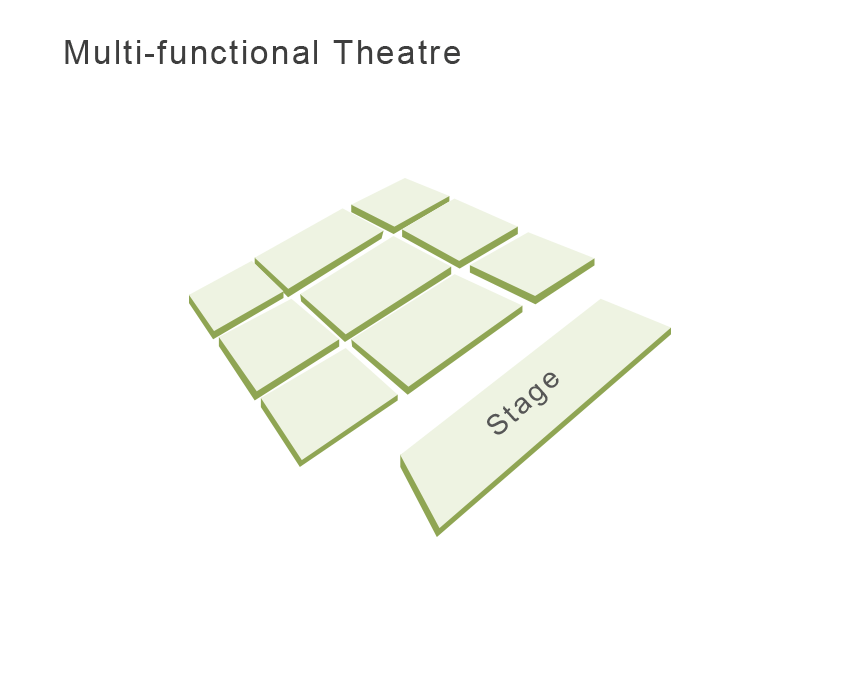 小剧场
小剧场
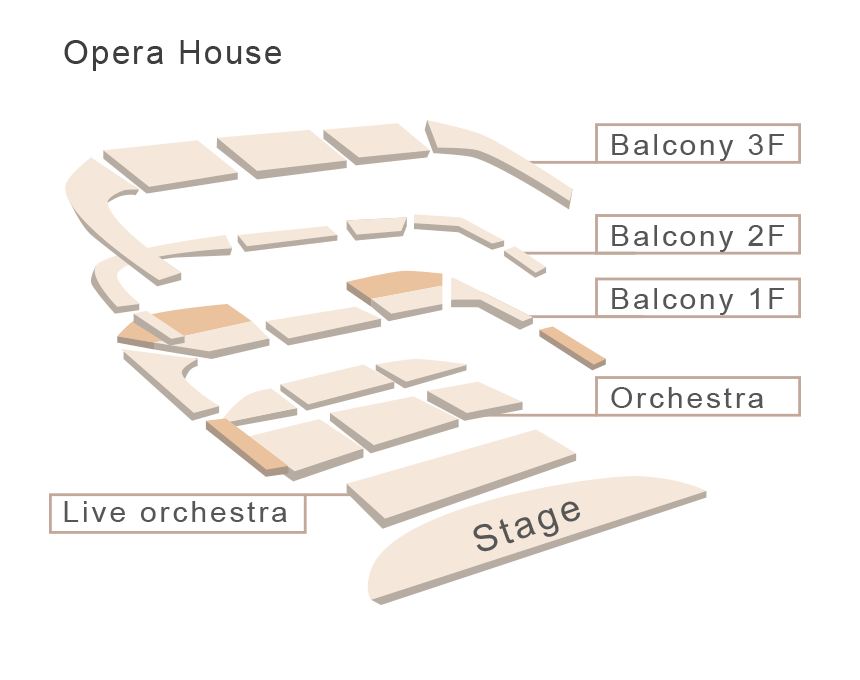 歌剧院
歌剧院
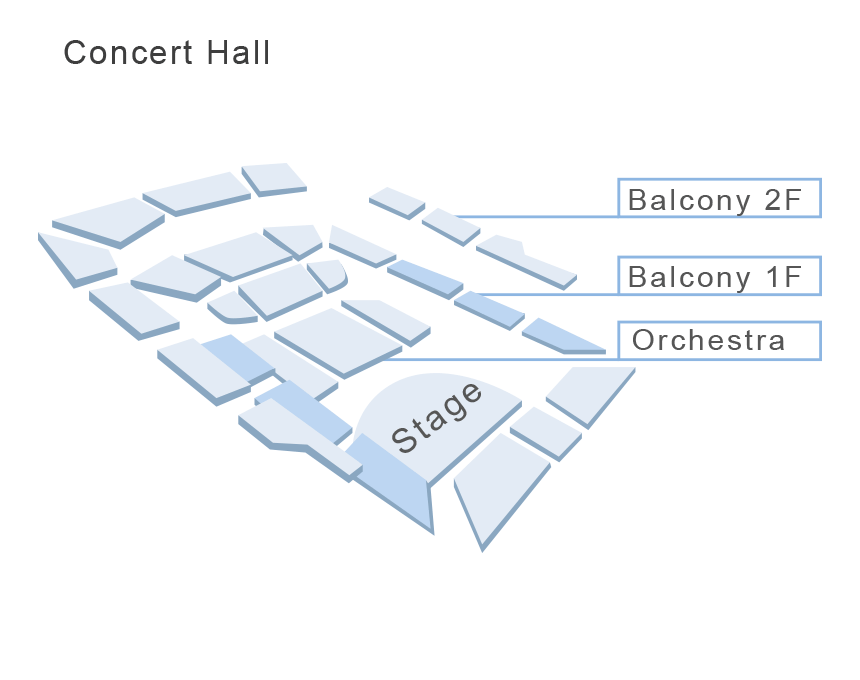 音乐厅
音乐厅