-
About
-
Synopsis
-
Creative
-
Presenter
Guidance
The detailed information will be coming soon. Click our Full Calendar and explore more performance in NCPA.
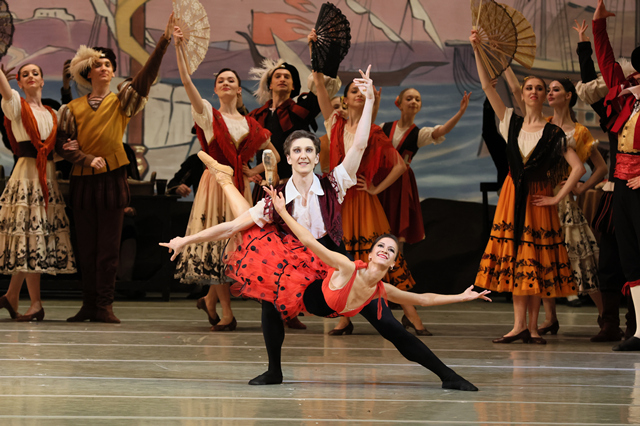
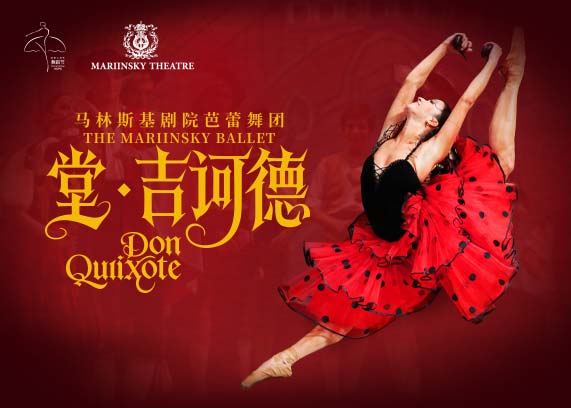
Don Quixote, our legacy of the golden age of classical ballet, is a poignant example of how Spain is portrayed in ballets with its whirlwind ensemble dancing, castanets, fans, polka dot skirts, roses and decorative combs in women’s hairdos.
Despite its name, the ballet is not an adaptation of Miguel de Cervantes’ novel. Only one episode of the ingenious hidalgo’s many adventures serves as the basis for the story and the dancing scenes. It is a story about the failed wedding of the wealthy Camacho (Gamache in the ballet) to the fair Quiteria (Kitri in the ballet), who is also the object of affections of the villager Basil (Basilio). However, Don Quixote is in no way the lead character in the story by the ballet standards. His role is mostly that of a pantomime artist or a stage walker, while all the dancing feats are accomplished by other characters.
This festive, hot-tempered and virtuoso ballet was staged in 1900 (and transferred from the Bolshoi Theatre in Moscow to the Mariinsky Theatre in 1902) by Alexander Gorsky after the eponymous ballet of Marius Petipa, which had graced the St Petersburg stage from 1871. The young and passionate choreographer Gorsky was heavily influenced by Stanislavski (who had just opened the Moscow Art Theatre) at the beginning of the 20th century. To make the ballet more "lifelike and truthful" he turned the symmetrical corps de ballets, so common in his renowned colleague Petipa’s works, into a playful, lively, and cheerful crowd. The first spectators recalled, "the lively and passionate crowd in the square makes you believe up to a point of delusion in the sun, which makes you fall in love so keenly, tease each other, chase after the running beauty, who hides behind her fan…"
Gorsky kept the contours of the libretto, the music written by Minkus for Petipa, and many of the choreographic pieces for his production. However, Gorsky rearranged some of the scenes of the existing production.
The modern
Don Quixote arguably features the most diverse dances from among the ballet repertory: one can still see the echoes of Marius Petipa, Alexander Gorsky, Fyodor Lopukhov, who created the "folkloresque" Spanish fandango in 1923, and Nina Anisimova, who added her version of the gypsy dance in 1946. Moreover, many of those dancers who performed the role of Basilio can be considered co-choreographers for the main character. On many occasions did their tricks and ideas aimed at showcasing the artist himself in full glory make their way into the variations. For soloists, Don Quixote is not just a measure of virtuosity, but also an opportunity to be in the midst of a game, where even the smallest of roles might blossom into a colourful humoristic touch. For spectators, this production, featuring in equal measure genre and everyday scenes, character choreography and pure classical elements, is pure charm due to its generous serving of dancing and the atmosphere of carefree festivity. (Olga Makarova)
Music by Ludwig Minkus
Premiere of the ballet choreographed by Marius Petipa: December 14
th, 1869, Bolshoi Theatre, Moscow
Premiere of Alexander Gorsky's version: December 6
th, 1900, Bolshoi Theatre, Moscow
Premiere of Alexander Gorsky's version at the Mariinsky Theatre: January 20
th, 1902
Creative Team
Libretto by Marius Petipa, based on the novel by Miguel de Cervantes
Choreography by Alexander Gorsky after Marius Petipa
Gypsy and Oriental Dances choreographed by Nina Anisimova
Fandango choreographed by Fyodor Lopukhov
Set design: Alexander Golovin and Konstantin Korovin
Restoration of sets: Mikhail Shishliannikov
Costume design: Konstantin Korovin
Lighting adaptation for the Mariinsky II by Yegor Kartashov
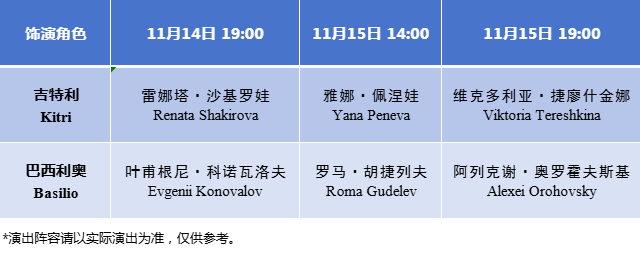
Cast is subject to change without notice
Prologue
Having read some tales of chivalry, Don Quixote decides to set out in search of adventures. It occurs to him to make his servant Sancho Panza his armour-bearer.
Act I
In Barcelona, a holiday crowd has gathered. Also there are Kitri, the flirtatious daughter of the innkeeper Lorenzo, and her lover Basilio, the barber. Lorenzo does not like the poor barber. He thinks the rich nobleman Gamache, who wants to marry Kitri, is more fit for his daughter.
The crowd welcomes a street dancer and the famous toreador Espada. At the appearance of extraordinary-looking Don Quixote on horseback, the people are struck with astonishment. Lorenzo welcomes Don Quixote courteously and invites him to partake of some refreshment. The girls seize the opportunity to have a bit of fun by playing tricks on fat Sancho Panza.
Don Quixote sees Kitri and is struck by her beauty. Is it not she who has haunted his dreams as the beautiful Dulcinea?
Act II
Fleeing from Lorenzo and Gamache, the two lovers, Kitri and Basilio, wander into a gypsy camp. Soon Don Quixote appears in the camp. The gypsies invite Don Quixote to attend a play they are about to perform. Don Quixote watchs the performance with rapt attention and, forgetting it is theatre, defend those characters who need protection. Catching sight of the windmills, he mistakes them for evil magicians whom he has to hit. Don Quixote attacks the windmill.
Don Quixote, who has fallen asleep, is haunted by visions: he is in the beautiful Kingdom of the Dryads. Among them is Kitri, who has assumed the form of Dulcinea.
Morning breaks. Kitri and Basilio wake up only just in time, for Lorenzo and Gamache are close upon them. The lovers flee. Don Quixote, their protector, sends Lorenzo and Gamache on a false trail, but Sancho Panza corrects his master’s “mistake”. The chase goes on.
Act III
People are gathering for a fiesta at an inn. Among them Kitri and Basilio. Lorenzo tracks down the lovers and insists that Kitri marry Gamache. Basilio feigns suicide. Kitri begs Don Quixote to persuade his father to fulfill Basilio's dying wish – to give their love his blessing. Lorenzo blesses the lovers. The very next instant, Basilio jumps to his feet.
Don Quixote attends the wedding of Kitri and Basilio as the guest of honour. Wishing the newlyweds every happiness, the knight-errant departs in search of new adventures.
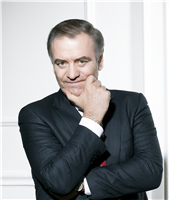
Valery Gergiev Artistic and General Director of the Mariinsky Theatre
Valery Gergiev is a world famous conductor. While still a student at the Rimsky-Korsakov Leningrad State Conservatory, Gergiev won the Herbert von Karajan Competition in Berlin and the All-Union Conducting Competition in Moscow, following which he was invited to join the Kirov Theatre (now the Mariinsky) as an assistant to the principal conductor. His debut as a conductor at the theatre came on January 12, 1978. In 1988 Valery Gergiev was appointed Music Director of the Mariinsky Theatre, and in 1996 he became its Artistic and General Director. Moreover, since December 2023 he has also been General Director of the Bolshoi Theatre of Russia.
The maestro made his debuts in 1991 at the Bayerishe Staatsoper, in 1993 at the Royal Opera House, Covent Garden and in 1994 at the Metropolitan Opera. He worked with the World Orchestra for Peace, the philharmonic orchestras of Berlin, Paris, Vienna, New York and Los Angeles, the symphony orchestras of Chicago, Cleveland, Boston and San Francisco, the Royal Concertgebouw Orchestra (Amsterdam) and many other ensembles. From 1995 to 2008 Valery Gergiev was Principal Conductor of the Rotterdam Philharmonic Orchestra, and from 2007 to 2015 he was Principal Conductor of the London Symphony Orchestra. From 2015 to 2022 the maestro headed the Munich Philharmonic and from 2018 to 2022 the Verbier Festival Orchestra.
Valery Gergiev’s musical and public activities have brought him many titles and awards of the Russian Federation and prestigious state awards of Armenia, Bulgaria, Germany, Italy, the Netherlands, Poland, France and Japan.
Andrian Fadeyev Artistic Director of the Mariinsky Ballet
• Honoured Artist of Russia (2008)
• Laureate of the Vaganova-Prix International Ballet Competition (St. Petersburg, 1995)
• Winner of the Baltika Prize (1998)
• Winner of the Golden Sofit, St. Petersburg’s most prestigious theatre prize, in the categories “Best Role in a Ballet Performance” for his portrayal of Petrushka in the eponymous ballet and for his solo in Jewels (2000) and “Best Ensemble in a Ballet Performance” for Christopher Wheeldon’s For Four (2008)
• Recipient of the Ballet magazine’s Soul of Dance Award in the category “Rising Star” (2000)
• Laureate of the Premio Positano Léonide Massine for the Art of Dance (Italy, 2006)
Andrian Fadeyev was born in Leningrad, and graduated from the Vaganova Ballet Academy (class of Vilen Semyonov) in 1995. He was a member of the Mariinsky Ballet Company from 1995 to 2011.
He has performed leading roles in La Sylphide (James), Giselle (Albrecht, Classical Duet), Swan Lake (Siegfried), La Bayadère (Solor), The Sleeping Beauty (Désiré, Bluebird), Le Corsaire (Ali, Lankadem), The Awakening of Flora (Zephyr), Don Quixote (Basilio), The Fountain of Bakhchisarai (Vaslav), Romeo and Juliet (Romeo), Michel Fokine’s Les Sylphides, Le Spectre de la Rose, Petrushka (title role), George Balanchine’s Apollo, Symphony in C Major (1st movement), Pas de Deux to music by Tchaikovsky, Jewels (“Emeralds”, “Rubies”, “Diamonds”), Tchaikovsky Piano Concerto No. 2 (also titled Ballet Imperial), Scotch Symphony, Roland Petit’s Le Jeune Homme et la Mort and Harald Lander’s Études.
In 2001, John Neumeier created the leading role in his ballet Sounds of Empty Pages for him. As a guest soloist, he has performed with the Rome Opera Ballet, the Bavarian State Ballet, the Berlin State Ballet and the National Ballet of Japan. Since 2011, Andrian Fadeev has been Artistic Director of the Leonid Yacobson Ballet Theatre in St. Petersburg. Since 2024, he has also been Artistic Director of the Mariinsky Ballet.
The Mariinsky Ballet
The history of the Mariinsky Ballet is closely linked with the history of European choreographic art. In the 18th and 19th centuries the foundations of the theatre's ballet repertoire were laid by productions by choreographers from Italy and France who were invited to Russia who also taught in school. Among many famous European choreographers, Marius Petipa played a very important role. Having taken on the post of the theatre's Principal Ballet Master, over his lengthy career as a choreographer (spanning almost sixty years), he developed the form of grand ballet – a multi-act production, the plot combining fully developed scenes of classical ensembles, character dances, genre spectacle scenes and pantomime. Even today the ballets The Sleeping Beauty, Swan Lake (Petipa made together with choreographer Lev Ivanov) and Raymonda form part of the "gold reserves" of the classical legacy and adorn the theatre's repertoire.
At the turn of the 19th and 20th centuries, the Mariinsky Ballet was famed for its galaxy of star performers. Many of these famous dancers presented Russian ballet during Diaghilev's legendary Saisons russes, thanks to which Europe discovered avant-garde Russian art of the time and the St. Petersburg choreographers Michel Fokine and George Balanchine who had set out at the Mariinsky Theatre and launched their international careers.
In the difficult years the Mariinsky Ballet retained its classical repertoire. The ballet playbill expanded to include new works relating plots that were current in the new historical context. Leonid Lavrovsky's Romeo and Juliet defined the rule of the drama-ballet. At this time also saw a veritable take-off of the dancers' technical level: Galina Ulanova, Natalia Dudinskaya, Konstantin Sergeyev, Natalia Makarova, Rudolf Nureyev, Yuri Soloviev......
After the 1970s, the Mariinsky Ballet fully integrated with international choreography, showcasing new ballet styles from choreographers like Roland Petit, Maurice Béjart, George Balanchine, John Neumeier, and Wayne McGregor on the Mariinsky stage. These new ballet works, along with classical masterpieces, have become part of the repertoire of the Mariinsky Ballet, which continues to thrive with nearly 300 years of history.
*Please purchase tickets through authorized channels to avoid counterfeiting. Before completing your purchase, please verify the performance date, time, venue, and seat number carefully. Performance tickets are time-sensitive and limited in availability. Once a transaction has been completed, tickets are non-exchangeable, non-refundable and cannot be reissued if lost. Please double-check all ticketing details and securely retain your physical ticket or electronic order. If you are unable to attend due to personal reasons, please make your own arrangements regarding the use of your tickets. We appreciate your understanding as any inconvenience caused.
*The cast, programme, or other performance details are subject to change and shall be based on the live performance. In the event of major adjustments - such as changes to the performance date or lead cast - please refer to the official announcements issued by the NCPA and follow the relevant procedures as instructed.
*The NCPA opens 90 minutes before performances, and 60 minutes before art education lectures and similar events. Auditorium entry begins 45 minutes before performances. For all performances and events, the Northern entrance serves as the sole public entrance. Please ensure that ticket scanning and security screening are completed prior to entry, and allow sufficient time to avoid delays.
*Tickets must be retained in their original, intact condition. Admission will be denied for tickets lacking a stub, or bearing any alterations, obscured information, or defacement. Each ticket is valid for a single entry on the date of the performance. For certain performances, presentation of original valid identification documents is required. Admission will be granted only when the ticket information corresponds with the presented identification.
*Recommended admission height: 1.2 meters and above. Special provisions may apply to certain performances or events, as indicated on the corresponding ticketing page.
*All attendees are required to undergo security screening upon entry. Smoking and open flames are strictly prohibited within the NCPA premises. Prohibited items include, but not limited to, firearms and replicas, controlled knives, flammable or explosive substances, toxic or hazardous materials, corrosive substances, and radioactive materials. Any prohibited items discovered will be handed over to public security authorities.
*For safety and hygiene reasons, the NCPA does not provide storage services for food, beverages, or similar items. The following items are not permitted inside the NCPA: food and drinks, flags & banners, electronic cigarettes, power banks exceeding 20000mAh, flowers, recording or photography equipment, and oversized luggage.
*Attendees are requested to address appropriately. Admissions will be denied to individuals who are improperly attired or under the influence of alcohol.
*If you are late, please wait quietly in the audience waiting area. Entry will be permitted under the guidance of ushers during appropriate intermissions or between movements, and you are requested to take the nearest available seat with minimal disturbance. For concerts consisting of a single piece - either for the entire performance or a complete half - late arrivals and audience who leave midway will not be admitted.
*All attendees are requested to observe proper performance etiquette. Please keep quiet and remain seated throughout the entire performance. Mobile phones should be turned off or set to silent mode, and calls should not be made in the auditorium. Photography, audio, or video recording of the performance is strictly prohibited without prior permission. The use of flashlights, including phone flashlights, is not allowed.
*After the performance, please exit the auditoriums in an orderly manner. Loitering is discouraged.



 Repertoire
 Films
Films
 Videos
 Podcast
 China NCPA Orchestra
 China NCPA Chorus
 NCPA Resident Singers
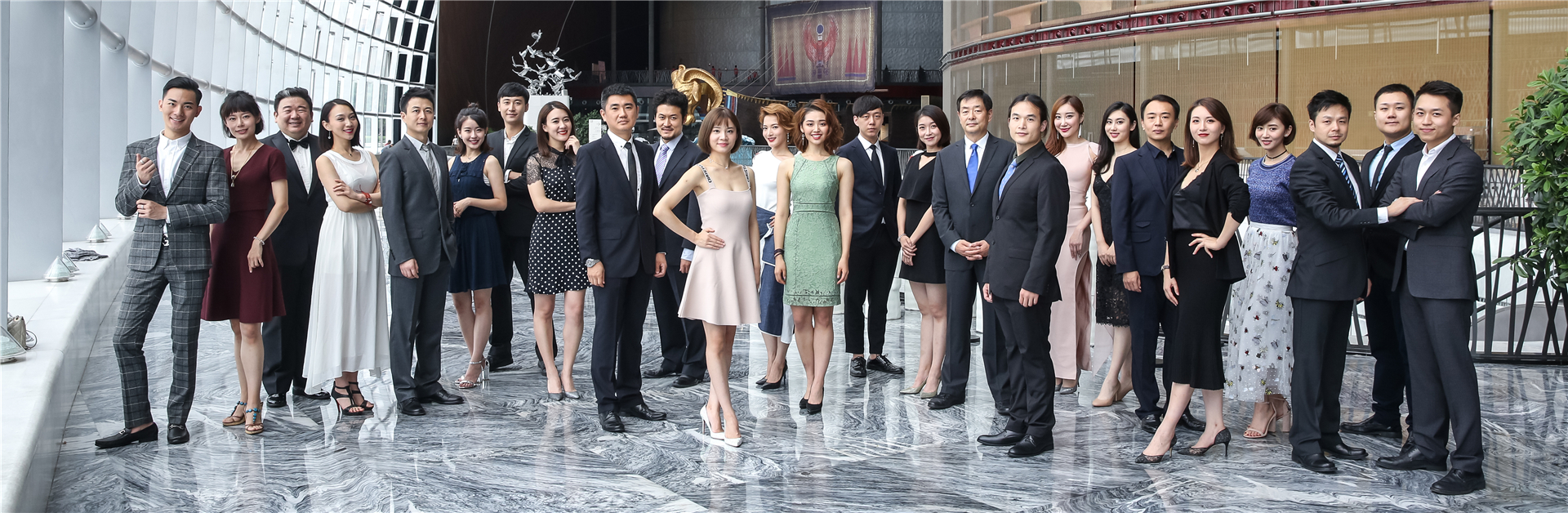 NCPA Drama Ensemble
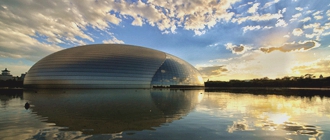 Buildings
Exhibitions
Buildings
Exhibitions
 Opening Hours
Services
Opening Hours
Services
 Western Cuisine
NCPA Café
Arts Gifts
Western Cuisine
NCPA Café
Arts Gifts

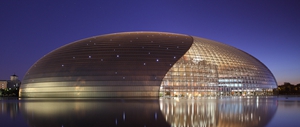


 This page provides performance information only.

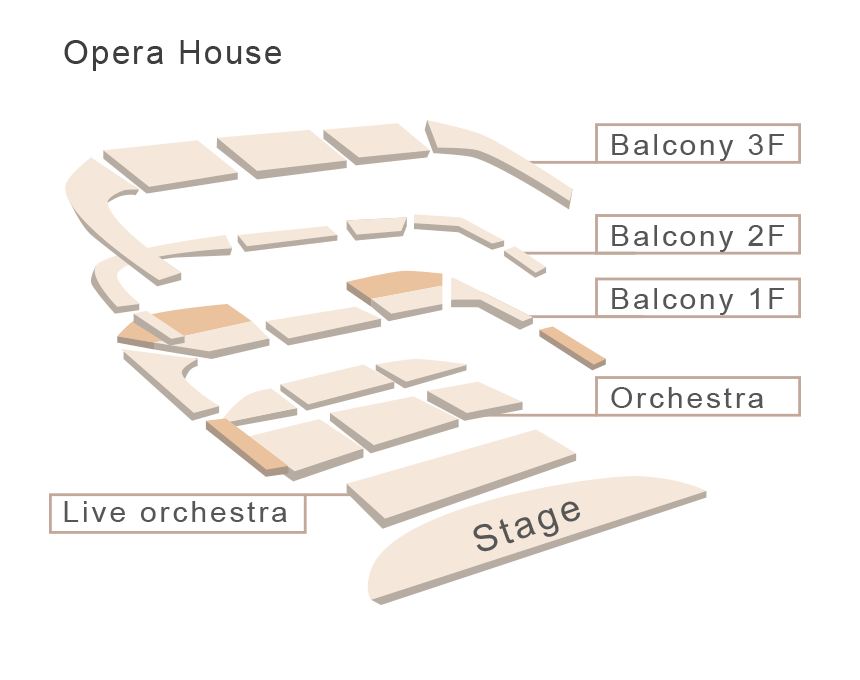 歌剧院
歌剧院
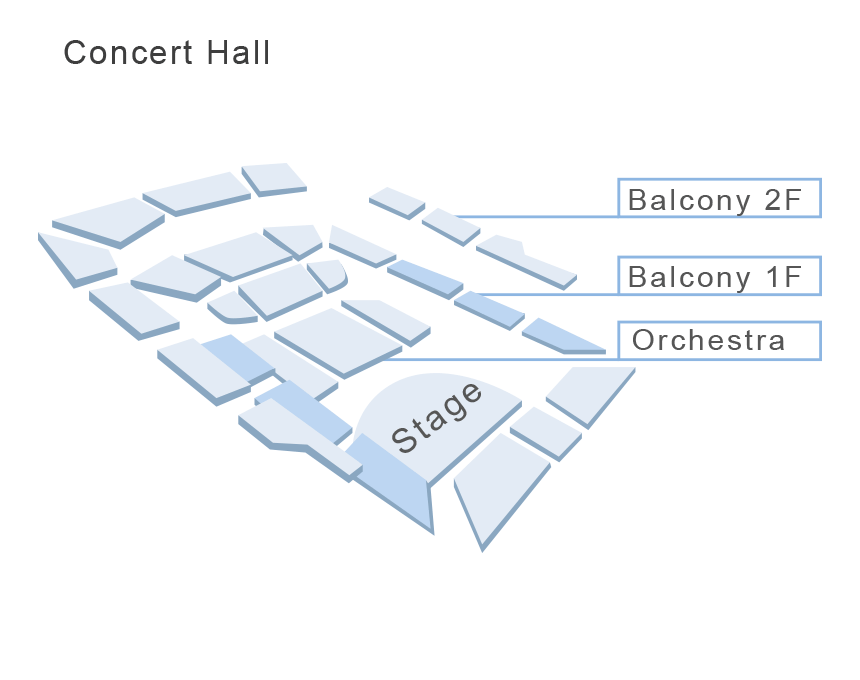 音乐厅
音乐厅
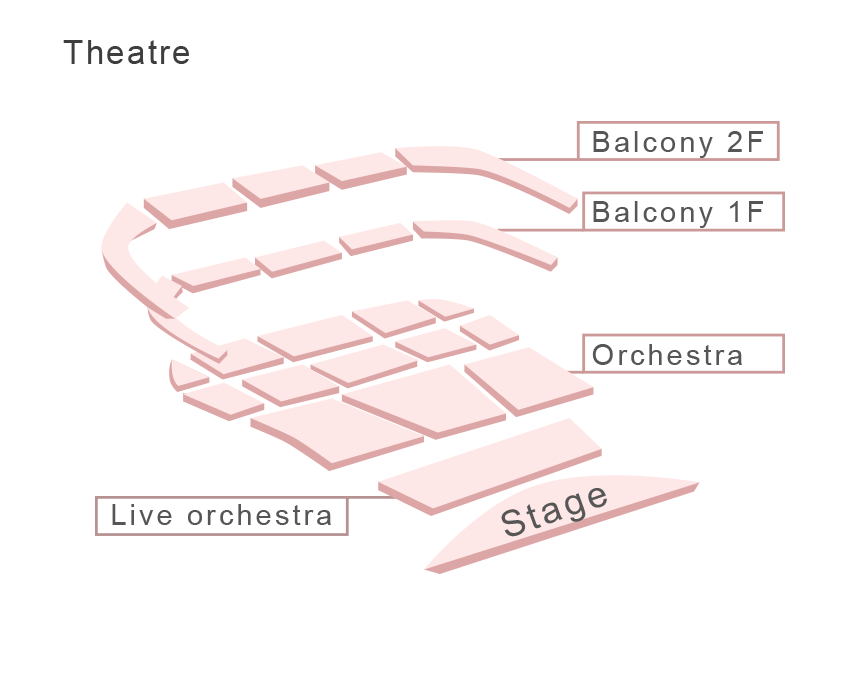 戏剧场
戏剧场
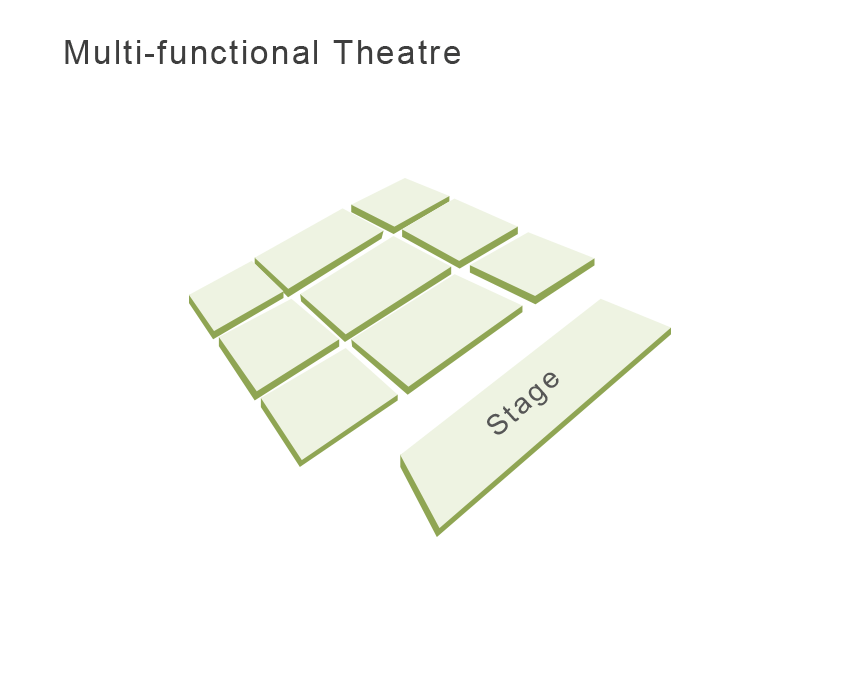 小剧场
小剧场