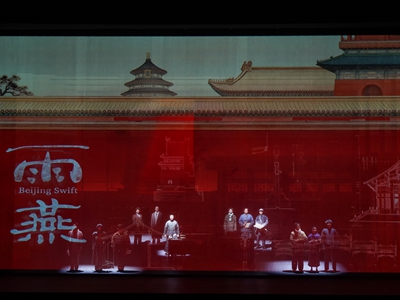
On the night of January 31
st, 2026, the NCPA Drama Commission
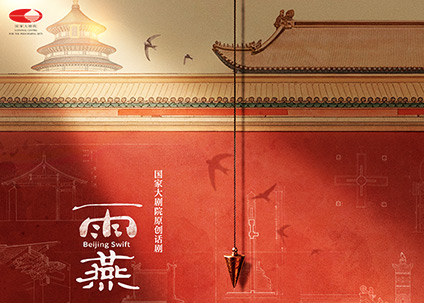
Beijing Swift had its premiere at the Theatre, marking the 120
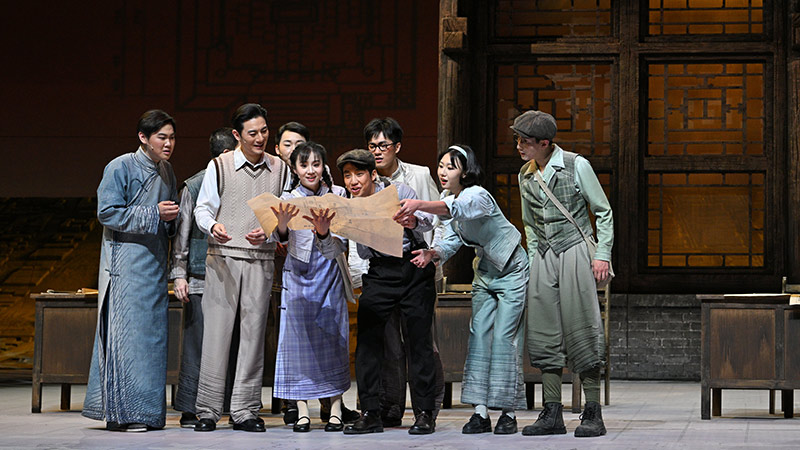
th production of the NCPA. Boasting a top Chinese creative team, the drama is China’s first grand drama produced to commemorate the successful inscription of the Beijing Central Axis on the World Heritage List. Set in Peking in 1939, a year when the city is occupied by the enemy, and based on the historical facts about LIANG Sicheng and the Society for the Study of Chinese Architecture, the drama depicts a great feat - a group of young scholars, led by architect ZHANG Di, secretly surveys and maps the historic buildings along the Beijing Central Axis amidst the flames of war.
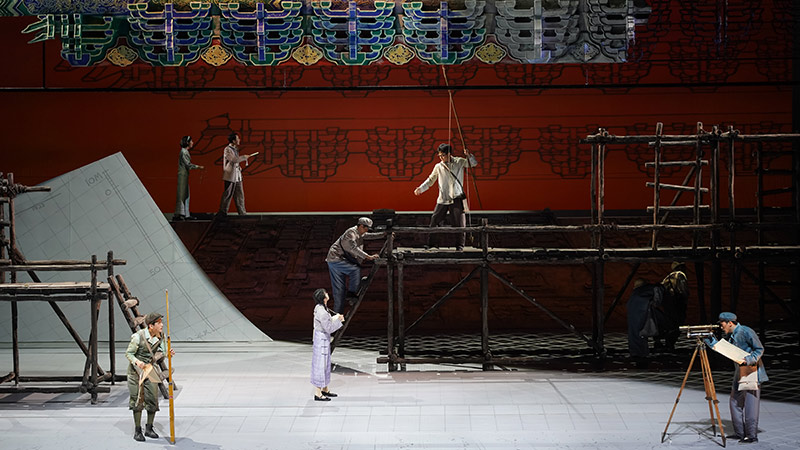
Written by TANG Ling, who spent three years refining the script, and directed by FANG Xu, who depicts history with delicate strokes. Set designer WANG Chen integrates ancient architecture and blueprints, creating a dual space of freehand brushwork and realistic representation. Video projection designer ZHANG Shiqian, lighting designer LIU Zhao, and sound designer WANG Zichun jointly create an immersive atmosphere. Composer LYU Liang infuses Treatise on Architectural Methods (The Building Standards) into the score, weaving a magnificent theme. Costume designer NING Fangguo, makeup designer LIN Ying, and props designer WANG Weijun, together with other key creators, forge the texture of the era with meticulous craftsmanship. The drama features a cast of powerful actors including GUO Shuojie, ZHANG Xuewen, JING Songtao, LI Zhaoyang, TIAN Ren, LI Kunlin and SUN Lishi. Through artistic expression, the production deeply explores local cultural heritage, revisits the unforgettable history of the “War of Resistance against Japanese Aggression at the Cultural Level”, and builds a spiritual bridge connecting the past and the present.
That night, the stage was awakened by the chanting of Treatise on Architectural Method. Amid the historical figures portrayed in Beijing Swift, the complexity of the characters weaves together a three-dimensional portrait of the “War of Resistance against Japanese Aggression at the Cultural Level”. The survey team led by ZHANG Di, portrayed by GUO Shuojie, endured four years of being slandered as “traitors”, quietly protecting national heritage while striving for academic breakthroughs. JIANG Shenzhi, played by JING Songtao, operated undercover in enemy-occupied areas with a dual identity. Caught between saving the nation through indirect means and pursuing his academic ideals, he completed a silent yet perilous mission to transport architectural drawings. The circular narrative and plot twists proved deeply stirring. As the “gatekeeper” of the Palace Museum, Eunuch PANG (played by LING Yun) evolves from an initial obstructionist into a martyr who sacrifices his life to safeguard the drawings—a character arc filled with courage and pathos. Amid this predominantly male ensemble, female strength runs throughout the production. JIN Yuyan, portrayed by WANG Ziqi, head of the survey team, shoulders the burden of fieldwork with professionalism and fortitude. Her image echoes the spirit of women scholars like LIN Huiyin, who devoted themselves to studying ancient Chinese architecture.
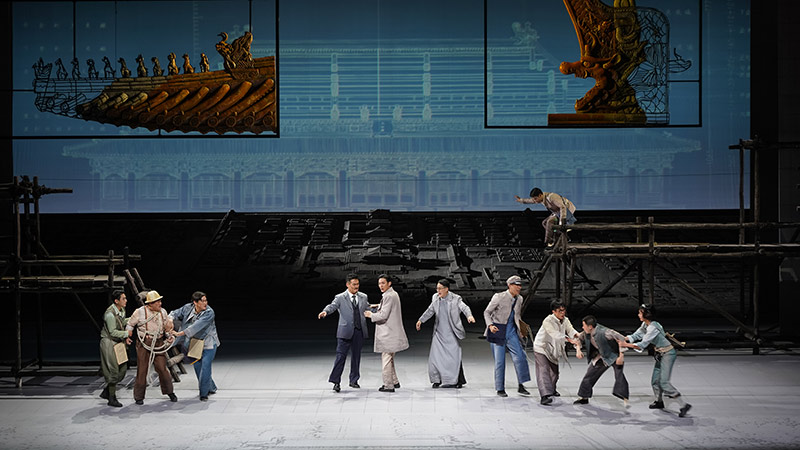
Standing in sharp opposition to them is LI Qianmo, the traitor played by SUN Lishi. His performance distills extreme selfishness and cunning into a chillingly authentic portrayal, cutting a cold gash through the passionate ensemble. The underground Communists portrayed by ZHANG Xuewen and ZHAO Zhen act like fuses in the dark night, weaving suspense between the survey sites and the undercurrents of espionage, lending profound depth to this mission of safeguarding civilization. It is the collision and intertwining of these forces—some open, some covert, some unwavering, some torn—that together uphold the truth of civilization’s undying spark during that period of history. In war-torn Peking, these academically dedicated warriors resemble the “Beijing swifts”, migratory birds inseparable from Beijing’s ancient architecture: resolute and steadfast, returning to their nests through wind and rain.
To faithfully capture the texture of the era, the production pursues precision and innovation across every dimension of stage art. The costume design adopts the calm and restrained “Peking grey” as its dominant tone. Within a unified palette, subtle variations in fabric and accessories delicately define the identities of different character groups. Adhering to a realistic style, the makeup design features a specially crafted “sunburn makeup” for the survey team members, meticulously recreating the marks left by scorching sun and harsh wind. Drawing inspiration from ancient architectural structures and survey blueprints, the stage design creates a visually symbolic space that blends reality and imagination. The theme music incorporates verses from Treatise on Architectural Methods, majestic and deeply emotive, enriched with regional musical expressions. It steadily builds dramatic tension, highlighting the emotions and choices of individuals caught in the tide of history.
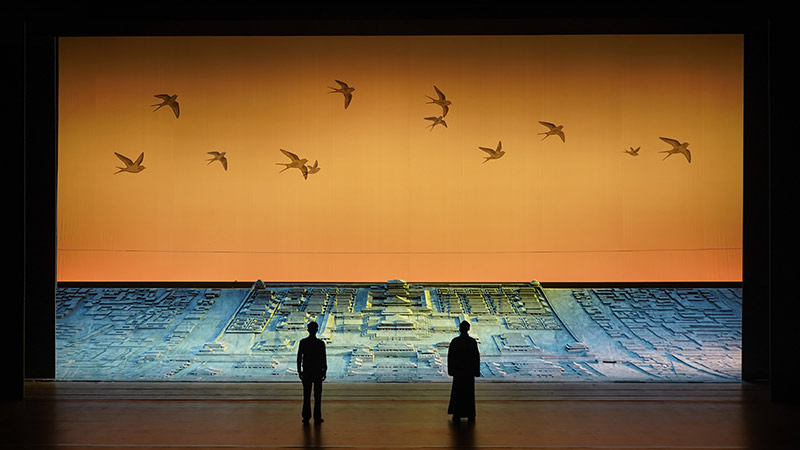
From the blueprint to the stage, the production of Beijing Swift is another significant achievement attained by the NCPA in fulfilling its cultural mission and exploring local themes. This drama not only offers an affectionate look back on our predecessors’ effort in safeguarding the culture, but also seeks to call on the contemporary audience to cherish our cultural heritage. The figure of the “Beijing swift” on the stage embodies the spirit of the young people staying faithful to the roots of civilisation during the War of Resistance against Japanese Aggression. It’s also an epitome of how China keeps moving forward in every era.
This drama, produced with countless efforts, has taken the audience back to that special period of history, so that they are aware of how our cultural belief and national integrity still shone keenly at those darkest moments. The performance will continue till February 2nd with the drama to be staged five times altogether.



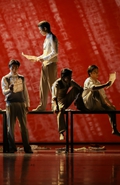 Repertoire
 Films
Films
 Videos
 Podcast
 China NCPA Orchestra
 China NCPA Chorus
 NCPA Resident Singers
 NCPA Drama Ensemble
 Buildings
Exhibitions
Buildings
Exhibitions
 Opening Hours
Services
Opening Hours
Services
 Western Cuisine
NCPA Café
Arts Gifts
Western Cuisine
NCPA Café
Arts Gifts