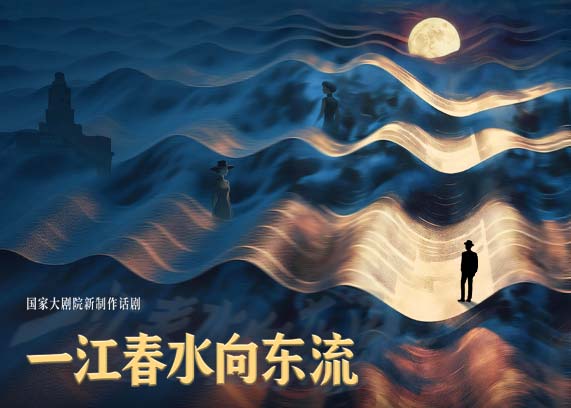
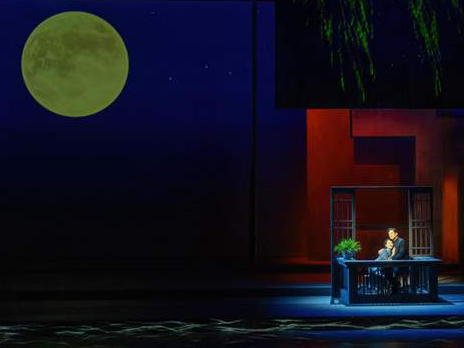
At the Mid-Autumn Festival, the stage curtain rose in moonlight for the drama
The Spring River Flows East. The story is set against the Chinese People’s War of Resistance against Japanese Aggression, with a nation’s suffering and toughness mirrored in an ordinary family’s joys and sorrows.
On the night of September 26
th, the drama
brought a 1947 screen classic onto the stage, realized through a theatrical expression of poetic realism.
It is the third blockbuster in the “Classic Black-and-White Film Adaptation Series” initiated by WANG Ning, President of the NCPA. Adhering to the tenet of “inheriting film classics and breaking new ground in stage aesthetics”, the NCPA gives the classic new life by blending creative stage vocabulary into it, with the spiritual core of the original held in respect. According to WANG Ning, it was
The Spring River Flows East that gave rise to the idea of conceiving this series in homage to the classics. The aim was to present old films on the stage and restore the charm of cinematic stories in live dramas.
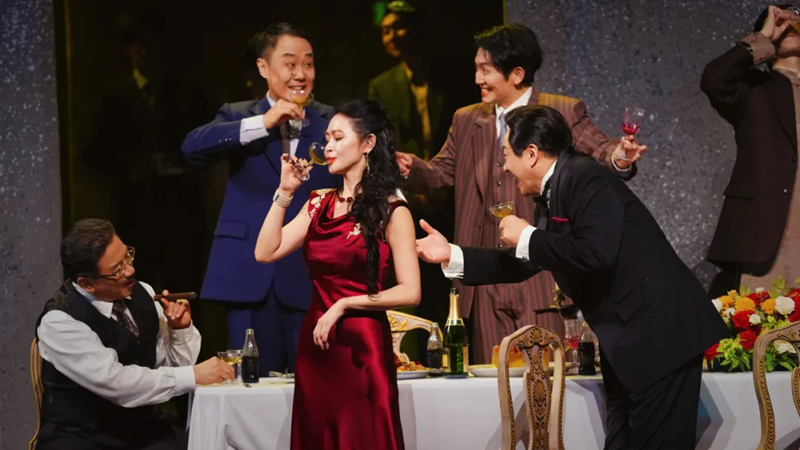
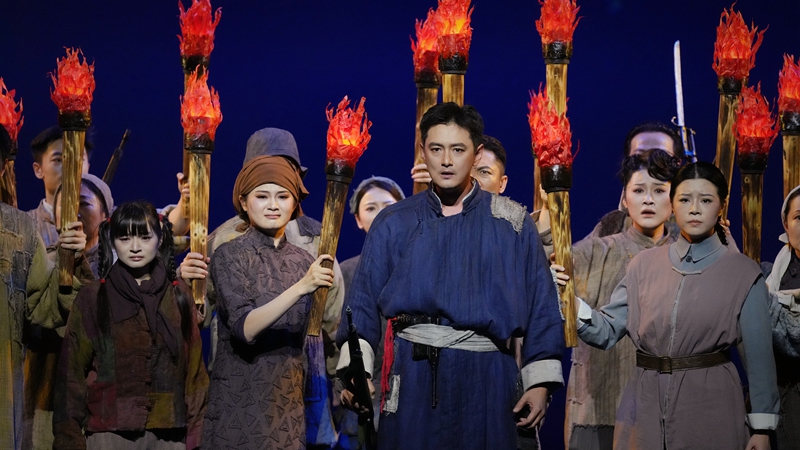
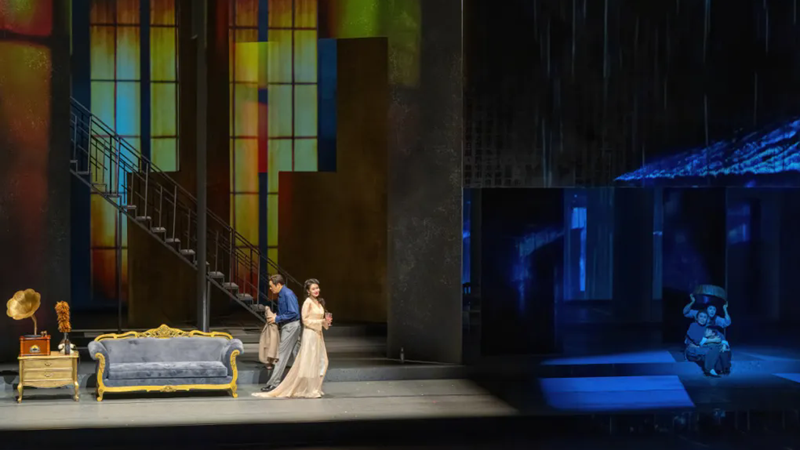
The drama begins at a Mid-Autumn gathering, where ZHANG Zhongliang, played by WANG Ban, stands in a Zhongshan suit, calling on the crowd to donate for the Northeast Anti-Japanese United Army. He is in high spirits, eye alight – the brightest moment of his life. After the Chinese People’s War of Resistance against Japanese Aggression breaks out, he joins a medical corps, trekking through heavy gunfire. Later, he narrowly escapes death from the prisoner-of-war camp, after a long and harrowing journey, finally reaches Chongqing. Ragged and with nowhere left to turn, he is offered a hand by WANG Lizhen, who gives him a ticket into “another world”. Gaudy lights, a well-cut suit - step by step he walks in, but the way that brought him there becomes a road of no return.
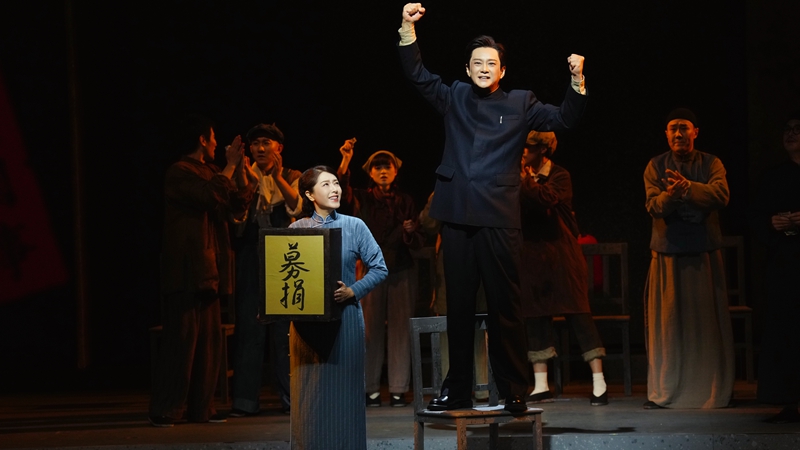
WANG Ban gives a finely shaded, richly layered performance in his portrayal of ZHANG Zhongliang, as the character turns righteous ardour into hesitation, struggle into callousness, and constancy into degeneration. WANG Ban put it in an interview, “The war is to blame for all separations, tumults, sufferings and pains in this drama.” ZHANG Zhongliang’s tragedy attributes to that circumstance, which seems to offer him countless choices, leaves him only one.
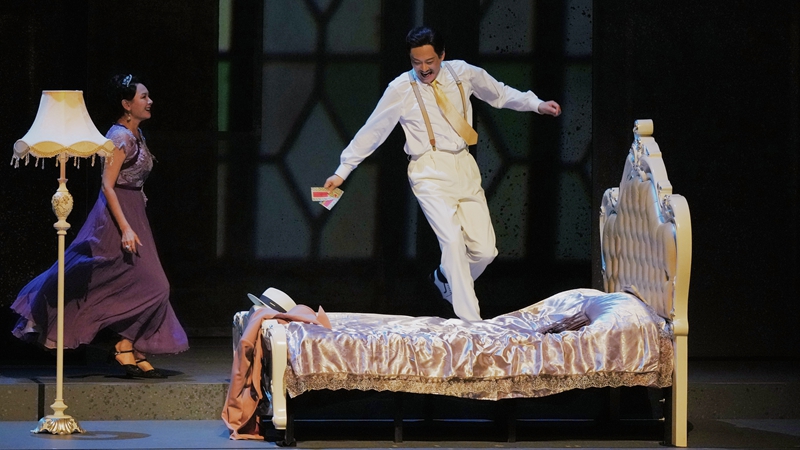
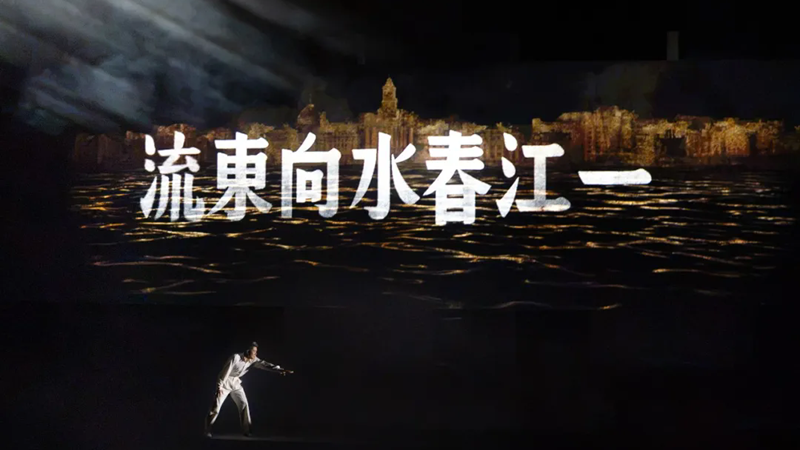
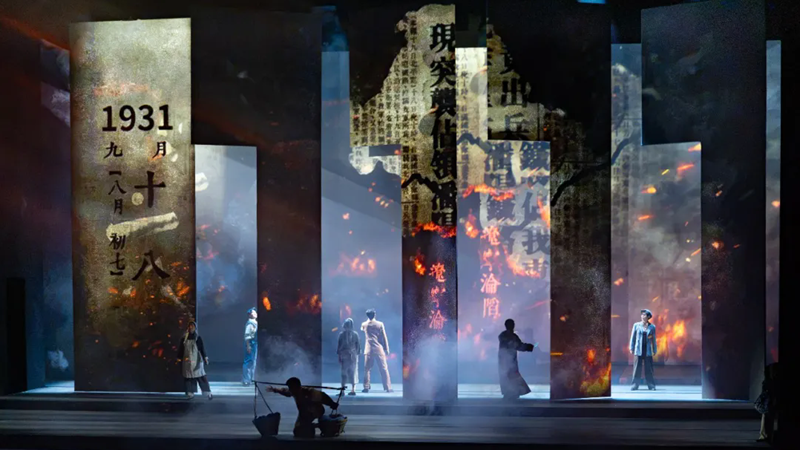
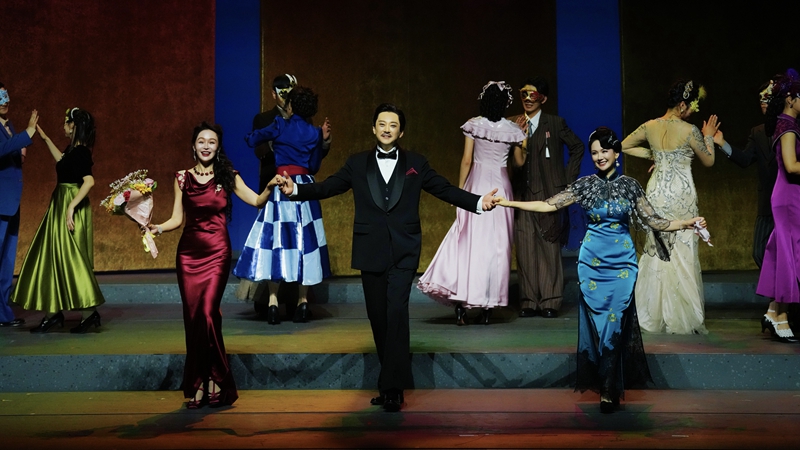
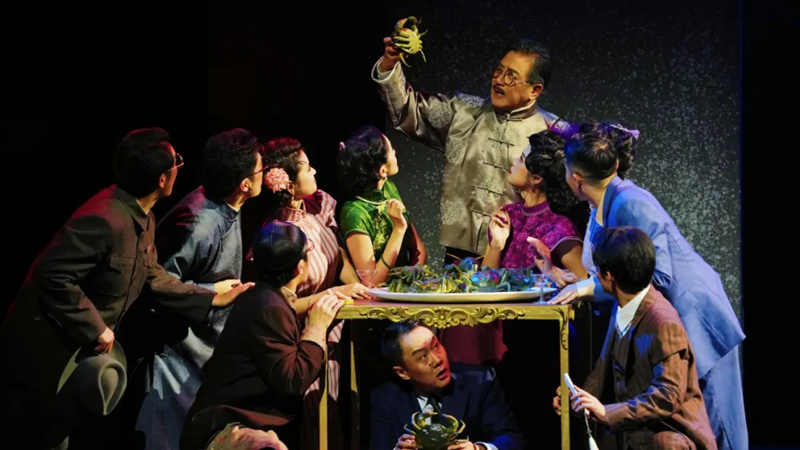
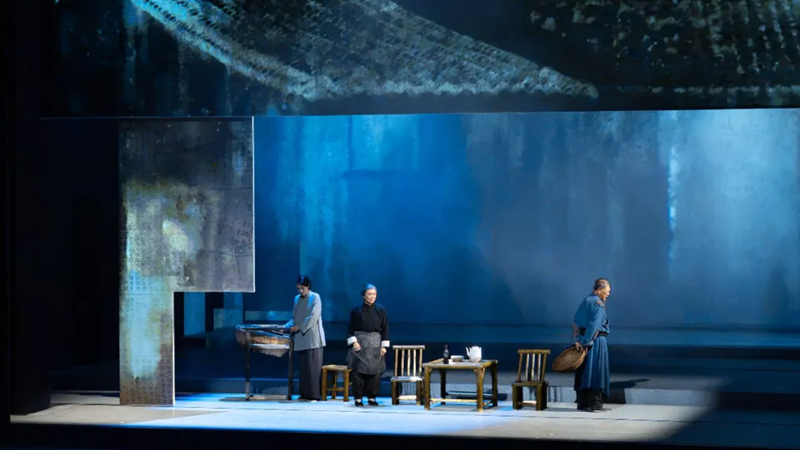
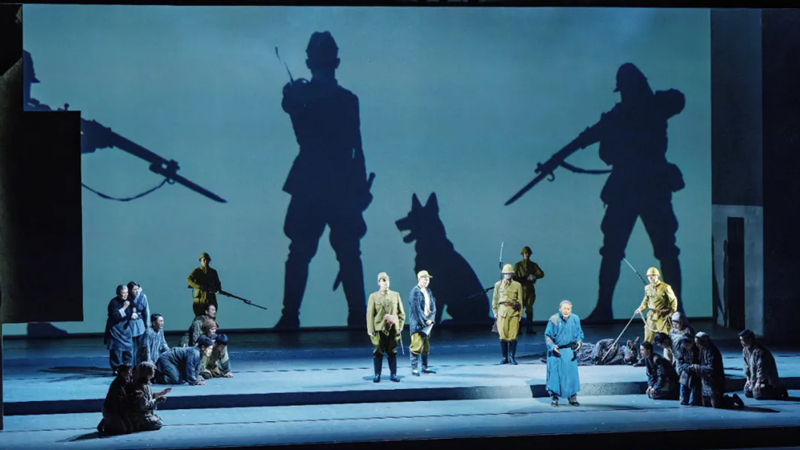
The stage is framed like a mirror, which reflects not only the characters, but also the audience. From donations for the Northeast Anti-Japanese United Army at the outset to the closing masquerade, the full Mid-Autumn moon hangs overhead, lighting up the characters - their constancy and their straying. The staging is built chiefly on multimedia and shifts with ease - light and shadow flowing across it, the scene is now given over to the thatched hut of the refuge, now to the Roman columns of the grand mansion, with letters, newspapers and other nostalgic touches scattered among them, bringing out the mottled patina of years gone by.
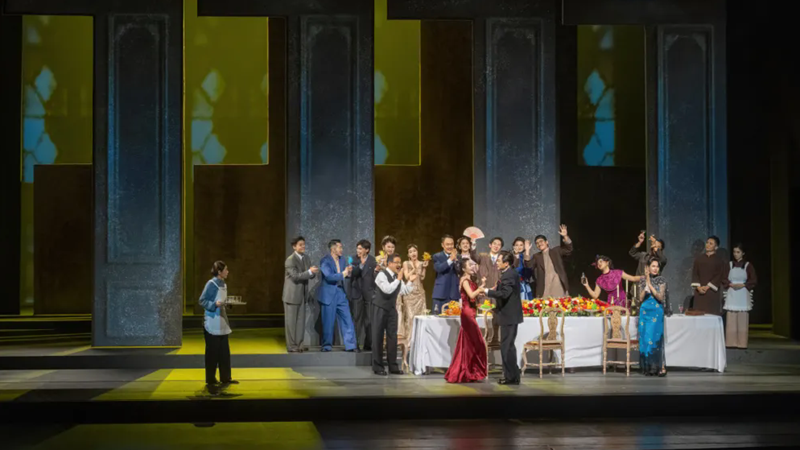
Parallel montage sets opulence and privation side by side on the same stage, spelling out a cruel reversal of fortune, that is, “a man rises with his family falling”. Downstage, the spring water flows gently throughout the drama, laden with significance. Three conveyor belts form the main structure of the stage, with scenes changing in full view of the audience in an unbroken sweep, like a river running its course.
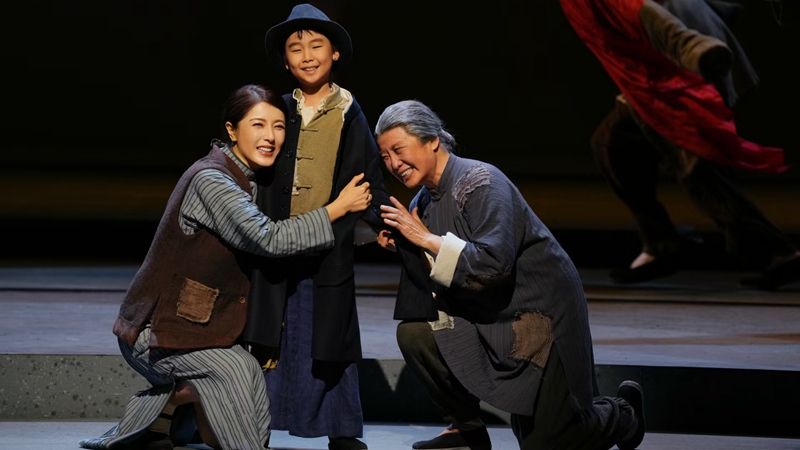
Sufen, portrayed by ZENG Li, is a symbol of the true, the good and the beautiful in a broken world. She unites in the role the traditional virtues of a devoted wife and mother and the toughness of a female textile worker. She meets ZHANG Zhongliang and falls in love with him. After the outbreak of the war, she single-handedly supports the old and raises the young, holding the family up, surviving eight years of separation and upheaval on old letters and a heart full of hope. ZENG Li gives a subdued yet compelling performance, in which Sufen’s forbearance does not make her weak, while her suffering enables her to stay calm with integrity.
WANG Lizhen, portrayed by YU Mingjia, is striking and adept at dancing, but arrogant and domineering. YU Mingjia gives a finely layered portrayal of the character, setting her shrewdness in life against her guilelessness in love. WANG Lizhen makes every choice for her own desire, because she, a woman in that era, was reduced to. She uses material things to hold love fast, but she gets betrayed in the end. So she is a pitiable schemer.
HE Wenyan, a role taken on by CHENG Lisha, is a sophisticated egoist of the upper class. Her presence adds another facet to the drama’s gallery of women. CHENG Lisha performs with perfect pacing, capturing the character’s lucidity and instinct for self-preservation in life, and her artless vulnerability in love. Her performance shows clearly that HE Wenyan holds deep love for ZHANG Zhongliang. That’s the fruit of CHENG Lisha’s own reading and handling of the role, lending the character a tenderness that makes one sigh.
His father, a man of few words, yet having integrity, is as simple as other upright traditional Chinese farmers. ZHANG Hua’s portrayal of this character is sincere and affecting. Without brave words, his restrained performance lets the audience feel the stubbornness and dignity Chinese farmers are born with.
Most moving of all is the guerrilla. In the film, what the times allowed to be said was necessarily indirect, yet on the stage, the old headmaster and ZHANG Zhongmin are placed in a clearer spotlight. In the darkness, They are the strivers and the awakened. Furthermore, ZHANG Zhongmin and TIAN Wanhua get married on August 15
th, 1945, the day Japan surrenders. Their marriage is in the most striking contrast to ZHANG Zhongliang’s degradation.
The drama’s ending grants Zhongliang and Sufen a “reunion” the film never gives them. Thus, the audience sees the first appearance of love, while the open ending remains unchanged. The director attaches great importance to expressing the protagonist’s inner world. The whole drama draws on a range of inventive stagecraft to magnify the character’s struggle, hesitation and remorse. On one night of the full moon after another, lunar light falls upon constancy and upon straying - both, in the end, flow east with the spring river.



 Repertoire
 Films
Films
 Videos
 Podcast
 China NCPA Orchestra
 China NCPA Chorus
 NCPA Resident Singers
 NCPA Drama Ensemble
 Buildings
Exhibitions
Buildings
Exhibitions
 Opening Hours
Services
Opening Hours
Services
 Western Cuisine
NCPA Café
Arts Gifts
Western Cuisine
NCPA Café
Arts Gifts